
The Ultimate Guide to Mochi

Want to learn more about mochi? Read this post to learn what mochi is, different types of mochi, how to make mochi, and the differences between mochi in Japan and in America.
What is Mochi?
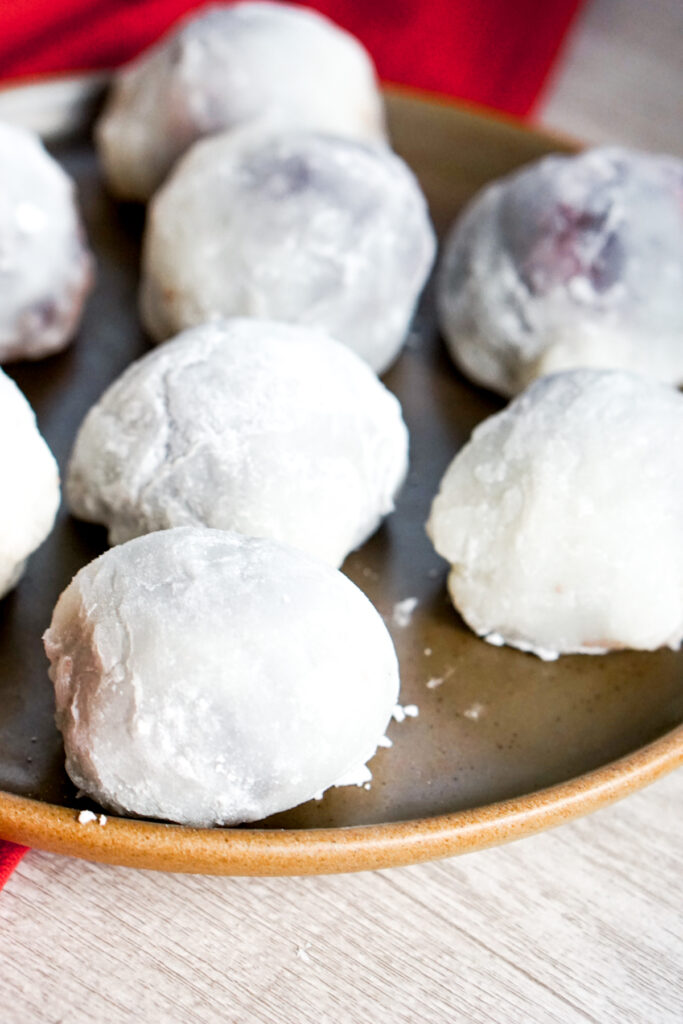
Mochi is a dense rice cake made entirely from one ingredient: “glutinous rice,” or mochikome. Mochikome is sometimes called “sticky rice” in other cuisines. It is most famously known as a Japanese food, but many countries use glutinous rice and glutinous rice flour in their cooking.
Is Mochi Sweet?
The short answer is no. The more complicated answer is.. it depends. A common misconception in America is that mochi is a sweet dessert. However, mochi in Japan refers to a rice cake made from pounded rice and no other ingredients. Therefore, the flavor of plain mochi is actually somewhat bland, and without added sugar, the only sweetness comes from the starch of the rice itself. Mochi in Japan is usually eaten with a variety of toppings, which adds flavor, or used as a component in a larger dish. These toppings and dishes can be either sweet or savory (or a little of both). However, an important distinction to make is that when you add other ingredients to mochi, the resulting dish usually has its own specific name and would no longer be called “mochi.”
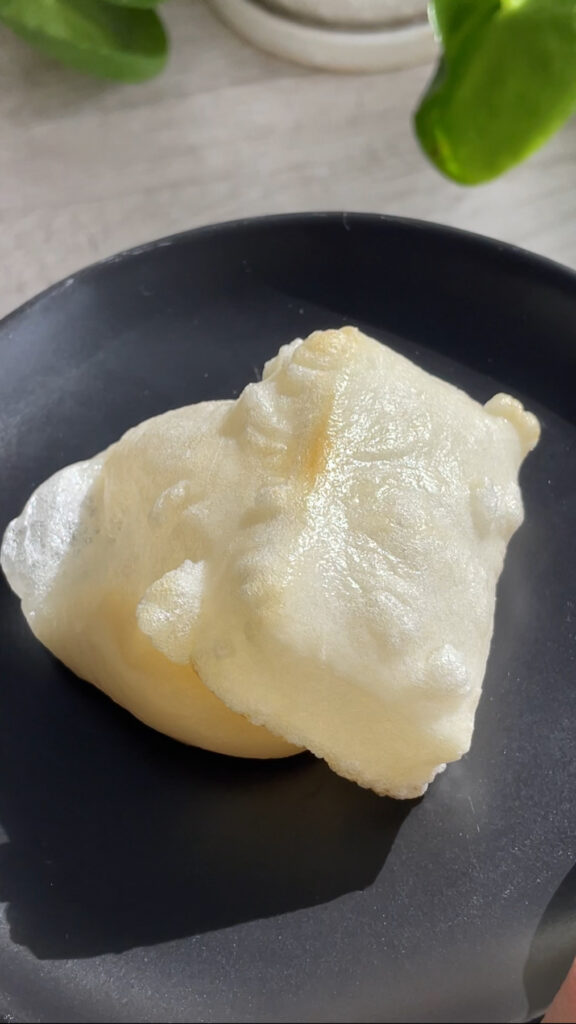
So why do so many people think mochi is a dessert? I’m going to guess that the popularity of mochi ice cream in grocery stores in America and the depiction of sweet mochi treats in anime has led to this belief. There’s also an issue of linguistic complexity: these sweet mochi dishes have specific Japanese names that may be difficult to pronounce for non-Japanese speakers, and it’s easier to describe them as being “mochi.”
Mochi in Japan vs. in America
But another huge reason may be dialectical difference. In Hawai’i, sweet filled rice cake is often still called “mochi” in addition to its typical Japanese name, daifuku. Weirdly, mochi that is stuffed with red bean is still called “daifuku” in Hawai’i, but mochi stuffed with strawberry is often called “strawberry mochi,” instead of “strawberry daifuku,” which is what it would be called in Japan. How this change in vocabulary came to be, I have no idea. Perhaps it’s related to the development of Hawaiian Pidgin? What I CAN tell you is that it leads to a lot of confusion between Japanese people and American mochi lovers.
To add to the confusion, I find Japanese Americans in California (where I grew up) have slightly different terminology for mochi as well. Famous mochi shops like Chikara Mochi in Gardena call some filled mochi daifuku, but Fugetsu-do in Little Tokyo refers to some of their filled mochi flavors as “mochi.” Both have sweet flavored mochi cakes that are unfilled and referred to as “mochi,” although they are more similar to Hawai’i’s chi chi dango. I feel like it’s important to note that many Japanese Americans in California may have originally immigrated to Hawai’i before venturing over to the mainland. So there’s a lot of Hawaiian Pidgin influence on Japanese American terminology.
Mochi vs. Gyuhi
I’m also told by a friend in Japan that sweet rice cake made with glutinous rice flour is technically called gyuhi. So the mochi wrapping in daifuku, mochi bites that you can find at froyo places, and chi chi dango would all be classified as gyuhi. However, from my discussions with other Japanese Americans, gyuhi doesn’t seem to be in our vocabulary. We tend to still refer to gyuhi as mochi.
See how it all gets so confusing?? So in America, if you say “strawberry mochi,” it could mean either a daifuku that is filled with strawberry OR a gyuhi that is flavored with strawberry. I try to use the Japanese terminology when I can 1. because it’s less confusing and 2. because my Japanese friends get really annoyed when people keep calling their foods by different names. However, it gets pretty difficult when I say “gyuhi” and nobody, even other Japanese Americans, know what I’m talking about. Bottom line is, when you are talking to someone from Japan, mochi is JUST the pounded rice. As for the other types of mochi dishes…
Types of Mochi
As you probably can tell by now, there are MANY different types of mochi. Sweet mochi falls into the category of Japanese confections, called wagashi, but there are also other savory mochi dishes as well.
Daifuku Mochi
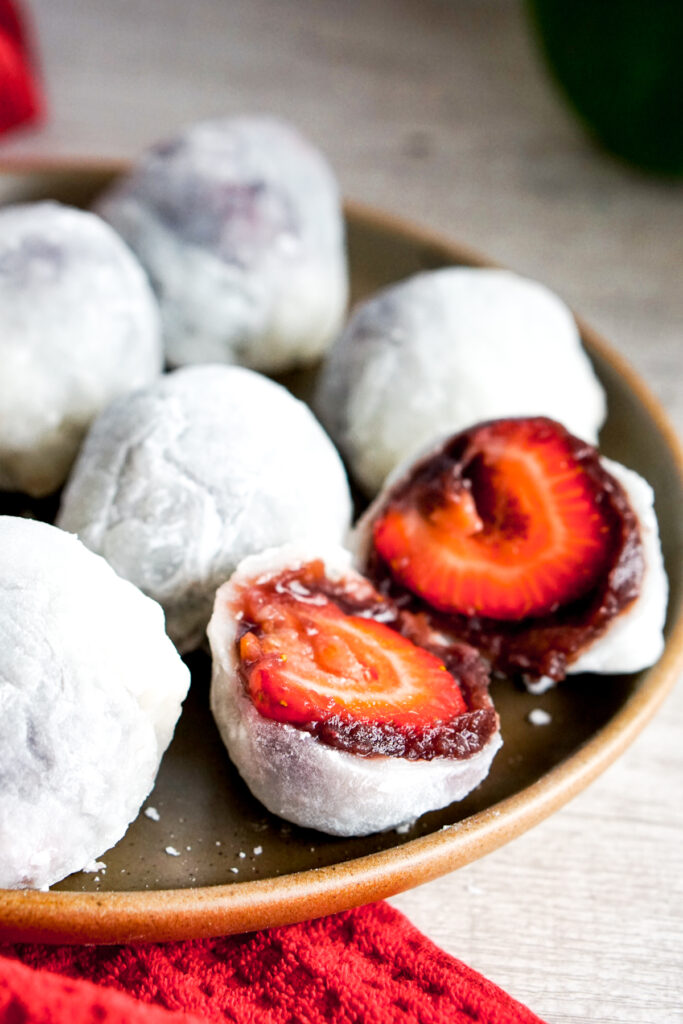
Daifuku mochi is probably the most well known wagashi made with mochi. The most basic daifuku is mochi that is stuffed with red bean. However, it can also be stuffed with white bean paste and/or fruits, such as strawberry. If you like creative daifuku flavors, I’ve got recipes for strawberry rose marzipan, funfetti, and mint chocolate daifuku!
Dango
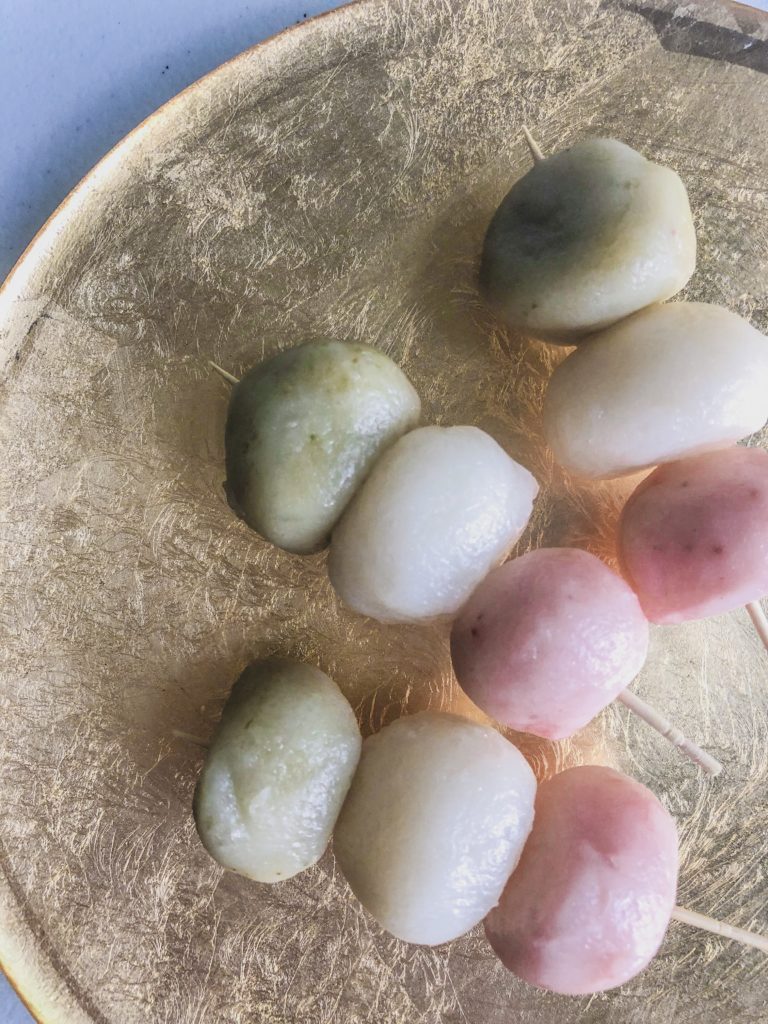
Dango translates to “dumpling,” and that’s exactly what these are, little round dumplings of chewy rice cake. Dango generally uses a mixture of mochi rice flour and other rice flours. There are also many different types of dango, some which lean more sweet and some more savory. Many dango dishes are skewered, such as mitarashi dango and hanami dango, which I talk about more below.
Yakimochi
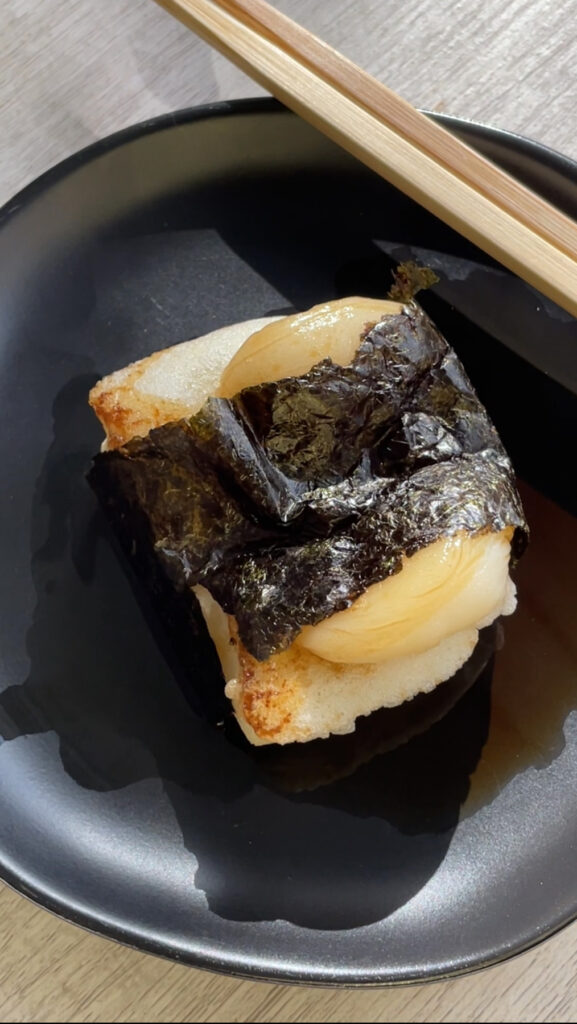
Yakimochi means grilled mochi, and like dango, it can be either sweet or savory depending on the toppings. Yakimochi can also be a component of other dishes, like zenzai or chikara udon. For more information on yakimochi, check out my Ultimate Guide to Yakimochi post.
Hawaiian Mochi
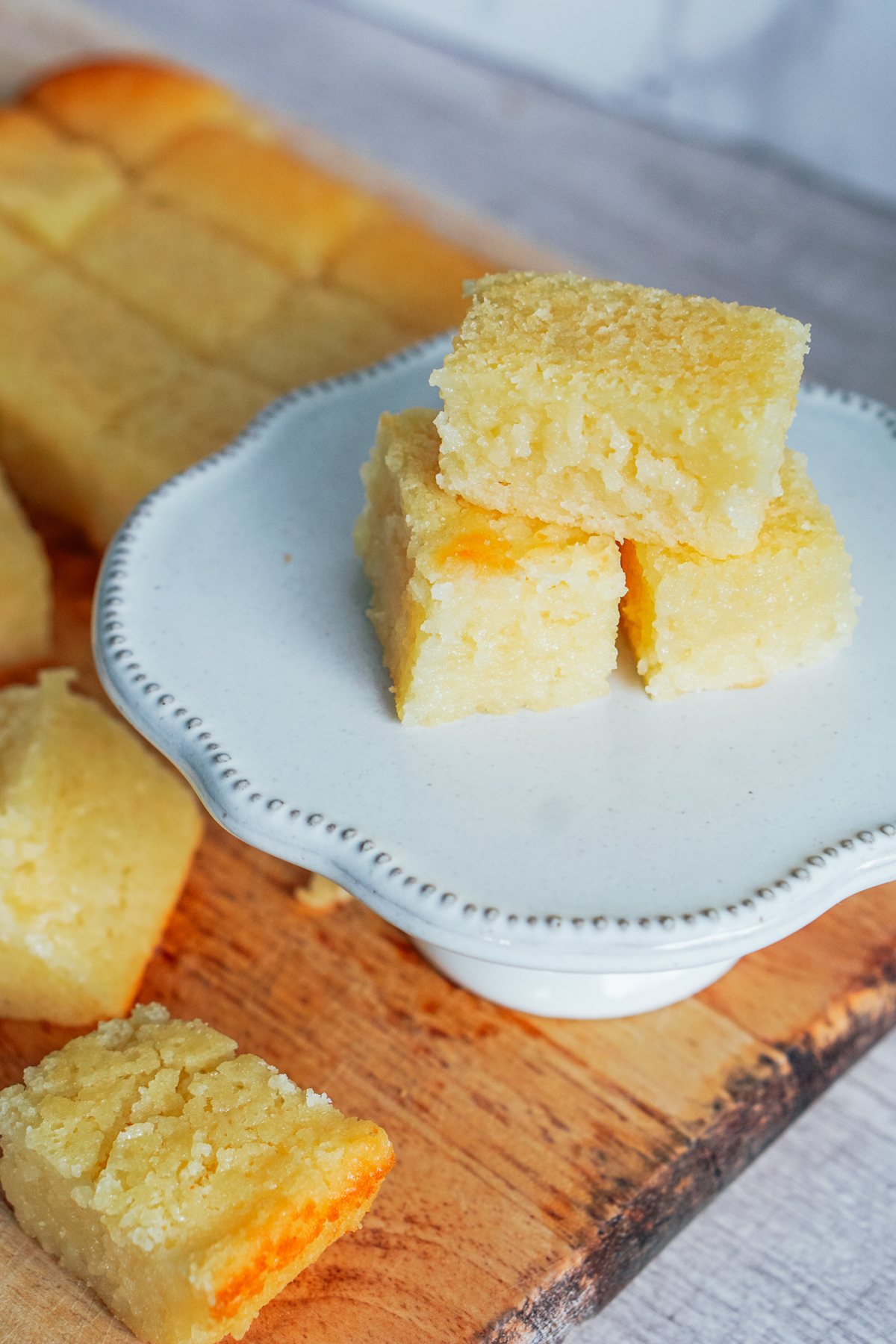
Yes, I’m giving Hawaiian mochi its own category, because really it’s become its own separate entity from Japanese mochi. The most famous Hawaiian mochi dishes are butter mochi and chi chi dango. Butter mochi is a cake made from mochiko that also includes typical western cake ingredients like eggs, butter, and milk. Chi chi dango is a sweet rice cake that is similar to mochi in Japan except for the addition of coconut milk and sugar. According to an article I read once in Honolulu, chi chi dango originated in Japan but lost popularity there, while it remained popular in Hawai’i. I’m going to guess the addition of coconut milk was a Hawaiian adaptation, though.
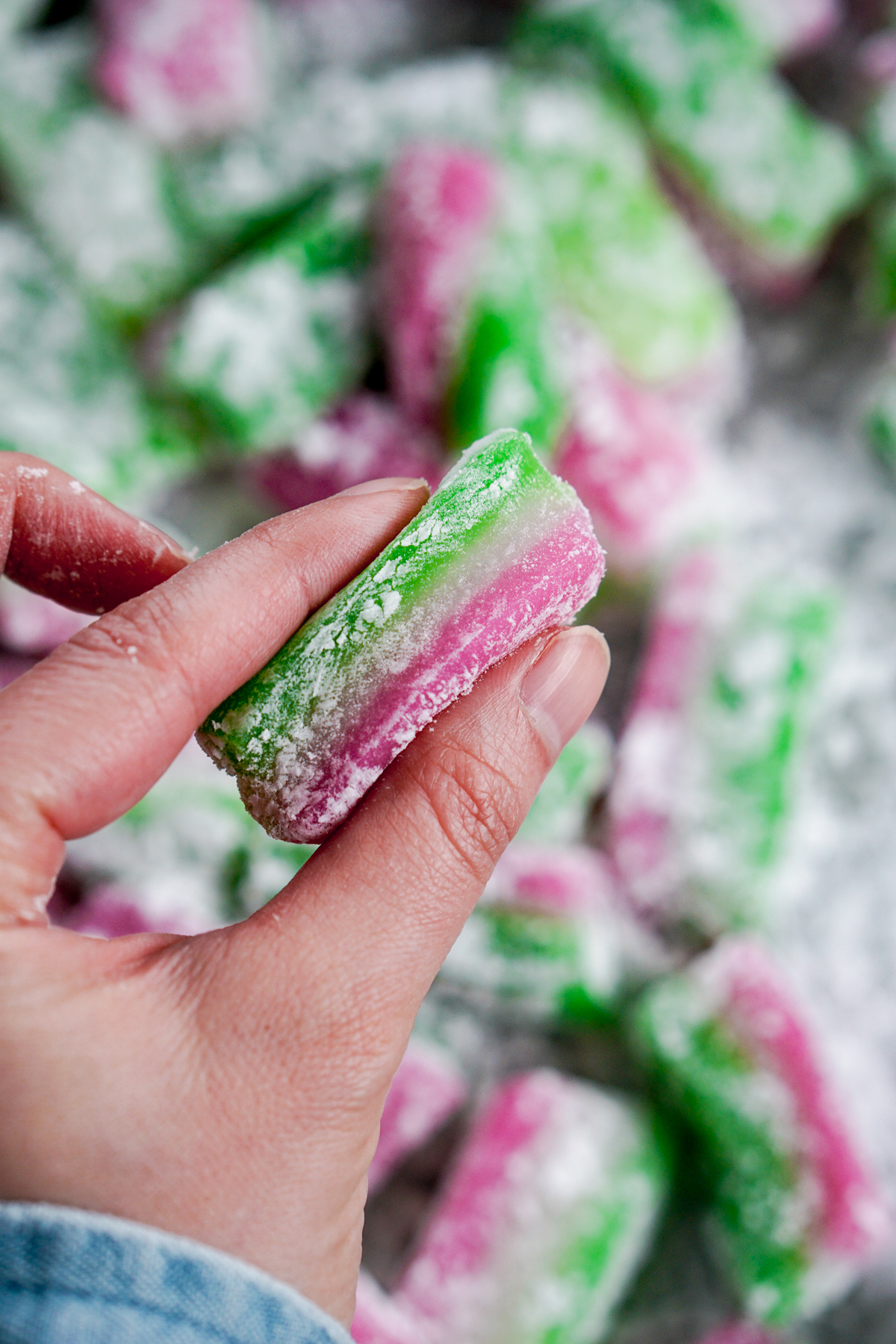
Hawai’i is also famous for its daifuku, like at the Two Ladies Kitchen in Hilo. As mentioned previously, however, daifuku in Hawai’i is still referred to as “mochi” sometimes, and they often have creative flavors. In fact, Japanese American mochi in general is distinct from Japanese mochi in the departure from typical Japanese flavors. You can find confections like peanut butter mochi or mango mochi in Hawai’i or California.
Fusion Mochi Desserts – Mochi Donuts and Mochi Waffles
On the topic of Hawaiian mochi, we can also attribute a lot of popular fusion mochi snacks to Hawaii as well. Mochi donuts were invented in Hawaii, inspired by the tapioca starch donuts called Pon de Ring from Mister Donut in Japan.
Similarly, mochi waffles are very popular in Hawaii, although I’m not sure if they originated first in Japan or Hawaii.
How is Mochi Made?
There are typically three ways to make mochi dishes at home. One way is to use kirimochi, which is a premade, shelf stable mochi I wrote about in my Ultimate Guide to Kirimochi post. If you want to make mochi from scratch, you can either pound it from mochi rice (mochikome) or use mochi rice flour (mochiko). There are several methods for both, which I’ll detail below.
Mochitsuki
Mochitsuki refers to the pounding of rice to make mochi. This is the most traditional way to make mochi, and is not often done in people’s homes. Some traditional mochi shops will make mochi this way (as you may have seen in some viral videos from Japan), and some families or communities may host a mochitsuki event during New Years.
Electric Mochi Machines


The more modern way to make mochi is to use an electric mochi machine. So instead of pounding the rice by hand with a wooden mallet, you just put it in the machine, which pounds it for you. It’s kind of like the kneading function in an electric bread maker. These mochi makers are typically $200-300, so I wouldn’t say it’s the most common household appliance, especially since it would typically get used only once a year. However, I do have a couple friends who have them and bust them out every January.
Steamed, Baked, and Microwaved Mochi
If you don’t have a mochi machine, then you probably buy your New Year’s mochi either fresh from a shop or frozen at the Japanese market. Or, if you live in a Japanese American community, you may find community centers and churches that hold a mochitsuki in December to have fresh mochi for New Years day. Or you can just buy kirimochi.
For most mochi wagashi dishes, however, you would cook the mochi at home (assuming you don’t have a nice mochi shop near you) from some sort of mochi flour (yes, there are different kinds of glutinous rice flours!). When you’re cooking mochi from flour, you typically mix your flour with water, sugar, and any other ingredients and then you either steam, bake, or microwave to cook it.
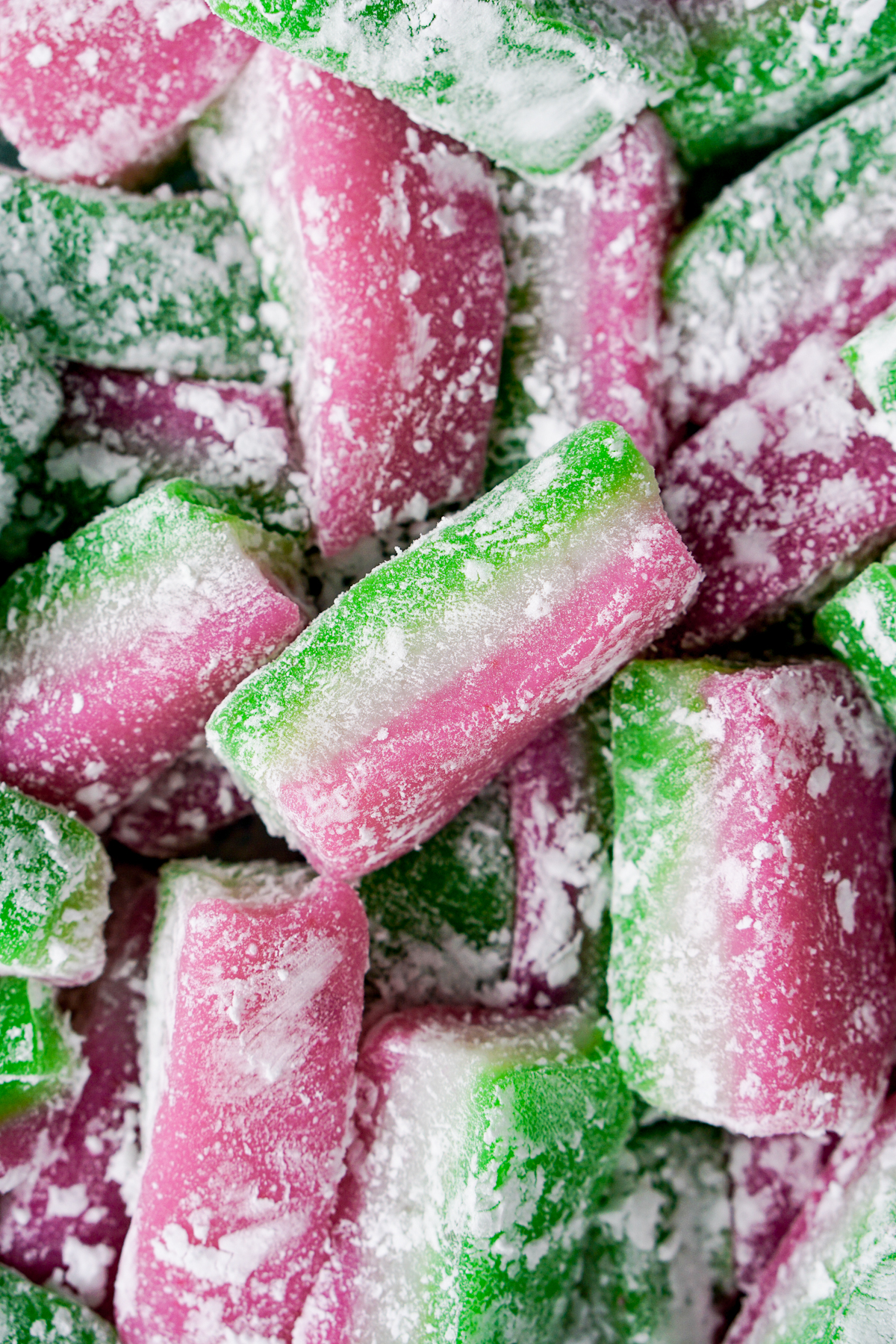
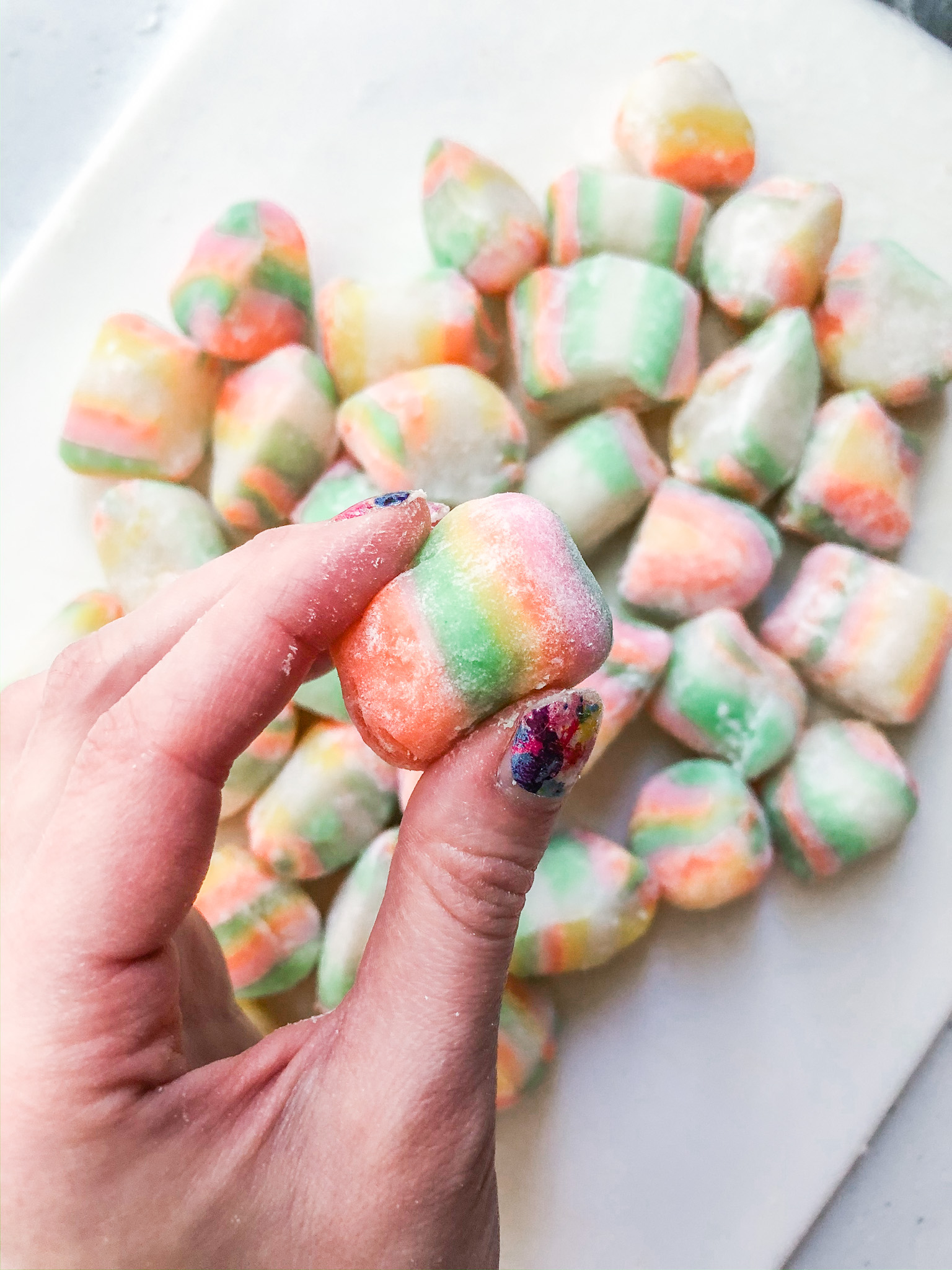
Based on my own experience and some feedback from social media, steaming seems to retain moisture the best, followed by baking, followed by microwaving. Baking typically takes the longest (think 1 hour in the oven vs. 8 minutes in the microwave). Microwave, of course, tends to be the fastest and most convenient.
Mochi for Special Occasions
By now you probably figured out that mochi is very popular at New Years. In general, however, mochi is also eaten throughout the year in Japan. Some mochi dishes are even associated with specific holidays or seasons. Here are just a few:
Ozoni
Perhaps the most important mochi dish is ozoni. Ozoni is a savory soup, typically with a dashi and soy sauce broth, with mochi in it. It’s eaten on New Year’s Day. Ozoni ingredients vary by region (and family) in Japan.
Hanami Dango
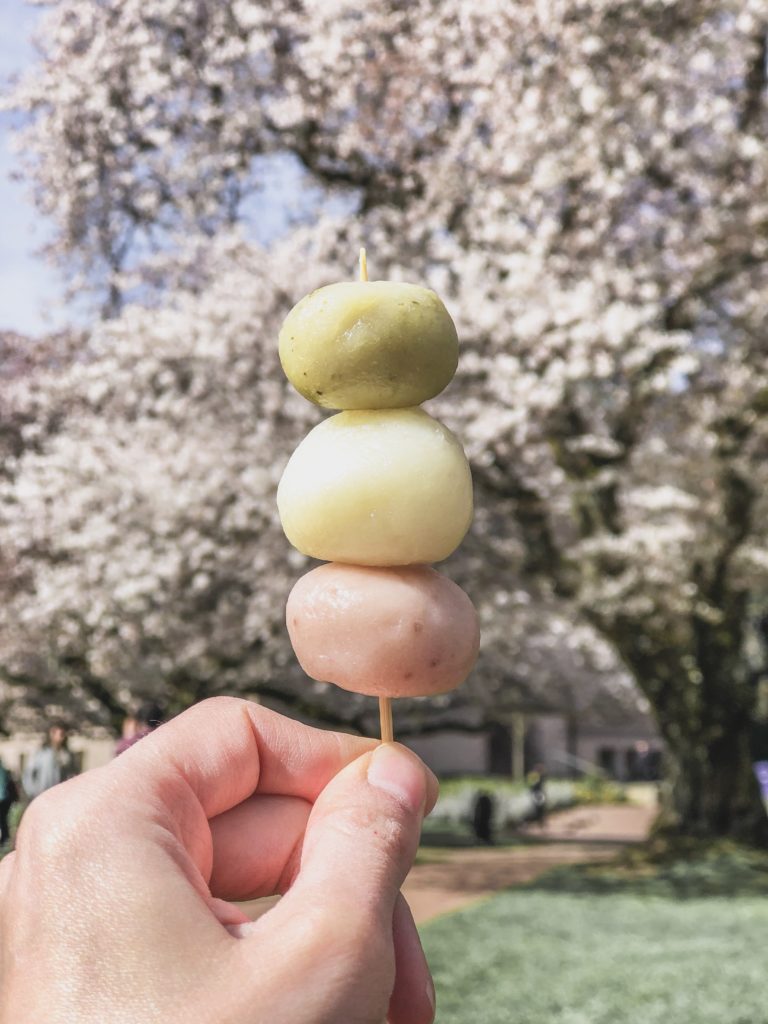
This type of dango has a specific color scheme: pink, white, and green. It’s eaten in the springtime, especially during cherry blossom viewing, which is called “ohanami.” It’s usually made with a combination of different rice flours, but I have a mochiko-only hanami dango recipe for those of you who like simplicity.
Sakuramochi
Another springtime mochi wagashi, sakuramochi is pink mochi stuffed with red bean paste and wrapped in a cherry leaf.
Kashiwamochi
Kashiwamochi is commonly eaten on Children’s Day. It’s made of mochi stuffed with red bean paste and wrapped in an oak leaf. Interestingly, kashiwamochi is made from joshinko, which is NOT a glutinous rice flour. So technically, it’s not really a mochi? I guess in this case, it’s mochi-adjacent.
Ohagi
Ohagi is a dessert made from halfway pounded (aka not a smooth texture) mochi wrapped in red bean paste. It’s eaten on the autumn equinox. You can see ohagi at the end of the previous video I linked from Instagram.
More Mochi Recipes
Interested in making some mochi desserts for yourself at home? I have plenty to choose from, ranging from very easy to more advanced.
- Chi Chi Dango
- Butter Mochi
- Chocolate Butter Mochi
- Strawberry Daifuku
- Yakimochi
- Baked Mochi Donuts
- Matcha Mochi Waffles
I hope this answered some of your burning mochi questions! Do you have a favorite mochi dish that I didn’t mention here? Or any other mochi requests? Let me know in the comments below, and don’t forget to browse through my other Ultimate Guides to learn more!

Pingback: Microwave Milk Mochi Recipe - Mochi Mommy
Pingback: The Easiest Tsukimi Dango Recipe - Mochi Mommy
Pingback: Kiwi Daifuku Mochi Recipe - Mochi Mommy
Pingback: The BEST Easy Matcha Mochi Waffles - Mochi Mommy
Pingback: The Best Mochi Brownies - Mochi Mommy
Pingback: Kaki Daifuku (Persimmon Stuffed Mochi) - Mochi Mommy
Pingback: Strawberry Nutella Daifuku with Vanilla Bean Mochi
Pingback: Strawberry Matcha Daifuku Mochi - Mochi Mommy
Pingback: Ube Daifuku Mochi Recipe - Mochi Mommy
Pingback: Ichigo Daifuku (Mochi with Strawberry on Top) - Mochi Mommy
Pingback: Coconut Rose Mochi (Chi Chi Dango) - Mochi Mommy
Pingback: Coconut Mango Mochi (Chi Chi Dango) - Mochi Mommy
Pingback: Pumpkin Butter Mochi Recipe - Mochi Mommy
Pingback: Easy Hanami Dango Recipe - Options With and Without Tofu
Pingback: Easy Mochi Recipe (Chi Chi Dango) - Beginner Friendly! - Mochi Mommy