
Sata Andagi: Okinawan Donuts Sold at American Obon

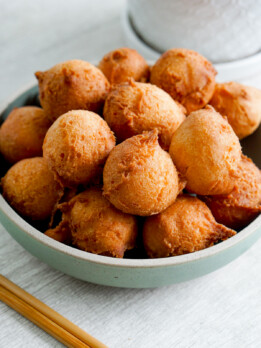
Sata andagi is a deep fried dough from Okinawa. You can find this version at Japanese American Obon festivals in Hawai’i and California. Disclaimer: This post may contain affiliate links.
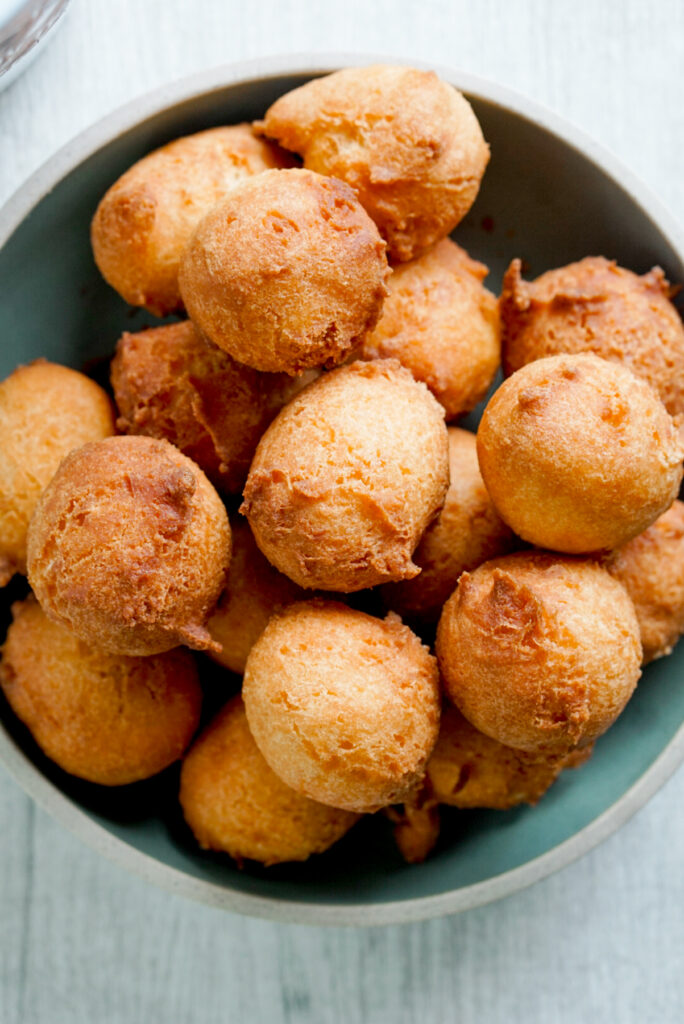
I recently posted a series of Obon food reels on my Instagram, and this dango was by far the most requested recipe! No surprise, as this is also my favorite Obon food. Unlike some of the other offerings at Obon, this Okinawan fried donut never appeared at any of my other family gatherings or community potlucks, so I looked forward to Obon every year just for this treat.
If that’s you too, now you don’t even have to wait! You can make it yourself at home.
What does sata andagi mean?
Sata andagi (サーターアンダギー) is actually a word from the Okinawan language, as opposed to standard Japanese. “Sata” means sugar, and “andagi” means fried in oil. The Japanese equivalent would be “sato abura-age.”
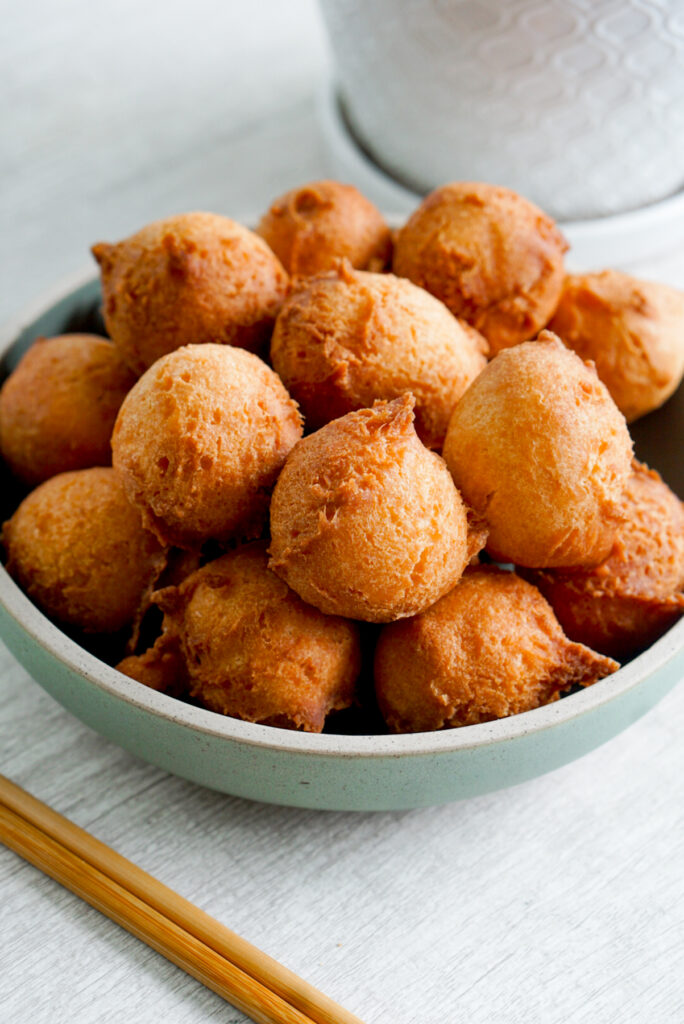
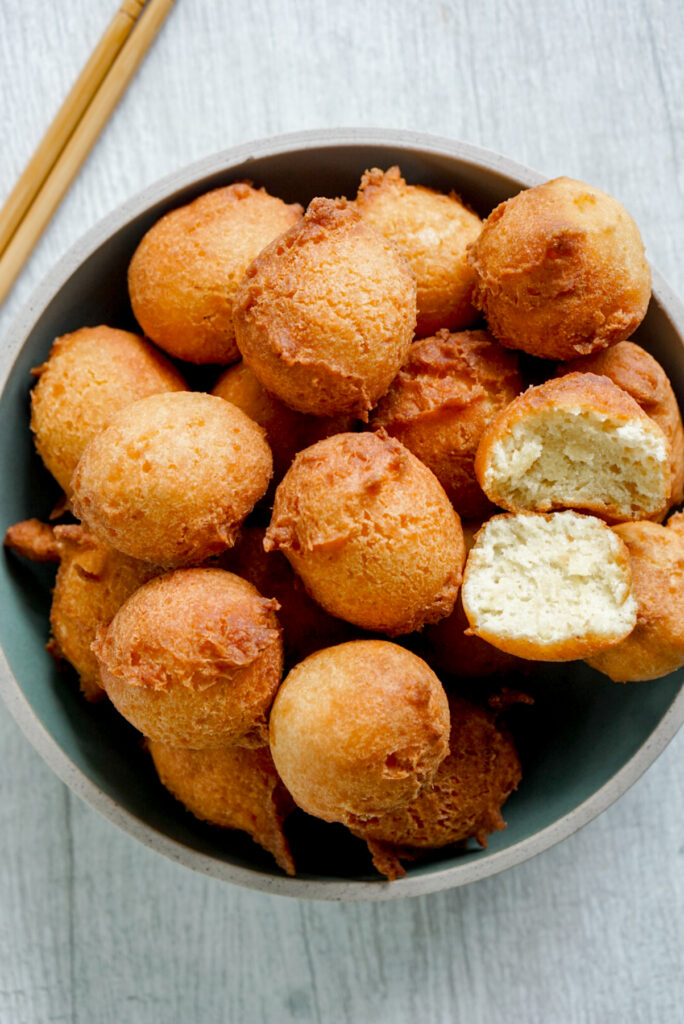
And andagi are pretty much exactly what its name describes: a deep fried ball of sugary dough. Essentially they’re donuts!
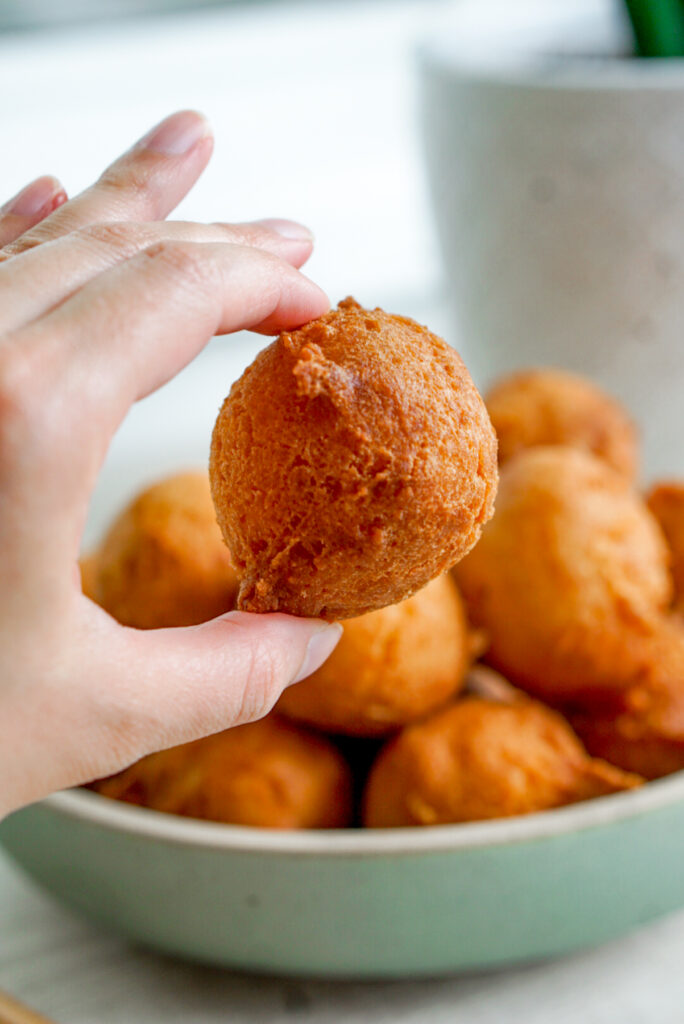
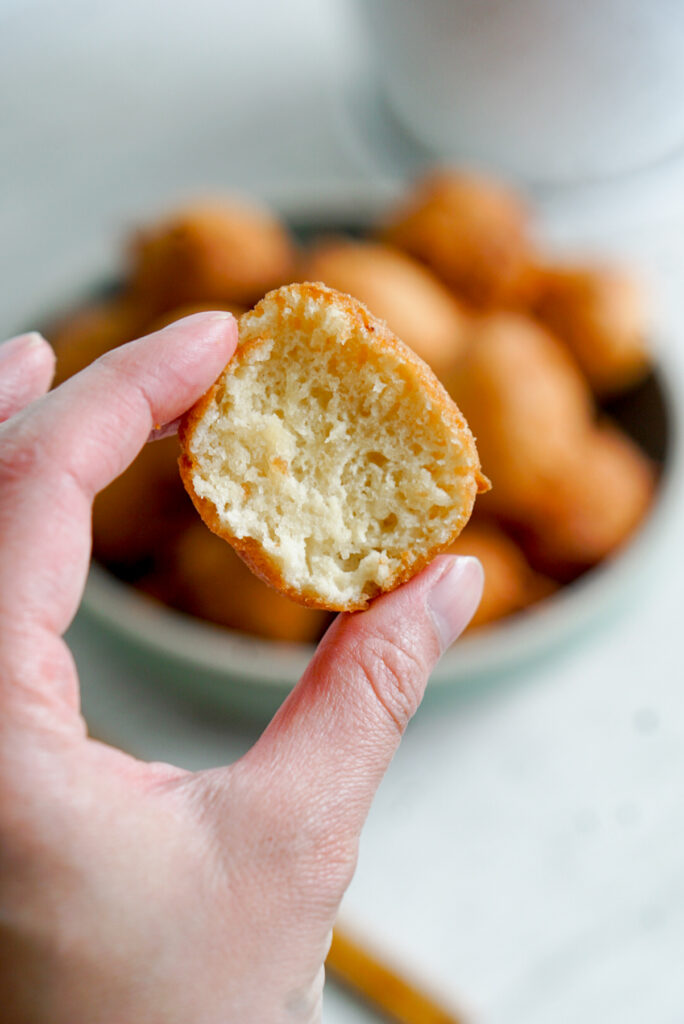
I’ve seen some people compare them to malasadas, but malasadas are yeasted and therefore pillowy and fluffy on the inside. In comparison, andagi are very dense and crispy on the outside. Still, both are fried balls of dough, so it’s hard to go wrong.
California and Hawai’i Obon Food
At Japanese American Obon festivals in California, you may see these andagi served under the name “dango.” Why? I have no idea! My whole life I called this dango until I realized that no one outside of California will know what I’m talking about. My Japanese friends are always confused as to why this is called “dango” at our Obon. In contrast, it’s pretty much always called “andagi” in Hawai’i. If you go to Okinawa, however, people may correct you if you don’t say the full word “sata andagi.”
This food isn’t even necessarily found at summer festivals in Japan unless you are going to Okinawan festivals, but you can absolutely bet you’ll find it in California and Hawai’i. Note: It may also be served at other Japanese American Obon, but I haven’t personally been… I have not seen it at the Seattle ones.
What is andagi made of?
The basic andagi ingredients are flour, sugar, milk, and eggs. In America, it seems us Japanese Americans tend to use all purpose flour. Food bloggers from Japan who are trying to emulate the traditional ingredients from Okinawa seem to prefer cake flour. Because I want to recreate the nostalgia of my childhood Obon festivals in LA, I do all purpose flour, but feel free to switch it up.
I also notice that many recipes in Hawai’i use evaporated milk. I’ve always used whole milk, but evaporated milk is a great substitute with a more intense milky flavor.
Lastly, my recipe uses two tablespoons of melted butter, just for a little extra flavor and moistness in the dough. You could also substitute vegetable oil or canola oil instead.
Andagi Dango Variations
At Obon, I’ve only seen andagi sold plain. No fillings, no toppings. In Okinawa, however, you can find andagi of different flavors, such as the regional black sugar flavor or kinako (roasted soybean flour). In Hawai’i, you can find andagi sold year round, also with different flavors, like cinnamon sugar.
If you don’t mind straying from tradition, you can try dusting the donuts with powdered sugar or some other flavored topping, just like a donut hole. Recently at Obon festivals in America, I’ve also been seeing DANGO DOGS or ANDAGI DOGS! This is GENIUS! It’s a corndog but with andagi batter. I want to try making this at home (will update when I do), except I find it annoying to try and find a pot big enough to fit the entire corndog and stick. Plus, that’s a lot of oil.
Deep Frying Andagi
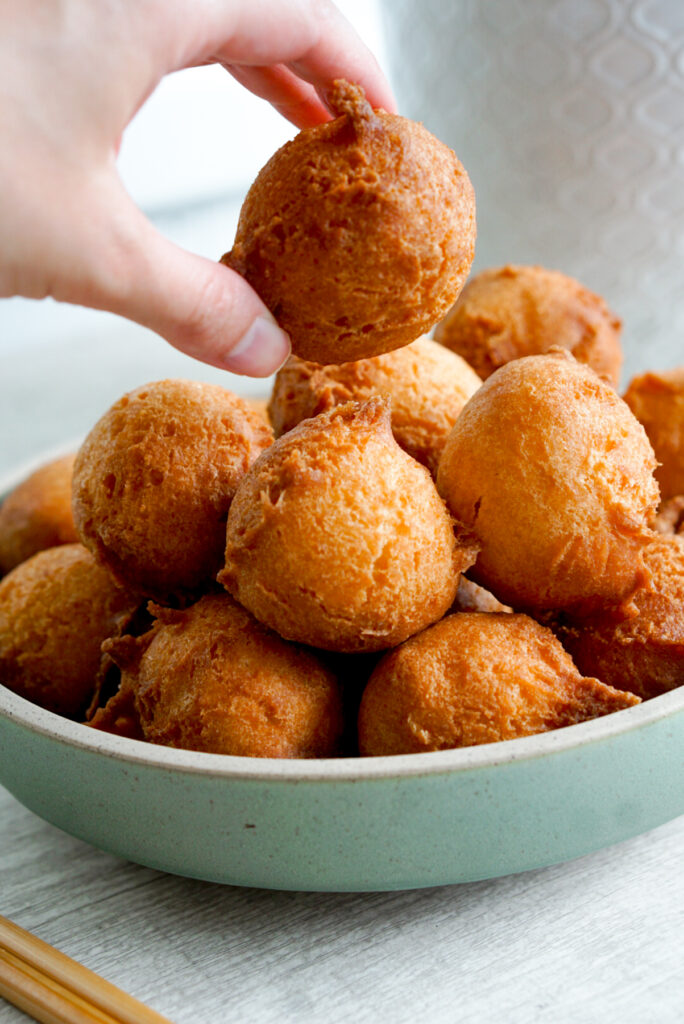
Because andagi are so dense, I highly recommend using a digital thermometer to measure the temperature of your oil. Too hot, and your dango will burn on the outside before the inside cooks. Too low, and your dango will absorb a lot of oil. I cook mine at 340 degrees F for exactly five minutes, and it’s perfect.
The old school, hardcore way of shaping your dough balls is to squeeze the batter through your index finger and thumb, pinching off the end, similar to how you shape fresh mochi. However, I’m a baby, and I don’t like putting my fingers close to hot oil, so I use a cookie scoop. The dough balls are about the size of a ping pong ball or golf ball going into the oil, but they expand as they cook.
How to freshen up day old donuts?
I think andagi taste best super freshly made. However, if you have leftovers, you can keep them at room temperature in an airtight container. To reheat, I recommend using the air fryer if you have one! It’ll get the outside super crispy again.
More Obon Recipes
Looking for more Japanese American foods you may see at Obon festivals? Check these out:
- The Best Teriyaki Chicken
- The Best Teriyaki Beef
- Somen Salad
- Deep Fried Wontons (Crispy Gau Gee)
- Classic Butter Mochi
Sata Andagi (Okinawan Donut Popular at American Obon)
Ingredients
- 2 cups all purpose flour, 250g
- 1/2 cup sugar, 100g
- 1/4 tsp kosher salt
- 1 tsp baking powder
- 2 large eggs
- 1/2 cup whole milk or evaporated milk, 118mL
- 2 tbsp unsalted butter, melted
- 1/2 tsp vanilla extract
- oil for deep frying, varies depending on your pot
Equipment
- digital thermometer not required but recommended
Instructions
- Heat oil in a pot to 340 degrees F.
- While oil is heating, whisk flour, sugar, salt, and baking powder in a mixing bowl.
- In a separate bowl, whisk eggs, milk, vanilla, and melted butter.
- Mix wet and dry ingredients together. Don't overmix, but make sure no dry pockets of flour remain.
- When oil is ready, scoop 1.5-2 tbsp balls of batter into the oil. The more traditional way is to squeeze the batter out of your hands from between your index finger and thumb, but you can use a cookie scoop or two spoons for convenience.
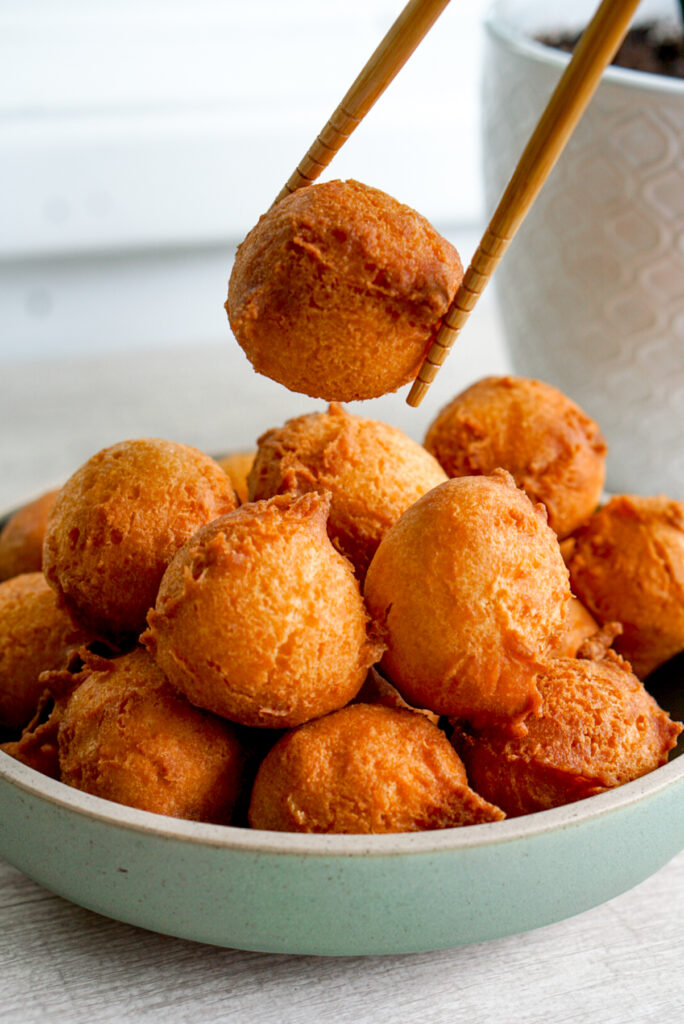
- Fry dango for 5 minutes, using chopsticks to flip them halfway through to make sure they fry evenly.
- Transfer dango to a wire rack to cool. Dango taste best fresh but can be kept in an airtight container at room temperature for a few days.
Notes
- This style of sata andagi is the way many Japanese Americans make them for our Obon festivals. Original recipes from Okinawa use local ingredients. This recipe uses ingredients local to Americans at time of Japanese immigration in the late 19th and early 20th century.
- Recipes from Hawai’i often use evaporated milk rather than whole milk, but either works.

I’ve spent my whole life in Hawaii and growing up, we all called this Okinawa dango, so it’s not just in California.
Hi BJ, thanks so much for that info! That makes so much sense – I always felt like it was weird and unusual for California to have an isolated term when we use the same names as Hawaii for almost all our other JA food. My friends from Hawaii who never heard it called dango are from Maui, Oahu, and Big Island but are all born 1985 or later, so I’m wondering if it has to do with generational language differences too. Someone at UH needs to do a research study on this!
I am going to try making this for my Okinawan wife who passed for obon.
Thank you so much for posting this recipe! My Mom (who was from Okinawa) died eighteen years ago and so did her recipe since she never needed to write it down.
So this has extra special memories for me.
Aw, thank you for commenting Susan. I hope this recipe brings you new good memories.