

Obon Style Fried Wonton Recipe (Hawaii Crispy Gau Gee)

These deep fried beef wontons are sold at almost every Obon festival in California. Originally a Chinese-Hawaii fusion food called crispy gau gee, every Japanese American family has their own fried wonton recipe. They usually make an appearance at special occasions and parties.
*Disclaimer: This post contains affiliate links.
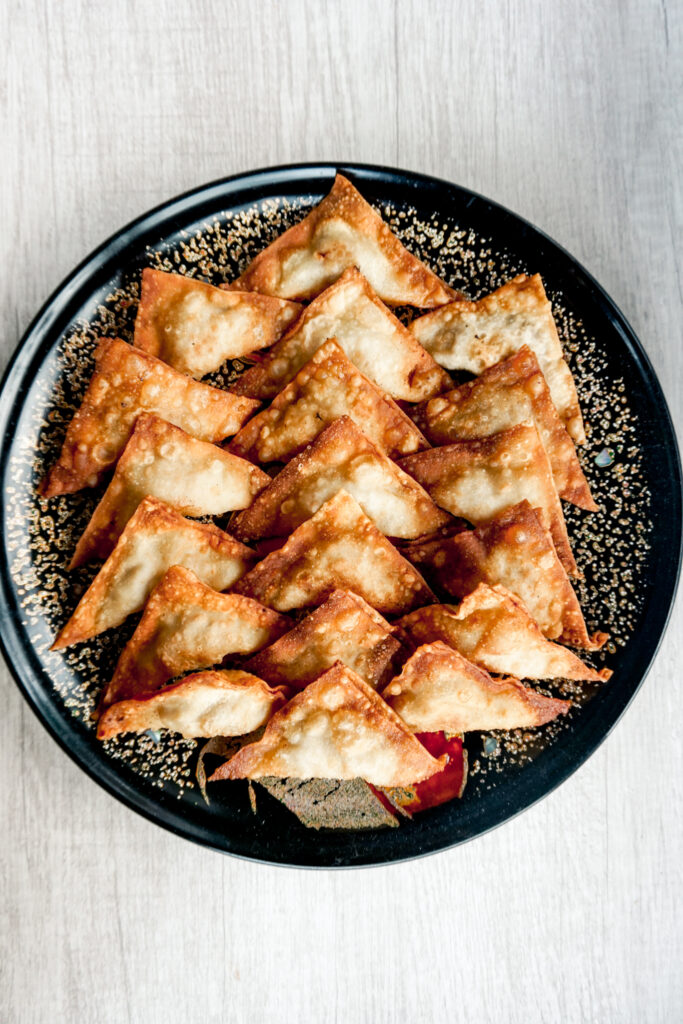
I love fried beef wontons. These deep fried delicacies are sold at Japanese Obon festivals in California every summer, and every Japanese American family I know has their own wonton recipe. My grandma used to make these for family gatherings, especially at New Year’s. Fried wontons are not necessarily traditional oshogatsu food, but it is a staple for Japanese American families. My grandma passed away last year, but thankfully I have relatives who remembered how she made it. And now I’m sharing it with you!
Are Fried Wontons Authentic?
My whole life, I thought these deep fried wontons were Japanese. My Japanese grandma made them, and every Japanese American family I know made them too. You found them at every Obon festival throughout California.
But then one day, in my thirties, I asked friends who grew up in Japan, and no one had heard of fried beef wontons before.
Yep. IN MY THIRTIES. It took me over THIRTY YEARS to discover that this food was NOT actually Japanese.
After polling the internet on Instagram, I have discovered that these wontons are a derivative of the Hawaii food known as crispy gau gee! (Thank you Naomi for letting me know!) Apparently, crispy gau gee is another fusion Asian/Hawaii food originating from immigration to Hawai’i in the 1800s, and in this specific case, from Chinese culinary roots. You can find gau gee at “Chinese” restaurants in Hawaii but usually they’re folded in rectangles, not triangles. I had some blog readers from Hawaii insist that it has to be rectangles to be called gau gee, but other locals argued that it’s all the same. I don’t really have a preference either way because I ate this from a Japanese perspective. Given the large population of Japanese immigrants to Hawai’i, it’s no surprise then that many Japanese American families have adopted fried wontons as part of their cultural heritage.
Fried Wonton Filling
Okay, I know I have called these beef wontons, but actually my grandma used a mix of beef and pork. If you’re feeling lazy, you absolutely can omit the pork and use only beef. I have seen other recipes for this wonton that use only beef. Personally, I like the mix of meats, but maybe that’s just nostalgia speaking.
The other ingredients for the filling are green onions, a little soy sauce, and chopped water chestnuts. You CANNOT omit the water chestnuts! They are vital for adding the tiniest bit of crunch to each bite. You can find water chestnuts in cans in the international aisle of many grocery stores, but of course Asian grocery stores will have them too.
How Many Wonton Wrappers Will You Need?
Oh, the question that haunts me every time I make dumplings.
I use store bought wonton wrappers, and there is no shame in that. You can buy them refrigerated in packs of 40 or 50. It chagrins me to no end that I usually use one pack and then have to open a brand new pack just to use 4 or 5 to finish using up my filling. If you’re better at stuffing your wontons, you can probably get away with just one pack. Which brings me to my next point…
How To Fold Fried Wontons
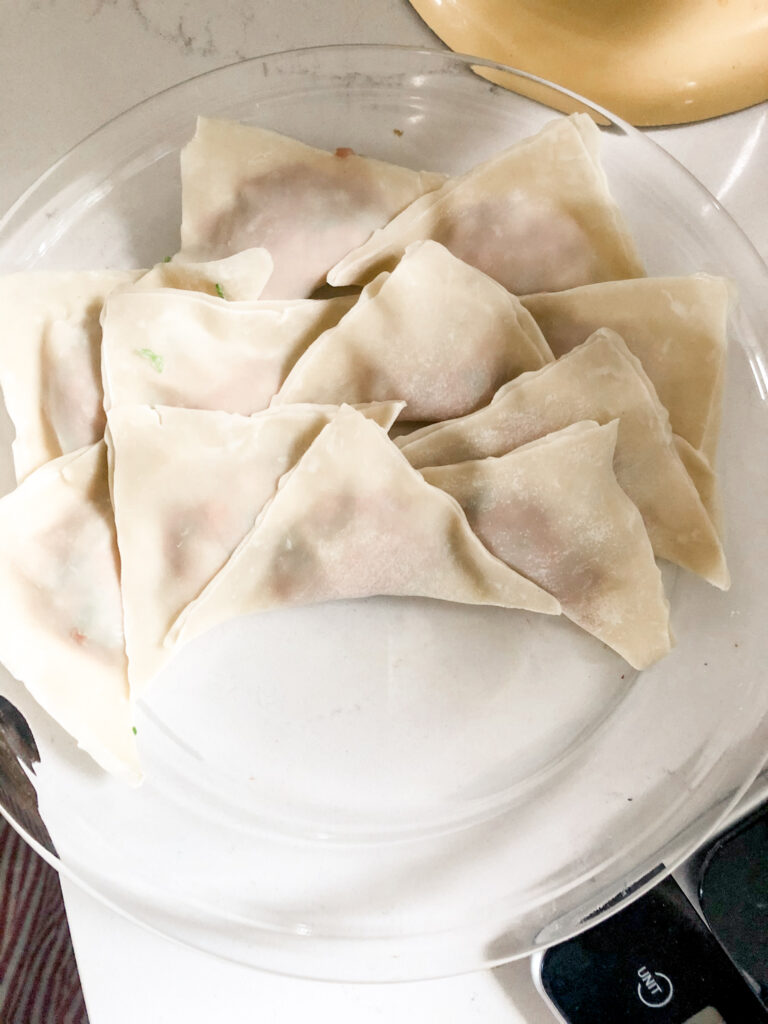
Plop a little teaspoon of filling in the middle of the wonton wrapper. Wet the edges with water. Then, fold into a triangle and press down to seal. THAT’S IT. It is not fancy. But every single Japanese American family I know does it this way. I have never seen them folded any other way at Obon.
This is The Way. *imagine photoshopped pic of Grogu aka Baby Yoda holding a fried wonton here*
By the way, make sure you get wonton skins, which are square, and not gyoza skins, which are circles.
Easiest Way to Deep Fry Wontons
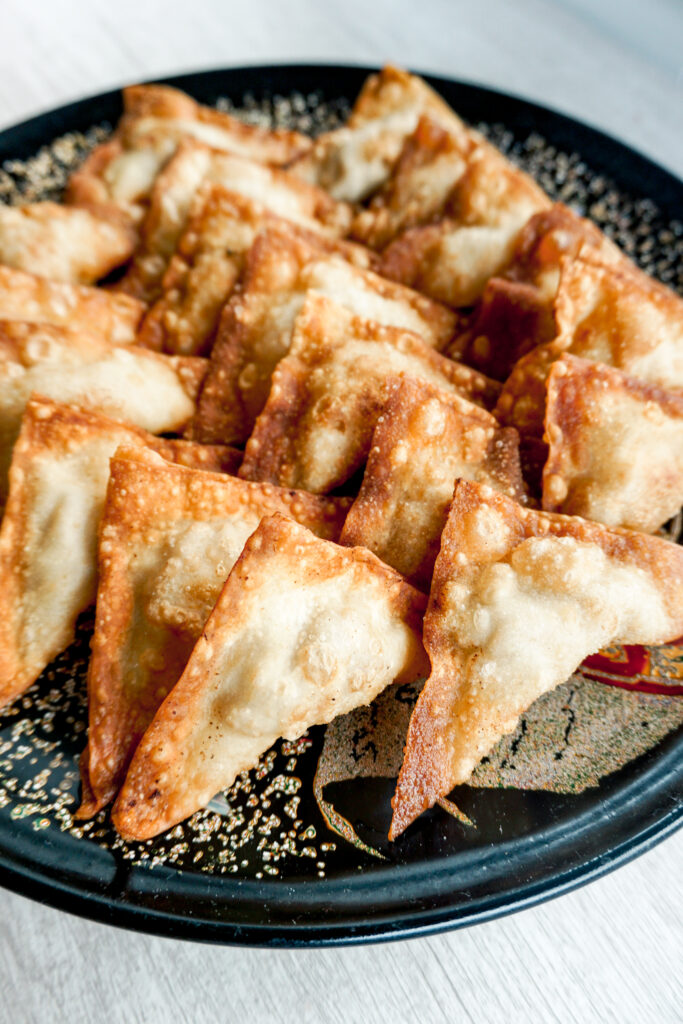
Hopefully you’ve enlisted all your relatives to help fill and fold your wontons, so you’re ready to fry lickety split. Hopefully you are reading this and it is no longer a pandemic, and you can actually have relatives over at your house. Anyway.
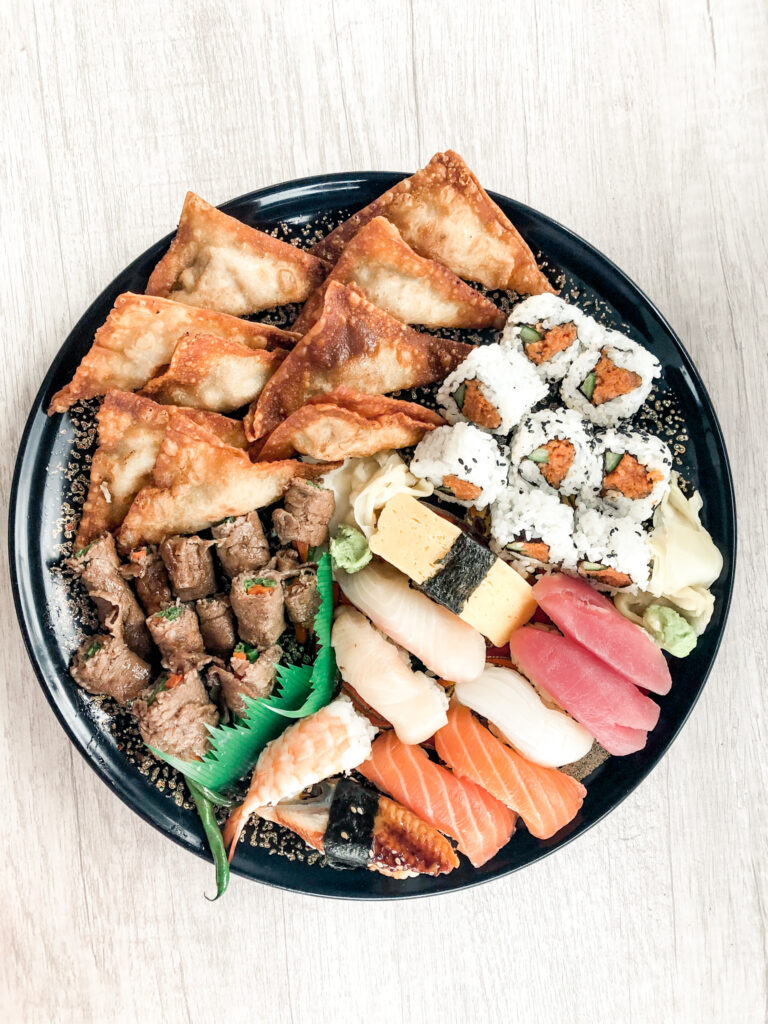
I use a 12-inch Lodge cast iron skillet and pour about 1-2 inches of oil in. I love the cast iron skillet because it has lots of room to put wontons in, but it also has really deep sides so there’s minimal splashing. Heat the oil to 350 degrees F and use a digital thermometer to monitor the temperature. Somehow my grandparents were always able to perfectly deep fry without thermometers, but I don’t trust myself. Plop 7-8 wontons into the hot oil and fry for about 2 minutes on each side.
Boom! You’re done! Actually pretty easy, right?
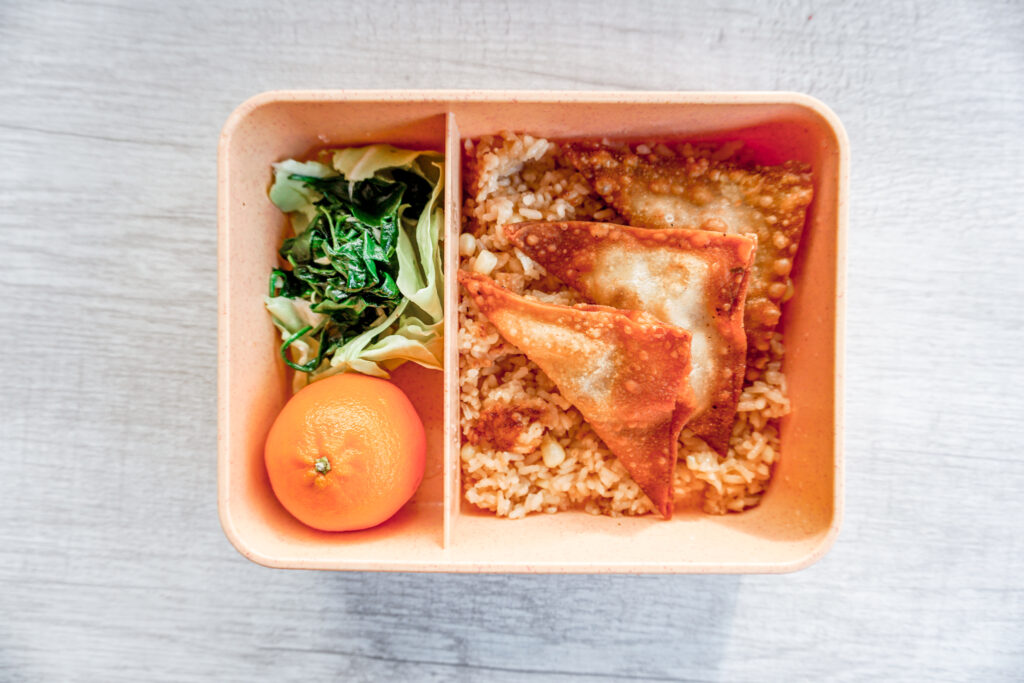
If you give these a try, make sure to let me know how it goes! Leave me a comment below or find me on Instagram and send me a message. I’d love to hear from you!
-Kristen
Looking for More Wonton or Dumpling Recipes?
Try these:
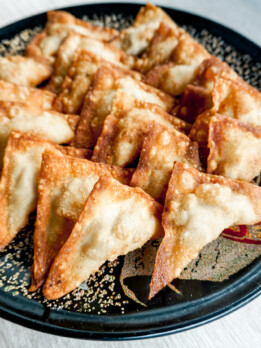
Obon Style Deep Fried Wontons (Hawaii Crispy Gau Gee)
Ingredients
- 3/4 lb ground beef
- 1/4 lb ground pork
- 1 5 oz can water chestnuts, drained & finely chopped
- 2-3 stalks green onion, finely chopped
- 1 tbsp soy sauce
- 1-2 packs wonton wrappers
- water for folding wontons
- oil for frying
Instructions
- Finely chop water chestnuts and green onions.
- In a large bowl, mix water chestnuts, green onions, pork, and beef. Add soy sauce and mix well.
- Take one wonton skin out of the pack. Using your finger, wet the edges of the wonton.
- Scoop about a teaspoon of filling into the middle of the wrap and fold like a triangle. Press the edges firmly to seal.
- Finish wrapping the rest of the wontons until all the filling is gone. If you stuff your wontons well, this will only take one pack of wonton skins, but I often go over by about 3-5 wontons.
- When ready to fry, heat up oil in a deep skillet or wok to 350 degrees F.
- Fry wontons until cooked through, flipping halfway through cooking. This takes me about 2 minutes per side. I can comfortably fit about 7-8 wontons in my 12 inch cast iron skillet.
- Line a serving platter with paper towels to absorb the leftover oil as the cooked wontons cool. Wontons can be enjoyed at room temperature, but keep leftovers in the fridge.
Thanks for sharing. You are amazing. 🙏🏼
YOU are! Thanks for reading, Michelle!
Pingback: Authentic Broiled Sushi Bake (Pan Sushi) | Mochi Mommy
I was trying to explain these and I came across your blog. My grandma would literally make hundreds of these for any occasion. I could eat as many as 20 pretty quickly! Any Japanese American will know these immediately.
Yes! It’s not a Japanese American party without these little fried triangles spread out across the table!
Woohoo finally I have found the recipe from a childhood favorite. When a friend of the family got out of the military he brought home his Japanese wife Hiroko, she loved to fish with my father and eat the catch fresh, the whole family loved her. On new years she would make fried beef wonton by the hundreds and still we couldn’t get enough. Thank you for sharing can’t wait to try these.
My grandmother’s name was Hiroko as well! It must be a sign. Hope it lives up to your childhood memories!
We’re Japanese American too and my Grandma would make these! My mom taught me and now I’m teaching my kids. So yummy and such a great comfort food!
Same! This is my grandma’s recipe, although my mom prefers using sausage meat for more spiced flavor in hers. Happy New Year!
Pingback: Furikake Chex Mix Recipe - Mochi Mommy
Pingback: Meat Jun Recipe (Korean Marinated Steak from Hawai'i) - Mochi Mommy
Pingback: The Best Beef Teriyaki (Japanese American Family Recipe)
Can’t wait to make this! I’ve been looking for a recipe. Can you assemble and freeze them?
Hi Kristi, you should definitely be able to in theory but I haven’t done it myself so I can’t say exactly how much longer you would need to fry it from frozen.