

The Best Ube Butter Mochi

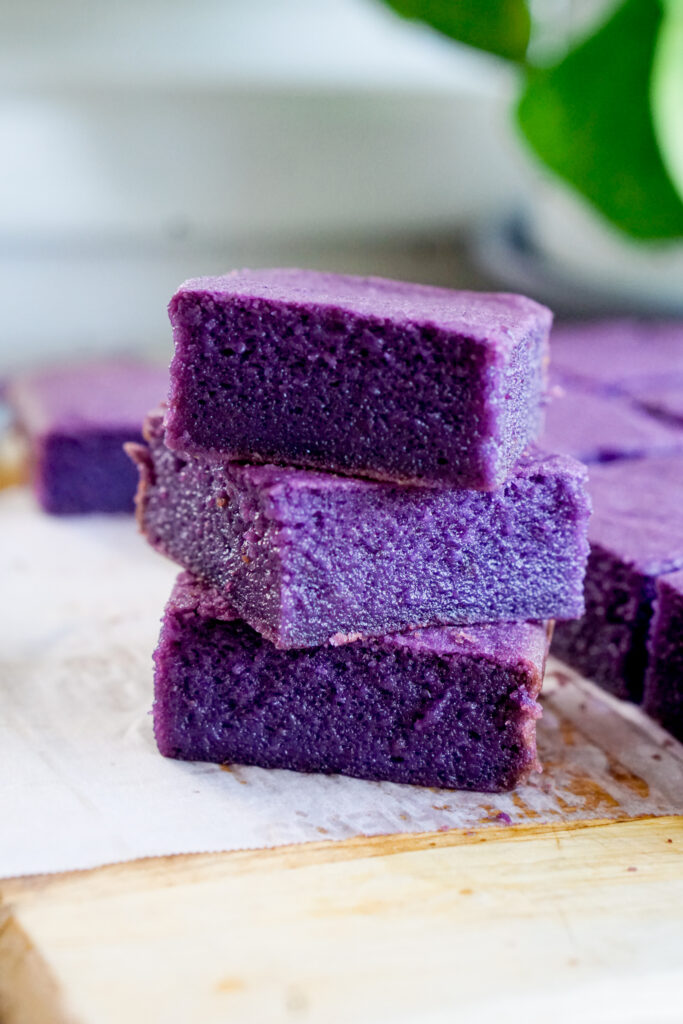
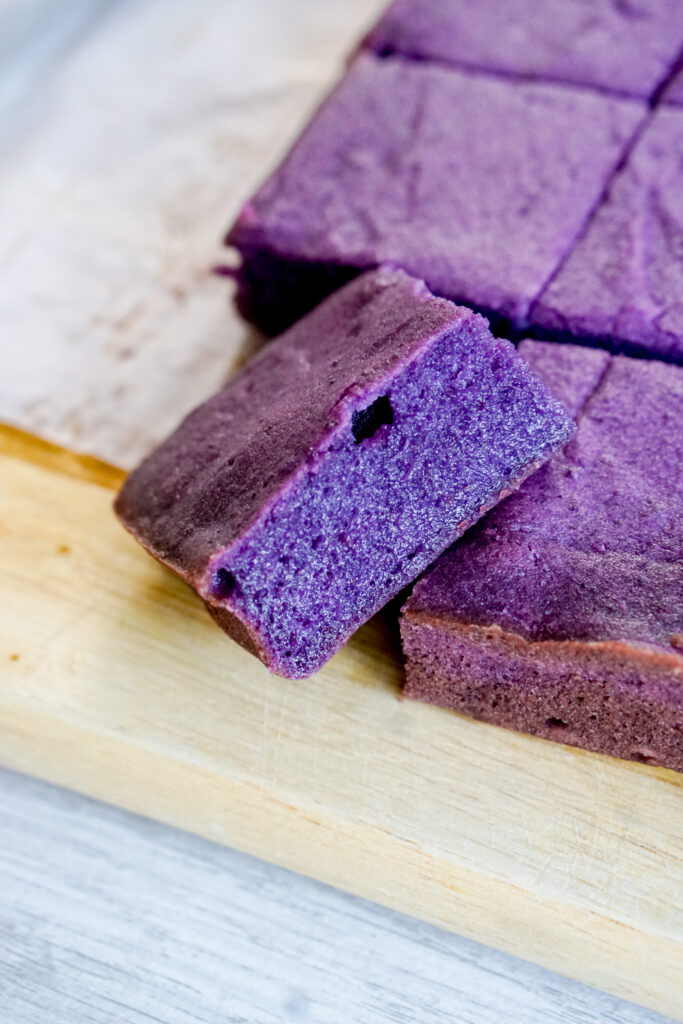
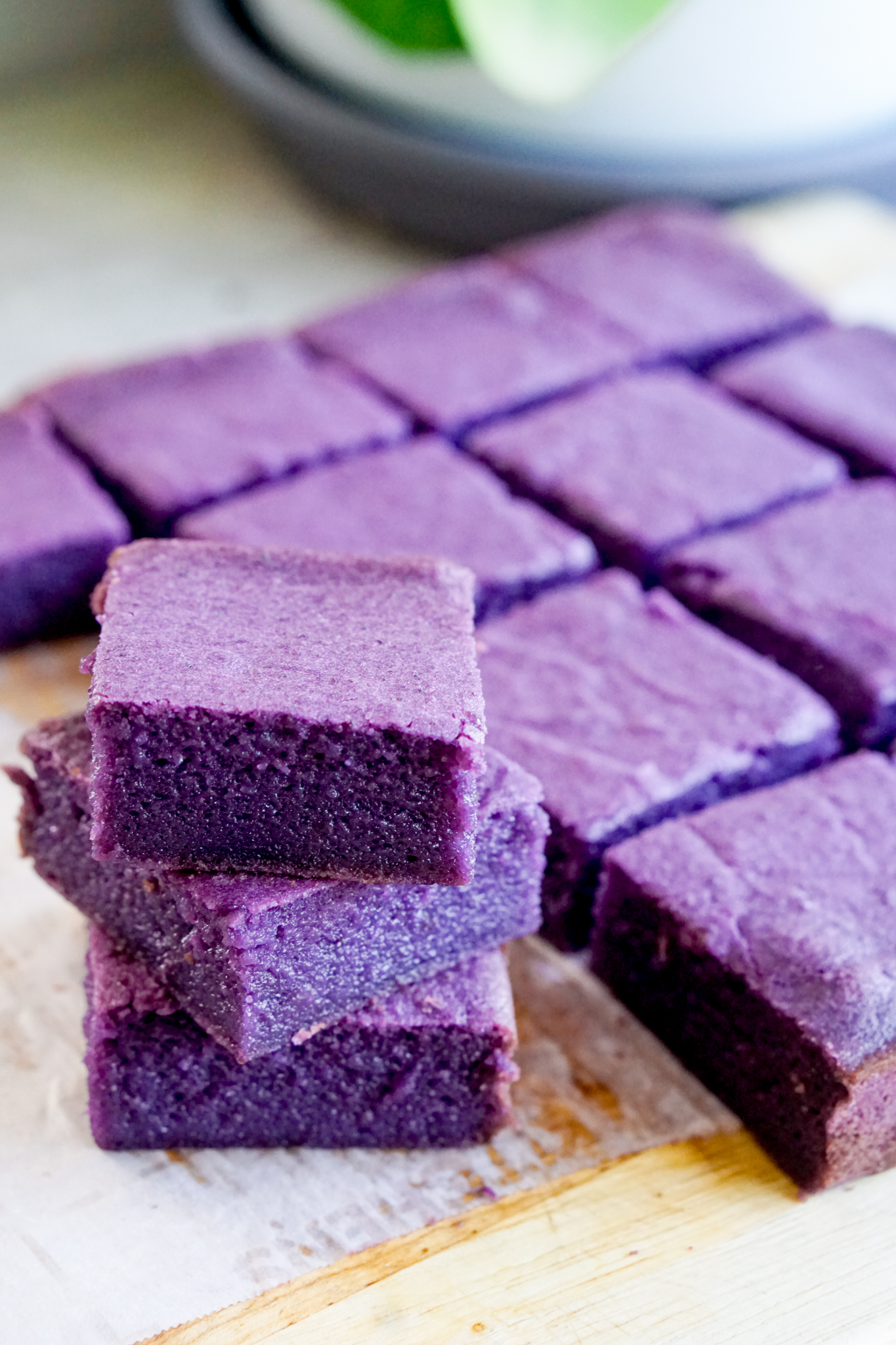
Add ube halaya jam to Hawaii’s classic butter mochi to make ube butter mochi! This butter mochi is so easy to make – just mix all ingredients together and bake.
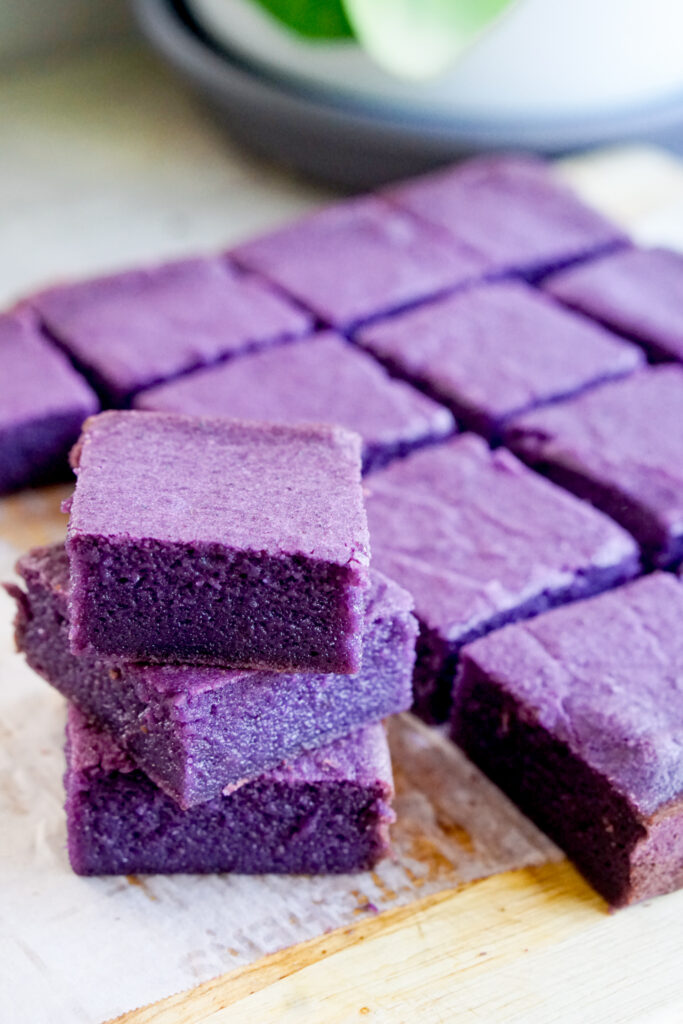
I have a lot of butter mochi recipes on this blog, but this ube butter mochi is one of my most popular among my friends. My friends from Hawai’i even asked me for the recipe, so I feel pretty confident about sharing this one with you.
Actually, I developed this recipe at the request of another friend who recently came back from vacation in Hawai’i and said she had the best ube butter mochi there. So for those of us not fortunate enough to live in Hawai’i, this one’s for you!
What is Butter Mochi?
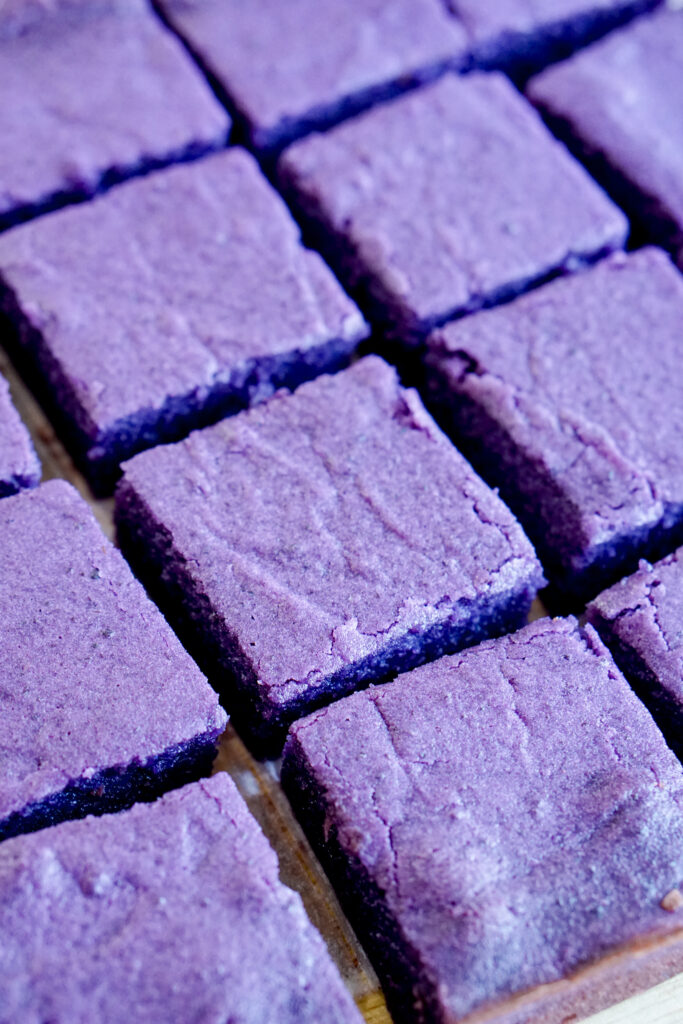
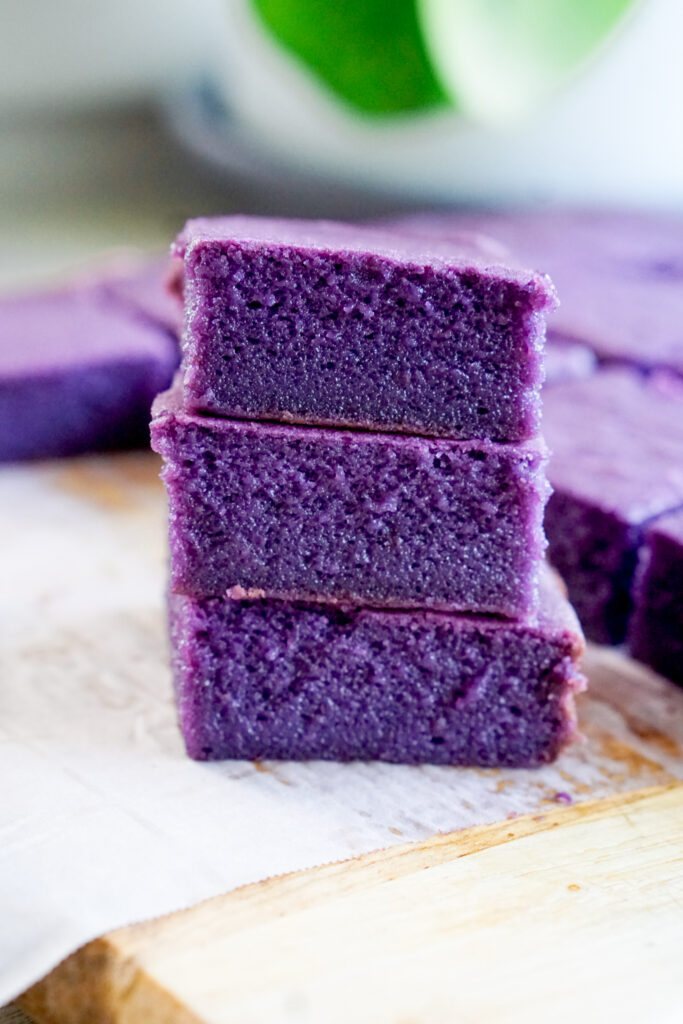
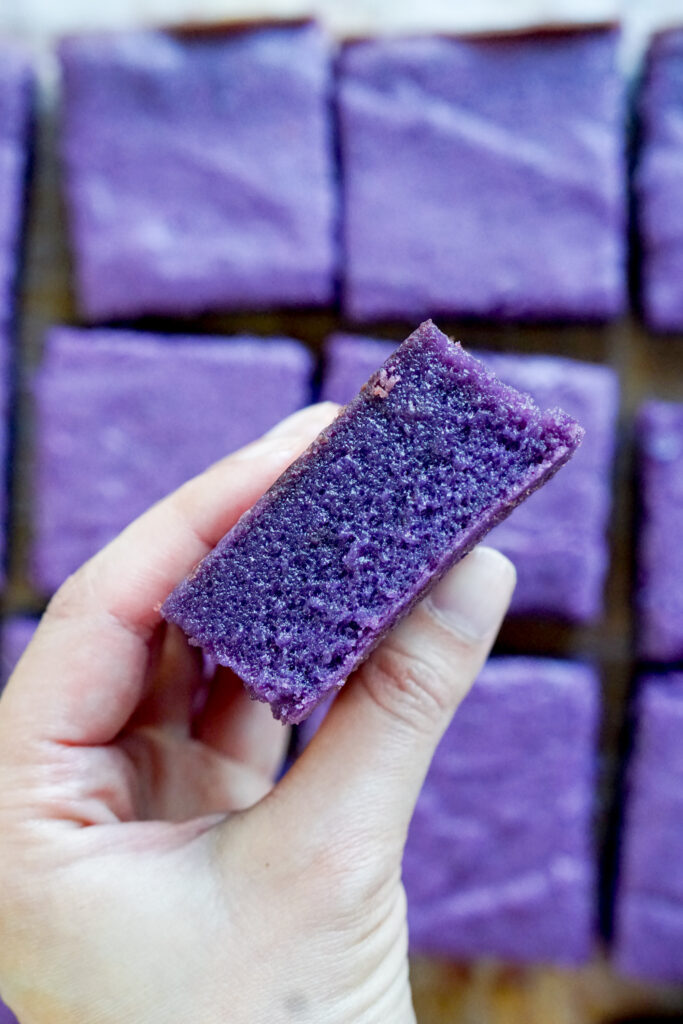
Butter mochi is essentially a mochi snack cake from Hawai’i. No one really seems to know for sure who invented it. It’s similar to the bibingka from the Philippines, but obviously it uses mochiko from Japan. In any case, you typically bake it in a rectangular dish and cut it into squares to share. Butter mochi is chewy, dense, and so so good.
What is Ube and Where to Buy It
Ube is a purple root vegetable with a mildly sweet flavor, similar to a sweet potato. Ube is from the Philippines and used frequently in desserts there. Recently, however, ube has become a very popular flavor among Asian American desserts. You can now find ube lattes, ube donuts… even Trader Joe’s sells a whole line of ube snacks (although they’re not that good, in my opinion).
For this recipe, I use both ube extract and ube halaya jam. Both of these are pretty well known ube ingredients and can be found at many Asian markets. While I would like to use fresh ube puree, fresh ube can be difficult to acquire in America. Plus, I heard there’s currently an ube shortage in the Philippines?! While I can get frozen grated ube or ube powder at markets near me, I know that’s not possible for many blog readers, so I developed this recipe with shelf stable ube jam instead.
If you don’t have an Asian market near you or can’t find ube products, there’s always Amazon, although it will be much more expensive. Alternatively, if you live near a major American city, you might have some luck using Say Weee grocery delivery. I’ve used them to buy ube halaya jam before, and I have no complaints. If you’d like, you can use my referral link for $10 your first order.
What Kind of Ube Extract to Buy
Ube Extract With No Artificial Dyes
In my recipe card below, I have linked the Butterfly ube extract, which works great. However, it does have purple food dye included in the extract. There are some cases where I don’t need so much food dye and I know some people avoid artificial dyes altogether. In this case, I recommend using the Harvest Moon natural ube flavor extract. They use only 100% all natural flavoring and no food dye. (Please note, the extract is not vegan.)
How to Make Butter Mochi
Are you ready for this? Okay… to make butter mochi… you dump all the ingredients in a bowl, mix, and bake.
THAT’S IT.
Seriously, no fancy techniques or stand mixers or other equipment needed. Just stir it all in a bowl. Pour into a dish. Bake.
Butter mochi is SO easy. I often let my kids help me make it because it’s hard to screw up. If you’re a beginner baker, even you can do this.
By the way, I wrote my recipe to use exactly one jar of ube halaya jam and one can of coconut milk. You can easily double this recipe and bake it in a 9×13″ dish for one hour. In that case you would need two jars of jam and two cans of milk, but it also uses an entire box of mochiko. So if you hate leftover ingredients, that’s a good option for you.
More Butter Mochi Variations
Butter mochi recipes are in no shortage. I like to say there’s a butter mochi for everyone. If you want to see more, check these out:
- Classic Hawaii Butter Mochi
- Custard Mochi
- Chocolate Butter Mochi
- Matcha Butter Mochi
- Black Sesame Butter Mochi
The Best Ube Butter Mochi
Ingredients
- 8 oz mochiko, about 1 3/4 cups or half a box
- 3/4 cup sugar
- 1 tsp baking powder
- 1/2 tsp salt
- 1 12 oz jar ube halaya jam
- 1 14 oz can coconut milk, see note
- 4 oz butter melted, 1 stick
- 1/2 tsp ube extract
- 2 eggs
Instructions
- Preheat oven to 350 degrees F and grease an 8×8" baking dish.
- Mix all ingredients in a large mixing bowl, stirring well to ensure no dry lumps of flour remain.
- Pour into your prepared baking dish and bake for 45 minutes or until a toothpick inserted in the center comes out clean.
- Allow butter mochi to cool before slicing and serving. Leftover butter mochi will keep in an airtight container at room temperature for a few days.
Video
Notes
- You can double this recipe and bake it in a 9×13″ baking dish for one hour.
- I highly recommend using a digital kitchen scale to measure your mochiko. Differences in the amount of mochiko may result in differences in the thickness of your batter, which will affect bake time.
- For this recipe, I suggest avoiding the Trader Joe’s brand of coconut milk, which doesn’t have any thickeners and can cause the batter to become more watery.
- Different brands of ube halaya may be more or less dry, which may also affect your batter texture and bake time. Expect that more wet batters will take longer to bake.

Pingback: The Easiest Ube Latte - Mochi Mommy
Yummy! I made this for thanksgiving and it was a hit. I used only half the bottle of the halaya jam and 2 tsp of the extract. I used a little more then half the box, and it came out great! Thank you for the recipe!!
Looks great! I always wanted to find a good ube butter mochi recipe but so many seems to just use extract.
What brand of ube halaya would you recommend? I do live by some filipino markets but I know some brands may be better than others.
Also if I doubled the recipe for 9×13 pan, would I use 2 sticks of butter? Only asking because the other butter mochi recipes in 9×13 pans use only 1 stick of butter.
Hi! My favorite brand that I’ve used so far is the dragonfly brand. And yes, double the entire recipe, so that means 2 sticks.
Understood, Thank you!
If I want to cut them into squares and place each square into cupcake liners for a school event, will the mochi stick to the paper liners or should I dust the bottom and sides with cornstarch beforehand?
You should be fine without dusting unless you live in an extremely humid environment.
I made this last night, and we loved it! I’m wondering if it would work if instead of putting the batter in a pan, if you baked it like individual cookies. Have you ever done it? How does it come out? Thank you for the great recipe!
Glad you liked it! I don’t think this would work for cookies, but I do have an ube cookie recipe already posted.
I made my own ube jelly, so how much would I need of that instead of the jar? Still 12oz?
Yes, that’s what I would recommend.
Hi! Really excited to try this recipe! Was wondering if I could substitute the ube halaya with ube puree and if I would have to make any adjustments? Thank you!
Hi Sophie, you definitely could use ube puree! The only issue is that the puree may contain more liquid than the halaya. The recipe should still work out, but you may need to bake the mochi longer. The texture may also become more stretchy and gooey as opposed to cakey, if that makes sense. I would expect that it would still turn out delicious.
Thank you for the advice! I made these by substituting the ube halaya with an equal weight of ube puree and they did turn out a bit more gooey but were still delicious! Next time I might try adding a bit more rice flour but a great recipe 🙂
Looking forward to making this. One question – i noticed your other butter mochi recipes combine evaporated milk and coconut milk. Any reason to omit evaporated milk in this recipe?
Hi Sejal,
Thanks for considering this recipe! No specific reason to omit the evaporated milk; if you decide to double the recipe for a 9×13” pan, you can substitute a can of evaporated milk for one of the cans of coconut milk if you wish. Coconut and ube tend to go together well, which is why I used only coconut milk for the smaller batch.
Can i use rice flour instead? I can’t find here in Norway.
Sorry, it has to be glutinous rice flour, and preferably mochiko specifically. 🙁 you can try ordering online?
Would you recommend salted or unsalted butter?
Hi, all my recipes use unsalted unless otherwise specified 🙂
Made this yesterday for a work party. Followed the recipe and it was super easy to make. I measured out 8oz of mochiko and the brand of Ube halaya jam I used was Monika brand. For my conventional oven, 350F at 45 mins was not enough, I had to bake for around 1hour and 10 mins for the toothpick to come out clean. Everyone enjoyed it and said it was the best ube butter mochi they had! Thank you for the recipe!
Made this twice for my family now and they LOVE it. I plan to make it again.
Unfortunately, both times I’ve made it, the center doesn’t seem to cook thoroughly — I refrain from baking longer because the outside edges are bouncy already. I have forgotten my scale both times but measured out 1c 3/4c of mochiko. \
The only thing I can think of that wasn’t “correct” was the coconut milk — the can says 13.5oz vs. the 14oz in the recipe. I also put less sugar since my family does not like desserts too sweet.
Thanks for your comment, Rosanna! Can I ask what kind of baking pan you are using? I have had some followers tell me that the center didn’t set well when using disposable baking tins or ceramic dishes. I recommend using a light colored metal baking tin and continuing to bake until a toothpick put in the center comes out clean. The edges may be more crunchy, similar to brownies, but a lot of people really like brownie edges and may like mochi edges too!
Both times I have used a glass pyrex 8×8 pan. Will definitely try a metal pan next time and toothpick more in the center. Thank you so much for responding and providing insight. Everyone still loved it either way.
Funny, Rosanna. I saw your comment right after baking mine in the same exact dish and I had the same issue. I kept baking it for a total of 1 hr 10 minutes. No idea why this happens, just wanted to chime in and confirm a similar experience
Is the extract crucial to this recipe? I can’t find it locally and I’m dying to make this today 🙂
Hi Susanne! Without the extract you probably won’t get a strong ube flavor, but it would still taste good. You also aren’t likely to get a vibrant purple, but you could add purple food dye to achieve the same effect.
I have a cracked top, not smooth like yours. How do I fix that? Is my heat not even? Thanks!
Hi! Cracked tops usually mean the outside cooked before the steam from the inside could escape, so could be that your oven runs hot or your baking tin doesn’t distribute heat evenly. Overall, it shouldn’t change the taste of the mochi, though!
Hi! Can I use frozen grated ube instead of ube halaya?
I haven’t done that myself since frozen ube isn’t always available to me, but I think it should be okay. You can let me know if you do it!
Pingback: Purple Sweet Potato Cinnamon Rolls - Mochi Mommy
Followed the recipe exactly and it turned out perfectly! Absolutely love the flavor and texture! Thank you so much for helping to bring back memories of Hawaii and Japan!
Thanks for your review! So glad you liked it!
Pingback: Classic Local Hawaiian Butter Mochi Recipe - Mochi Mommy
Hello
How many days would this stay ok in an airtight container?
Hi, usually about 3 days with it still tasting great. Up to 5 days it will still be good but maybe starting to get stale.
I’m so happy that you have this website! I followed your recipe to the letter and the Ube Butter Mochi was Amazing!
I had a difficult time not devouring half the tin after it cooled a bit. Nothing like fresh warm mochi.
Next week I’ll try another one of your recipes.
Thank you very much Kristen. My best to you and your family.
Cheers, Shane
I have ube extract and ube powder. Do you think I could just add some powder and a little extra liquid?
Hi Liz, in order for flavor to come through, you’d probably need a lot of the powder. I find most of the flavor actually come sfrom the extract instead. I would recommend looking at my Classic Butter Mochi recipe – add the extract to there and maybe dust the top with the powder instead of putting it into the batter.
I don’t want to leave this a bad review because it is not the recipes fault… But the extract I had is from halo pantry brand and I did not use enough so I didn’t really taste any of the ube flavor. I do like the texture of this a lot more than ice cream mochi for example but because I did not have that vivid, yet gross tasting artificial die that always hurts my stomach, I used some naturally dyed powder and it was just not vivid enough to make a difference so when they went in the oven, they were basically the same color as the homemade jam and when they came out of the oven, they were completely brown and gray so they are not appealing to eat at all. I guess I would try making them again one day, but I try to avoid the fake dies when I can, but I don’t think there’s a way to make this pretty color without it. I know that you linked a brand for the natural extract, but it doesn’t really have good reviews and I didn’t have time to get it so I just used what I had but I so wish that you could get vivid colors without all the fake stuff. 🙁
Hi Arlo, yes, unfortunately it’s nearly impossible to get the vibrant purple color without artificial dyes. The brand I linked has an extract WITH dyes that I do not recommend as it ends up not a great color – I only use the version that’s dye-free. If you’re interested, you can try my purple sweet potato butter mochi recipe (which uses Okinawan potatoes and not ube). It’s not quite the same as ube and not quite as vibrant a purple but it doesn’t need any extracts or dyes.
Hi there, is it possible to omit the eggs?
Hi, I’ve not tested it without eggs, so I’m not sure how it turns out, sorry!
Hi there! I will be making this in a few days for a bake sale. I have just the regular glutinous rice flour that comes in green bags. Are they okay to use for this recipe? It’s also from sweet rice grains. I’ve been told that those and Mochiko are the same thing but I thought I’d consult with the recipe-maker. Thank you in advance. I’m looking forward to trying!
I’ve had some recipe testers tell me that substituting other glutinous rice flours changed the overall texture and they did not recommend it. I did not do it myself so I can’t say exactly what the difference was, but that’s what I have heard from others!
Howdy!
Ive made this recipe a few times, and it is very good. As a question – what should I add more of to make it dense/chewier (similar to the regular butter mochi recipe that you had)? More liquid like evaporated milk/coconut milk? Or more flour? Both?
Thanks!
Glad to hear that, Lyon! I haven’t done it myself, so I can’t say for sure, but yes, I would do a little of both. Probably the halaya gives it a more soft texture and the mochiko is what gives it the chewy texture.
I made this and I love it! Thank you! I might cook longer than 1 hour for my 9×13 because it looked thick and it’s very chewy
What do you think would happen if I used only 1/2 the jar (6 oz) of Ube halaya?
It would still bake okay but with less flavor, potentially.
Hi! Do you have a recipe using actual purple yams instead of the halaya jam? Thx
Hi Jojo, try my purple sweet potato butter mochi. Unfortunately, fresh real purple yams are hard to find where I live, but I can easily get sweet potato. That may be similar to what you’re looking for.
Hello! I just made this tonight for my wife after we stumbled upon this Taiwanese boba shop selling ube mochi cakes, so wanted to see if I could make them at home. I’d say it turned out great, but we definitely had to bake it for around 1 hour 10 mins for the center to be fully cooked, following the recipe provided. I used the dragonfly brand ube halaya and the butterfly brand extract, along with blue star mochiko so I’m not sure what may have caused it. I did measure by cup instead of weight, so that may have been a factor.
Just out of curiosity. What could we do to get that more chewy and dense aspect? Like the almost sticks to your teeth mochi feel (but not quite).
Hi Josh, usually that happens if there’s too much liquid. Could be that measuring by cups didn’t give you enough mochiko OR some brands of coconut milk are more watery than others. The Whole Foods brand of coconut milk has worked well for me.
For a very chewy mochi, you actually want to veer away from butter mochi, which is often more cake-like in texture. You may want to try a chi chi dango recipe, which can also have a variety of flavors.
My daughter has potluck party with her friends and she has no idea what to bring to the party. Me and my daughter found this online recipe, and we have all the ingredients and decided to try it, and we successfully made it. Thank you for the recipe ♥️♥️
Are you able to make these in individual portions for like a work potluck?
You can bake these in lined cupcake tins for individual portions if you’d like. I haven’t done it myself so I can’t say for sure exactly how long it’ll take, but I’d start checking around 15 minutes.
I make this often and it always comes out tasting so good, but how do you get your top so purple in the picture? Mine always comes out brown at the tops from baking. Thank you so much for the recipe. ♥️
Hi! It could be just a difference in ovens. If your heat source is at the top of your oven, you can try baking it on a slightly lower rack so the top doesn’t brown as quickly. Or you can try checking for doneness a little earlier. Let me know if you find something that works!
Amazing ube mochi brownie recipe! I’ve made this so many times and it’s a hit each time. People ask for the recipe and also request for me to make it!
That’s amazing! Thanks for taking time to leave your review!
Just made it for first time. Although the toothpick came out clean, it was mushy and uncooked in big areas. If I ever try it again, I would use a bigger pan. It was a major flop for me.
Aloha! If I made an Okinawan sweet potato halaya like here :
https://www.youtube.com/watch?v=YDvUjPGvI1I
which recipe (between this one and the purple sweet potato mochi) would produce a soft, moist mochi as opposed to a chewy one? I’ve found some ube halaya jars at my local store, but it looks like they have some questionable ingredients, which is why I’m going to make my own version with Okinawan sweet potato and no food dye. I know you’ll say to try both, but I’d thought I’d ask. Mahalo for your time and thank you for the recipes!
Hi! Hmmmm having not tried those recipes exactly, I can only give my best guess, but I would say using a halaya will more likely give you a soft texture rather than my straight sweet potato mochi since there’s added ingredients in the halaya that usually contribute to more moistness and fat. By the way, I also have an Okinawan sweet potato halaya recipe as well that uses coconut milk!
Hi! Do you have a recipe using frozen grated ube? I would love to try this way as I heard halaya jam is full of preservatives.
Hi Diem, I totally hear you about wanting less preservatives. I haven’t developed a recipe yet, although I recently was able to get my hands on some frozen grated ube, so it’s on my list. My issue is that the package of the frozen ube seemed to not contain as much as I would normally like to add to my butter mochi. You can try using my purple sweet potato butter mochi recipe and substituting an equal weight of the ube instead of sweet potato. I would say that the Dragonfly brand of halaya that I have been buying is made almost entirely out of ube without preservatives, although it does have added food coloring.