
Easy Pumpkin Ghost Mochi
Making a pumpkin ghost mochi is easier than you think with this modified Japanese daifuku recipe. It’s naturally gluten-free and vegan. Time to have a spooky and chewy Halloween!
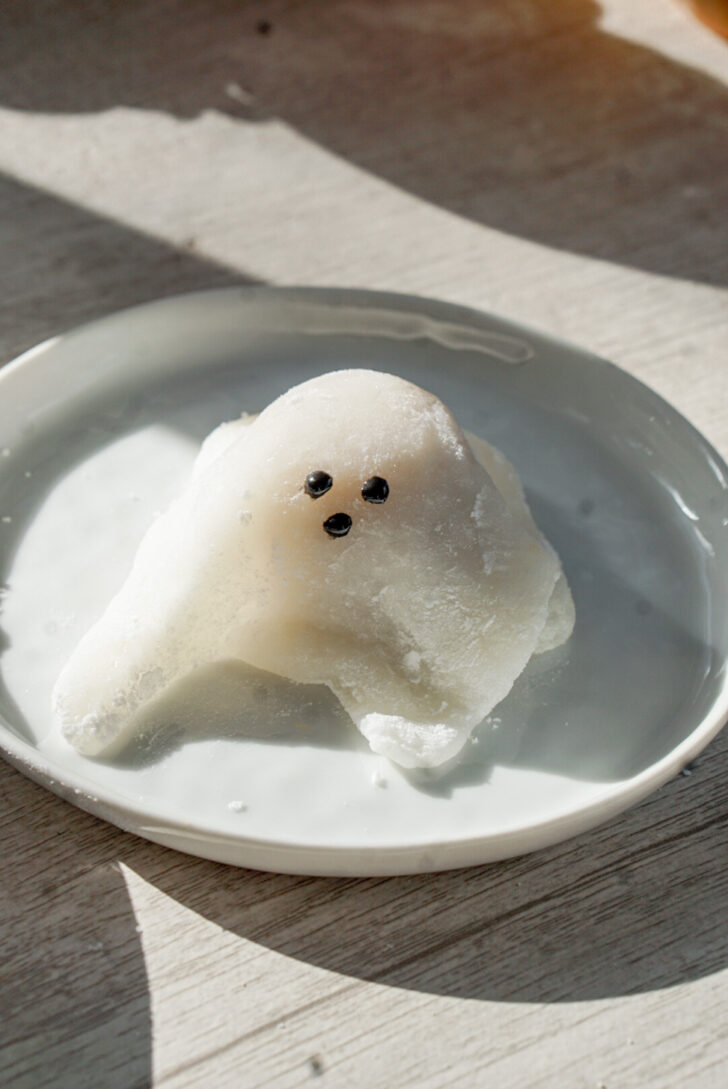
I am a strong advocate for serving mochi at every holiday. After all, the world of mochi confections is so vast and so crucial to Japanese culture, of course I should carry that over to my Japanese American life. But how to marry the respectability and reverence of traditional Japanese wagashi with kitschy American holiday decor??
The answer is clearly ghost mochi.
I first saw this idea for pumpkin daifuku on Nana’s Green Tea’s instagram:
Nana’s Green Tea is a popular matcha cafe from Japan that (praise the Lord!) has two locations in the Seattle area. When I saw their pumpkin daifuku, I knew I had to try my own version. And here we are!
What is a Daifuku? Daifuku vs. Mochi?
First things first, let’s clear up some terminology. The traditional Japanese sweet consisting of a sweet mochi dough wrapped around a filling of red bean paste is called daifuku or daifuku mochi. In Japan, it’s usually not referred to as just “mochi.” Plain mochi in Japan is not sweetened and consists only of pounded rice.
In America, the terminology seems a bit looser, with anything containing mochi rice flour being called “mochi.”
Call it whatever you like, but technically this “pumpkin mochi” is a modernized version of “daifuku.” It has a pumpkin filling and a sweet mochi outer shell.
For more information on mochi in general, check out my Ultimate Guide to Mochi post.
Ingredients Needed and Substitutions
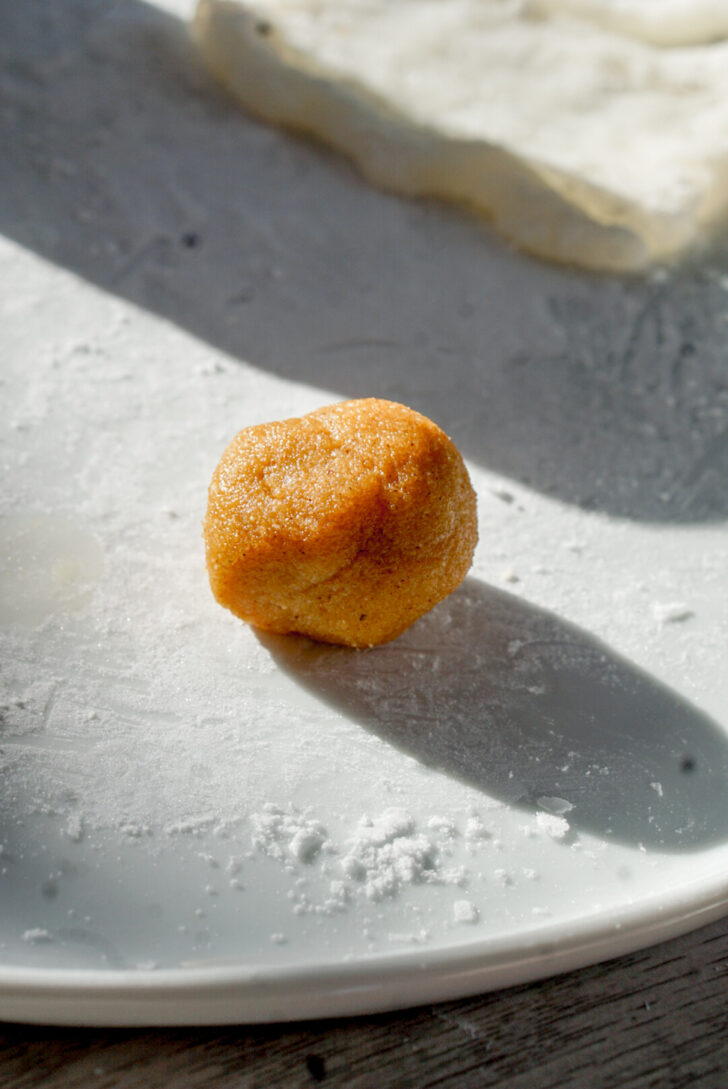
Please believe me when I say this recipe is so easy! The pumpkin filling is only powdered sugar, almond flour, and canned pumpkin puree flavored with a tiny bit of pumpkin pie spice. If you don’t have pumpkin pie spice, you can just substitute a little ground cinnamon plus a pinch of nutmeg or cloves or ground ginger or whatever you have lying in your cabinet. You don’t even need to cook the filling! It creates little pumpkin pie balls.
For the sweet mochi covering, which is called gyuhi, you need shiratamako, sugar, and water. That’s it. Some katakuriko (potato starch) for dusting.
Shiratamako is a type of glutinous rice flour that results in a very soft and tender texture. For a substitute you can use mochiko, which is cheaper and more easily available in US grocery stores. But if you do have shiratamako, I recommend it for a super stretchy bite. Please do not substitute other glutinous rice flours or plain rice flours, as you’ll get a very different end texture. P.S. I linked some of my commonly used ingredients in my shop if you need to see what the packaging looks like.
If you don’t have katakuriko, you can substitute cornstarch, but I prefer the katakuriko taste and texture.
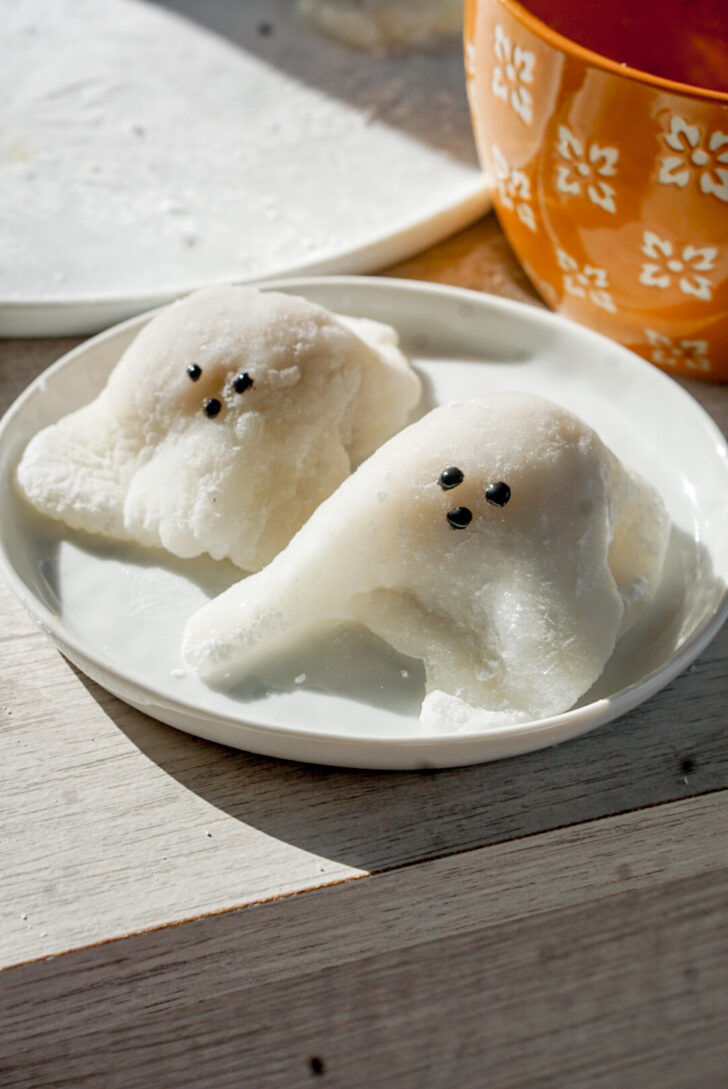
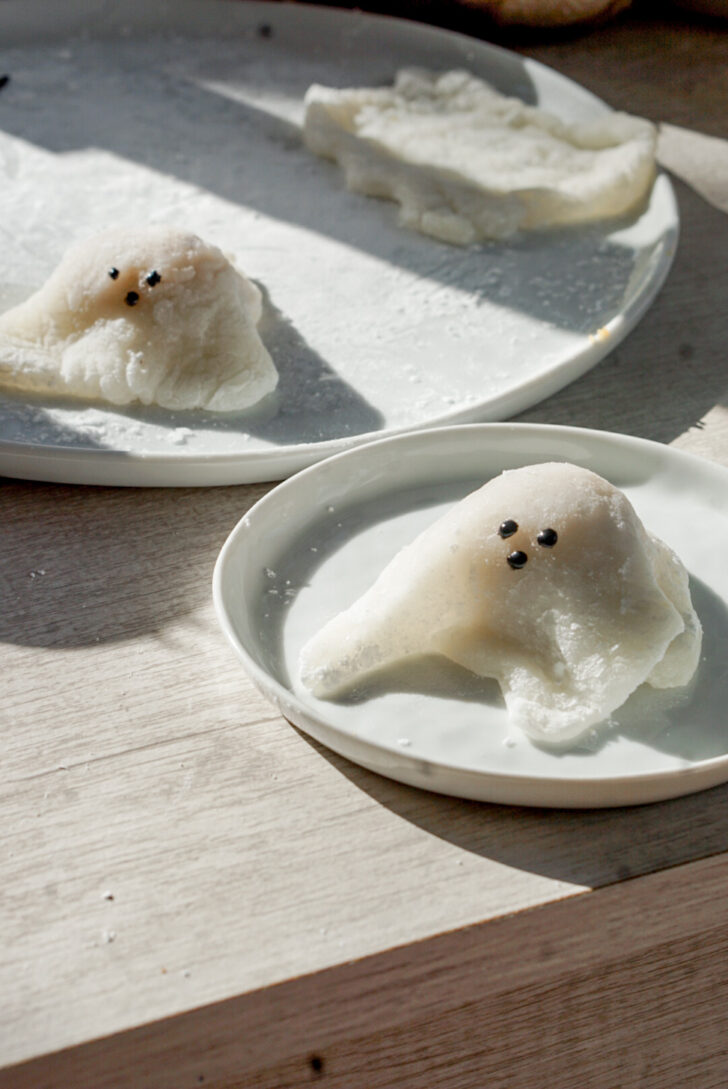
Lastly, to make the ghost face at the end, I simply dipped the end of a toothpick into black sesame paste and drew on the face. If you don’t have black sesame paste, you can use melted chocolate instead.
Why Don’t You Use Cream/Butter/Milk In Your Mochi?
Did you know – Japanese confections were historically vegan with the exception of some dishes that included eggs? Of course, modern mochi confections can include some whipped cream, even in Japan, but they are very clearly seen as fusion-y foods.
I try to keep my mochi recipes vegan when I can to maintain that same traditional taste. I find that adding dairy products significantly changes the taste and makes these desserts taste less “Japanese,” if you know what I mean. So I reserve adding dairy except for when I’m deliberately making a modern or Western flavor, like my chocolate daifuku.
Obviously a pumpkin ghost mochi is NOT traditional, so there’s really no need for strict adherence to historical ingredients. If you’d like to make your pumpkin filling a little creamier, feel free to use cream cheese instead of almond flour.
For more modern mochi dishes that use dairy and other non-traditional ingredients, check out my butter mochi recipes and my chi chi dango recipes.
Mochi-making Technique
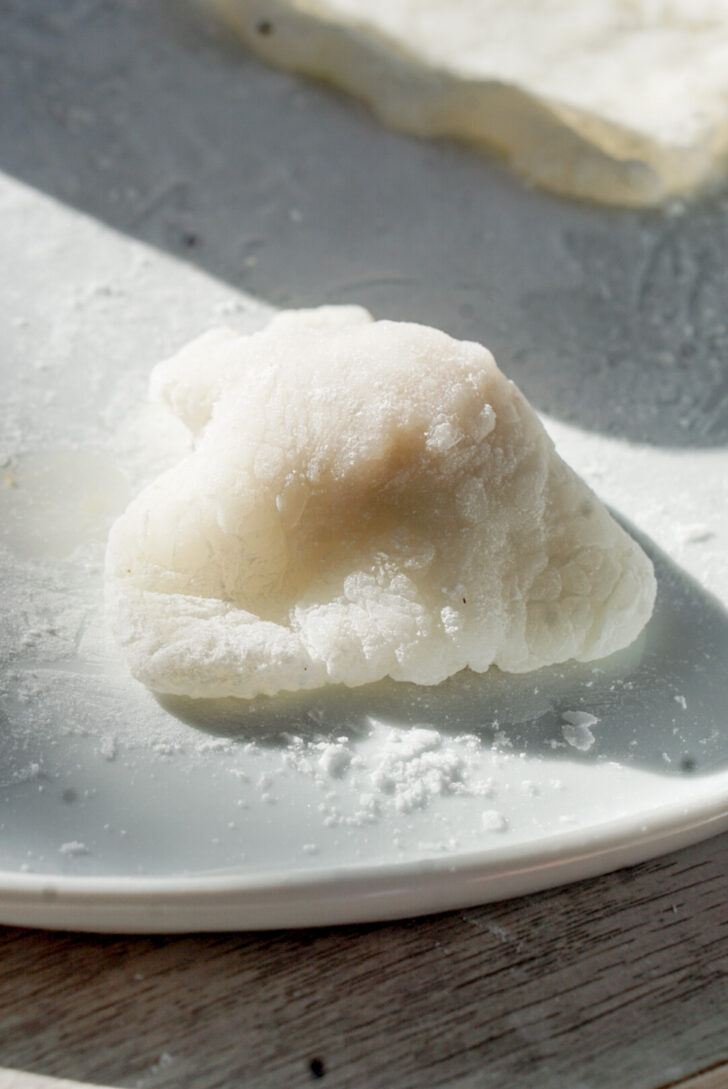
Normally to make daifuku, you wrap a hot gyuhi around a ball of filling, pinching the edges to form a sphere, similar to wrapping a round dumpling. Luckily, for this ghost version, we are emulating the look of a white bedsheet ghost. We don’t have to wrap the daifuku at all!
I make my gyuhi in the microwave. Simply mix all the mochi dough ingredients together, microwave until it’s cooked through, then flatten into three little sheets. Drape it over your pumpkin filling, add the face, and you’re done.
More Halloween Recipes
If you liked this recipe, check out these suggestions for filling out your Halloween menu:
- Pumpkin Butter Mochi
- Pumpkin Mochi Donut Holes
- Black Sesame Rice Krispies Treats
- Black Sesame Layer Cake
- Cakey Pumpkin Cookies with Cream Cheese Frosting

Pumpkin Ghost Daifuku Mochi

Ingredients
Pumpkin Filling
- 3 tbsp powdered sugar, 20g
- 1.5 tbsp pumpkin puree, 45g
- 6 tbsp almond flour, 40g
- 1/2 tsp pumpkin pie spice
Gyuhi (sweet mochi dough)
- 50 g shiratamako, a little less than 1/2 cup
- 12 g sugar, 1 tbsp
- 65 ml water, about 1/4 cup
- Katakuriko for dusting
Decorating:
Instructions
- For the filling, mix all ingredients together and roll into 3 balls.
- In a microwave safe bowl, mix shiratamako, sugar, and water. Microwave 2 mins.
- Transfer to surface dusted with katakuriko and divide into three portions.
- Flatten each portion into a thin blob, about 3 inches in diameter.
- Drape over each pumpkin ball and paint on faces with black sesame paste.
Notes
- You can substitute cornstarch for katakuriko if you wish.
- Feel free to double this recipe to make six daifuku with the same cook time. If scaling up any larger, I recommend microwaving the gyuhi in batches or using a larger dish and increased microwave time.
- I used almond flour to keep this vegan and gluten free, but if you’d like, you can use softened cream cheese instead for a creamier center.