
Grape Daifuku Mochi Recipe

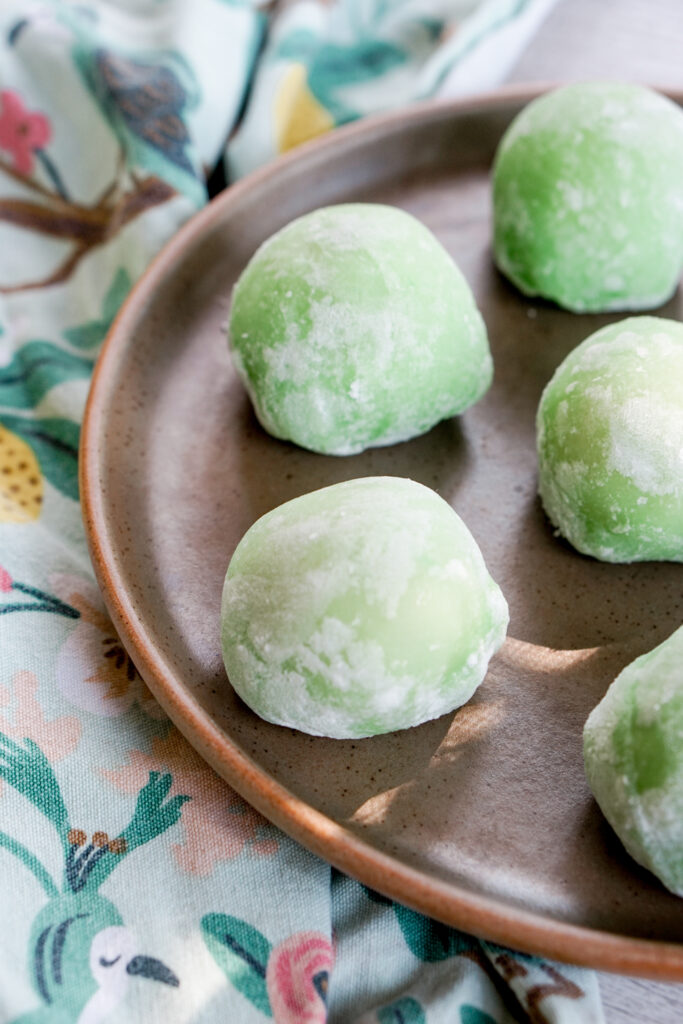
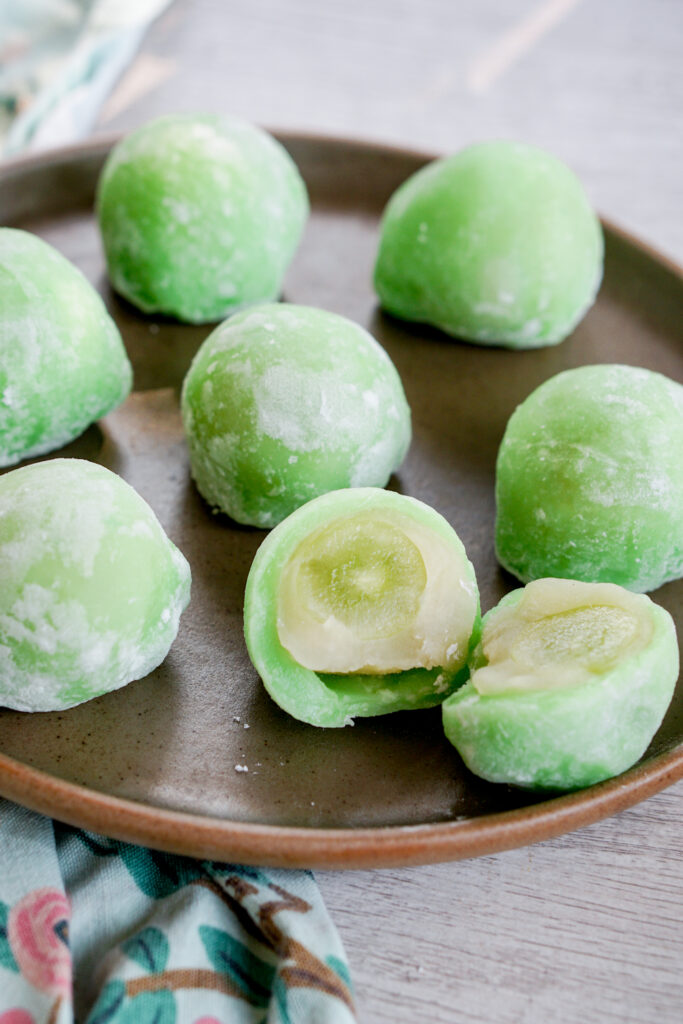
Grape daifuku is a fruity twist on a traditional Japanese daifuku. Balls of mochi (gyuhi) are stuffed with white bean paste and a green grape in the center! You can find these at certain specialty shops in Japan, Hawaii, and now in your own home!
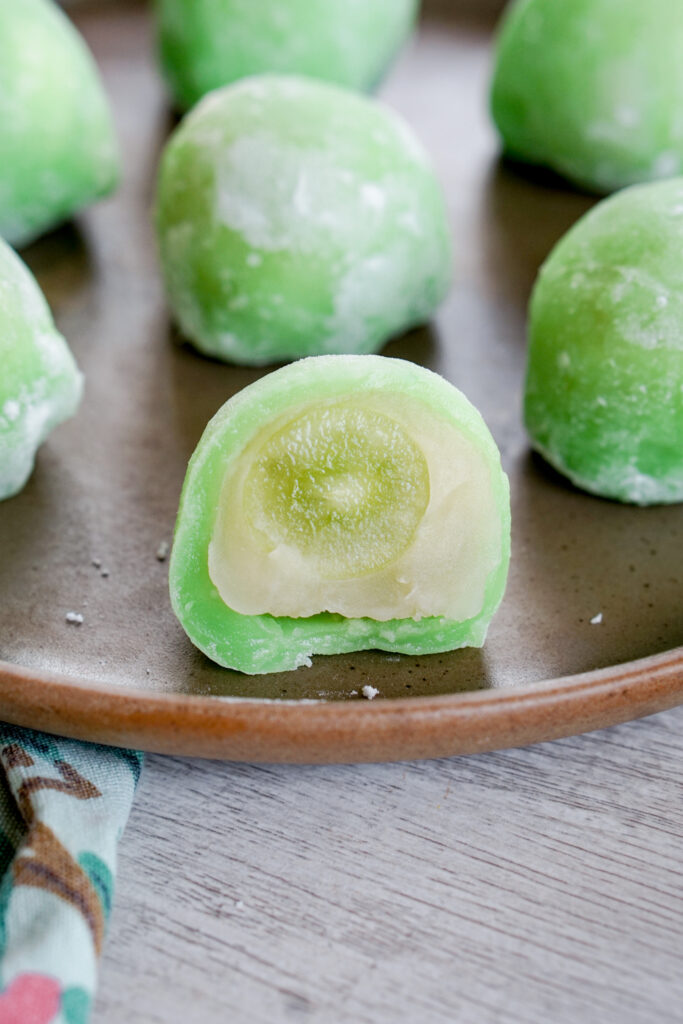
What is Grape Daifuku Mochi?
Did you know grape daifuku is actually a thing in Japan? Yep! The Okayama prefecture of Japan is known for their grapes. One variety they have in particular is the Shine Muscat, which is a HUGE, seedless green grape that’s super sweet. Seriously, muscat grapes can be up to 1.5 inches in diameter! That’s a perfect size for wrapping in mochi!
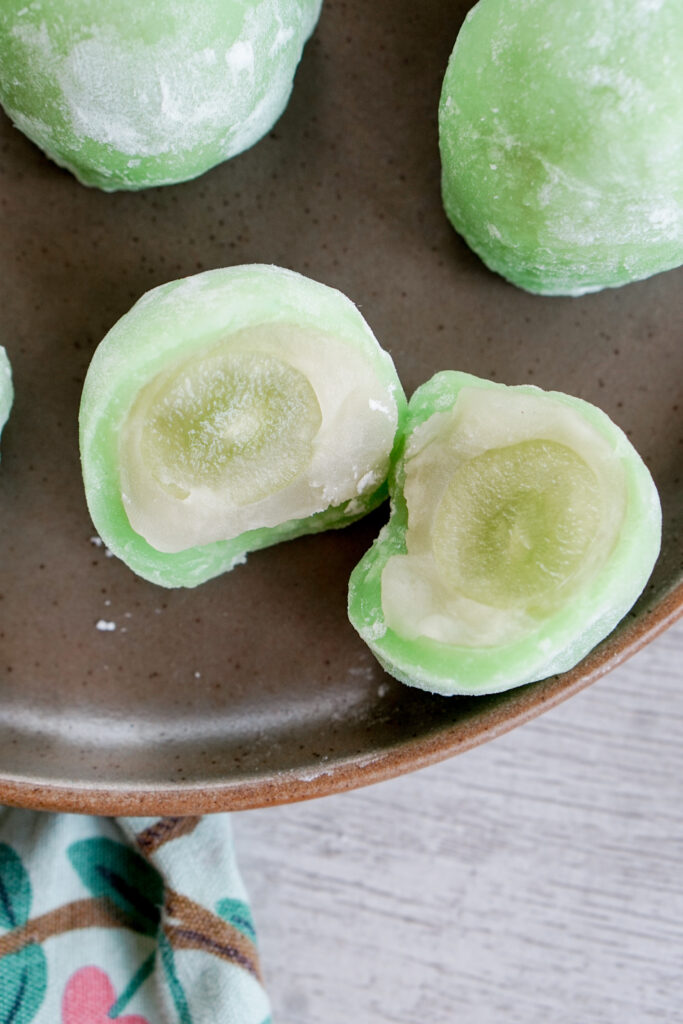
Outside of Japan, you can also find grape daifuku at mochi shops in Hawai’I, like Two Ladies Kitchen.
My grape daifuku recipe unfortunately does not use Okayama muscat grapes, as that would be VERY expensive to ship to me. Regular green grapes are a little bit too small for a typical daifuku, so I buff it up by adding extra white bean paste. If that’s not your thing, feel free to make smaller daifuku with thinner layers of bean paste.
Ingredients Needed for Grape Daifuku
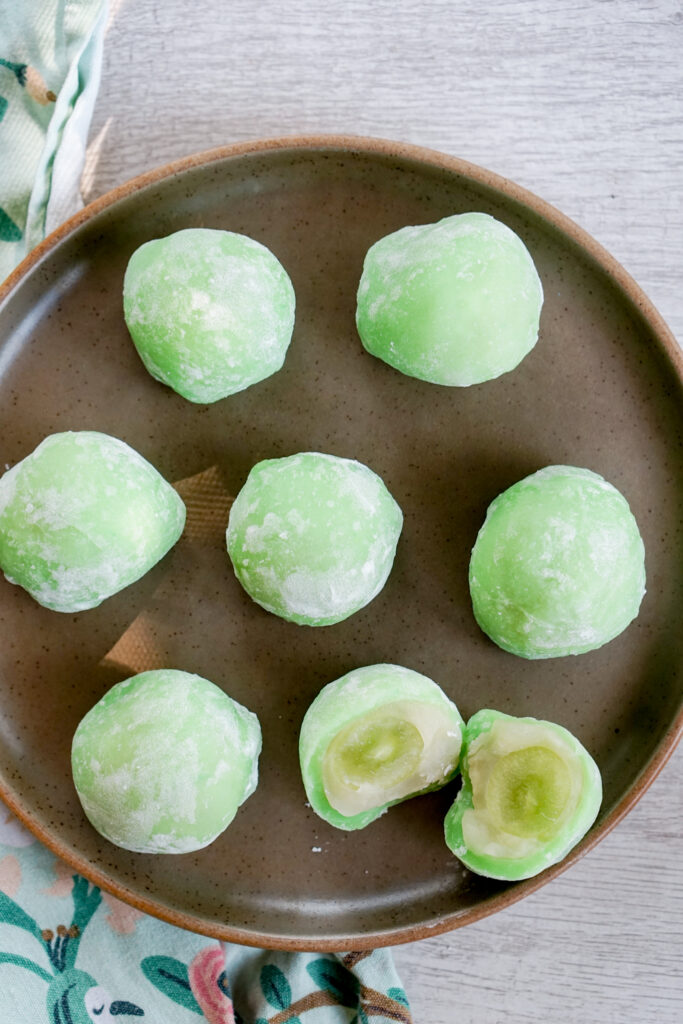
Obviously, you will need grapes. The bigger, the better. If you can get your hands on some muscat grapes and don’t mind shelling out some extra cash for it, go for it!
You will also need some glutinous rice flour, made from the same rice that you make mochi from. Although the most common version of this flour in the US is mochiko, I prefer using shiratamako instead. Shiratamako is ground differently from mochiko, even though they’re made from the same rice. The result is a much softer mochi…. But also a more expensive ingredient. If you don’t have access to a Japanese market near you, you can find shiratamako on Amazon. Feel free to substitute mochiko, though, if it’s too much of a hassle (or too expensive).
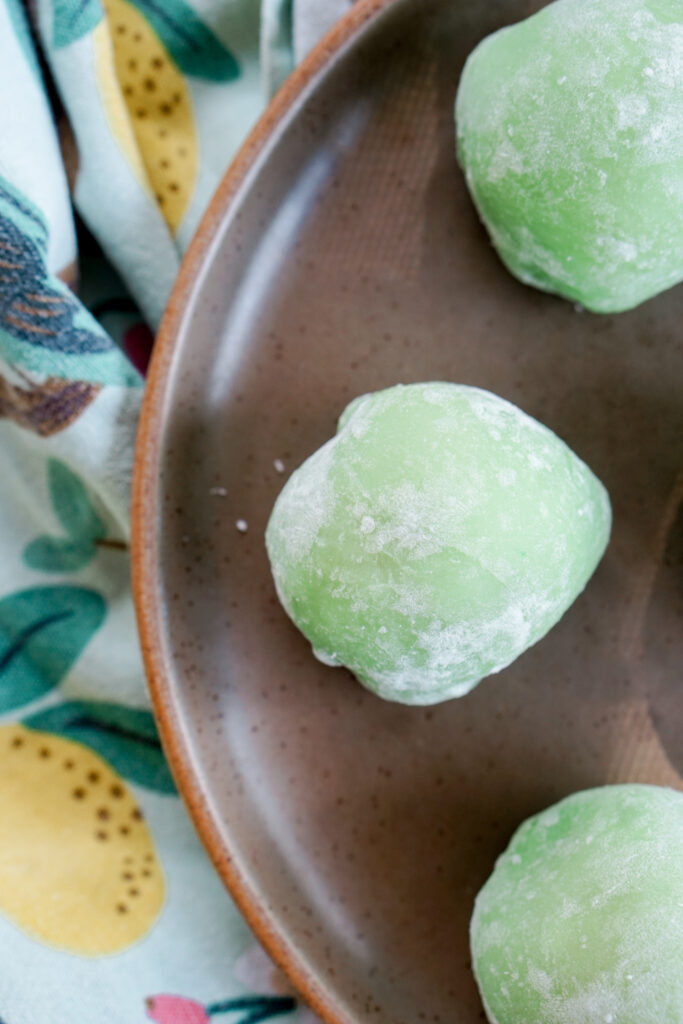
The last main ingredient you need is white bean paste. I buy mine from my local Japanese market. Unfortunately, I have not been able to find this on Amazon. If you can’t get your hands on white bean paste, you can substitute smooth red bean paste instead. Or you can try making it from scratch! I never do because I don’t have the time, so I don’t have a recipe, but you know the queen of Japanese food blogging, JOC, has a recipe that I’ll link here!
As for minor ingredients, I like to use a little food coloring to color my mochi dough, but this is totally optional. I also use katakuriko (potato starch) for dusting, so the mochi doesn’t stick everywhere. I know a lot of recipes say you can substitute cornstarch for potato starch, but I really don’t like the flavor when cornstarch is used. If you can, definitely try katakuriko.
How to Stuff Your Daifuku
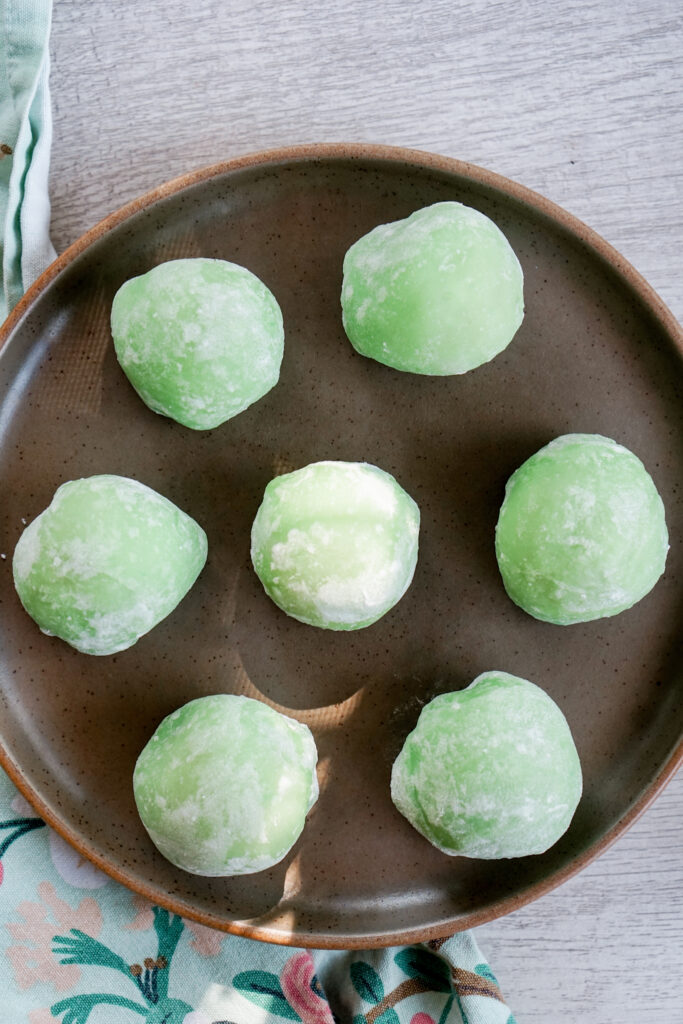
Thankfully, making daifuku with grapes is actually really easy! Just wrap each grape in a layer of bean paste (it’s not too sticky). After you’ve cooked your mochi, cut it into seven equal pieces and flatten each piece out with your hand or rolling pin. Place the wrapped grape in the middle, wrap the mochi over it, and pinch the edges to seal. The mochi should be sticky enough to seal the edges closed, and then you can dust it in katakuriko so it won’t stick to your hands or plates.
By the way, I always make my mochi for daifuku in the microwave these days. It’s so fast and easy! But if you don’t want to use the microwave, you can certainly steam it over the stovetop. I usually steam for about 15 minutes when making it that way.
More Daifuku Recipes
Interested in seeing what other daifuku and fruity mochi recipes I have? Give these a shot!
- Orange Daifuku
- Mango Daifuku
- Ichigo Daifuku
- Strawberry Marzipan Daifuku
- Mint Chocolate Daifuku
- Birthday Cake Daifuku
I hope you give one of these daifuku recipes a try!
Grape Daifuku Mochi
Ingredients
- 7 green grapes, the larger the better
- 180 g white bean paste (shiroan)
- 100 g shiratamako, can substitute mochiko
- 20 g sugar, 2 tbsp
- 100 g water
- 1 drop yellow and green food coloring, optional
- katakuriko (potato starch), for dusting
Instructions
- Divide white bean paste into 7 balls.
- Using your hands, stuff each bean paste ball with a grape, smoothing the bean paste over the sides.
- Set aside while you prepare the mochi.
- Add shiratamako, sugar, water, and food coloring (if using) in a bowl. Mix to combine.
- Transfer mochi batter to microwave safe bowl (I line my bowl with a damp washcloth) and cover well with plastic wrap, another dish, or other cover. Microwave for 2 minutes and 30 seconds.
- Carefully dump cooked mochi onto a surface lightly dusted with katakuriko. Divide into seven pieces. While you work with one piece, keep the others covered with a damp cloth so they don't dry out.
- Flatten one piece (either with a small rolling pin or your hand), and place grape/bean paste ball in the center.
- Wrap the mochi around the ball, pinching the edges to seal them. Dust in katakuriko and you're done! Daifuku should be eaten the day they are made.