

Easy Nikumaki (Japanese Teriyaki Beef Rolls)

Nikumaki are Japanese teriyaki beef rolls. Vegetables such as green beans and carrots are rolled into thinly sliced beef and marinated in a teriyaki sauce. After pan frying, nikumaki can be served hot or packed in a bento for later. I also love serving them as part of a Japanese New Year’s feast. These easy beef roll ups are a great Japanese dish for kids too!
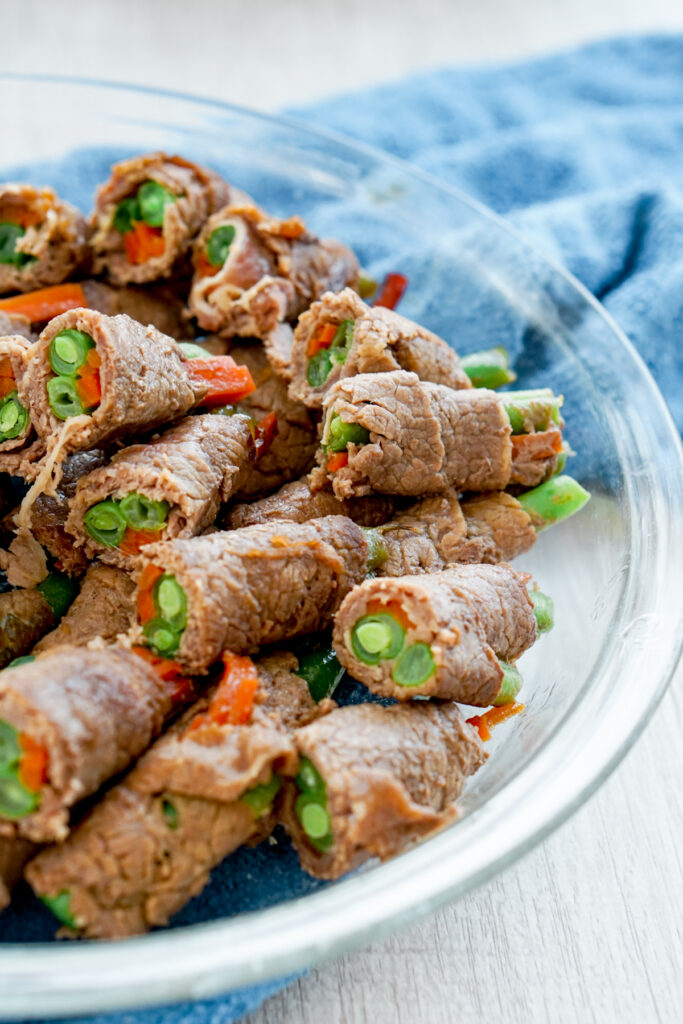
What is Nikumaki?
Have you heard of nikumaki? Or seen it before? I feel like nikumaki doesn’t get the same recognition as other Japanese dishes in America. And I get it… it’s not sushi and it’s not fancy looking. At first glance you wouldn’t necessarily recognize it even as Asian food. Afterall, things stuffed inside other things seems very…. American!
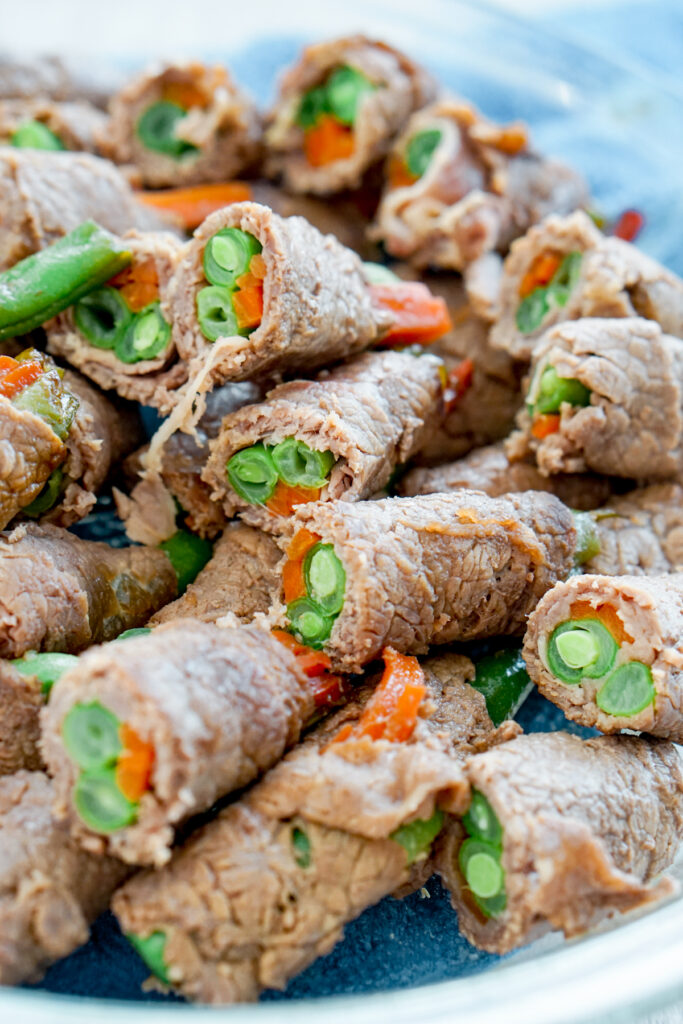
But that’s essentially what nikumaki is! The word niku means meat and maki means roll. So it’s a beef roll up! Nikumaki consists of vegetables that have been rolled into very thinly sliced beef and cooked in a teriyaki sauce. These teriyaki beef roll ups are then pan fried to perfection. They are often sliced in half for serving, so you can see the fun cross section of veggies inside. You can eat them hot, which is delicious, or you can put them in a bento and eat at room temperature. Or you can even eat them cold! Because they keep well, they’re a great Japanese food for packed lunches.
What Sliced Beef to Use for Teriyaki Beef Rolls?
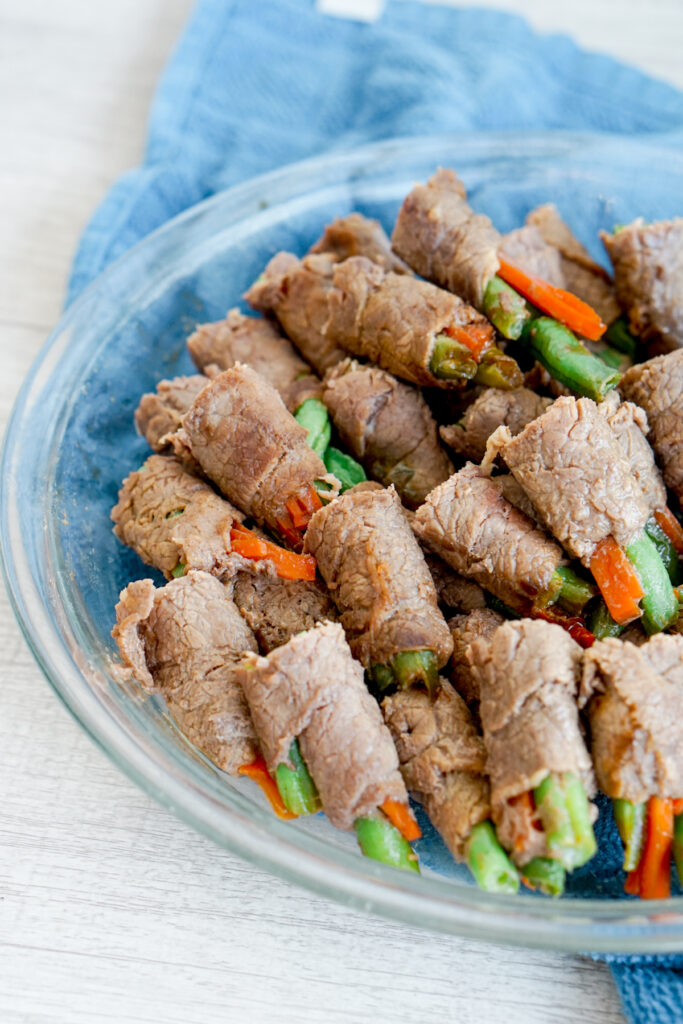
For this recipe, I use thinly sliced sukiyaki beef from our local Japanese market. Any thinly sliced beef used for Asian hotpots should work. Unfortunately, it’s hard to tell you exactly how much beef to buy, since the number of strips you get will depend on how thinly they are sliced. For me, I use about one pound of sukiyaki beef to make 20 rolls, but I always buy a 1.5 lb pack just in case. The leftover sliced beef can be used for sukiyaki!
What Vegetables to Use for Nikumaki?
You can use pretty much any vegetables you want. I always use green beans and carrots because that’s what my grandma did, so now it has nostalgia for me. I was a very picky eater as a kid (can you believe it?), but I ALWAYS ate my green beans and carrots when they were rolled up in teriyaki beef. Go figure.
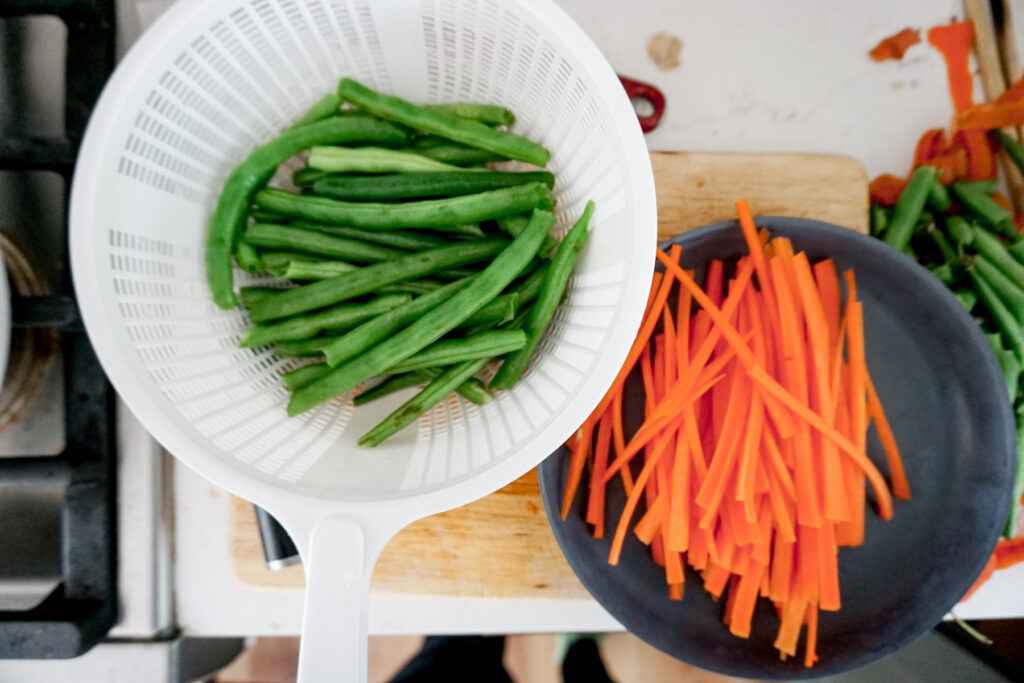
Other common vegetables used in nikumaki include gobo (burdock root), asparagus, and green onion. If you use green onion, you’re actually making a version of the dish called negimaki, which is very common.
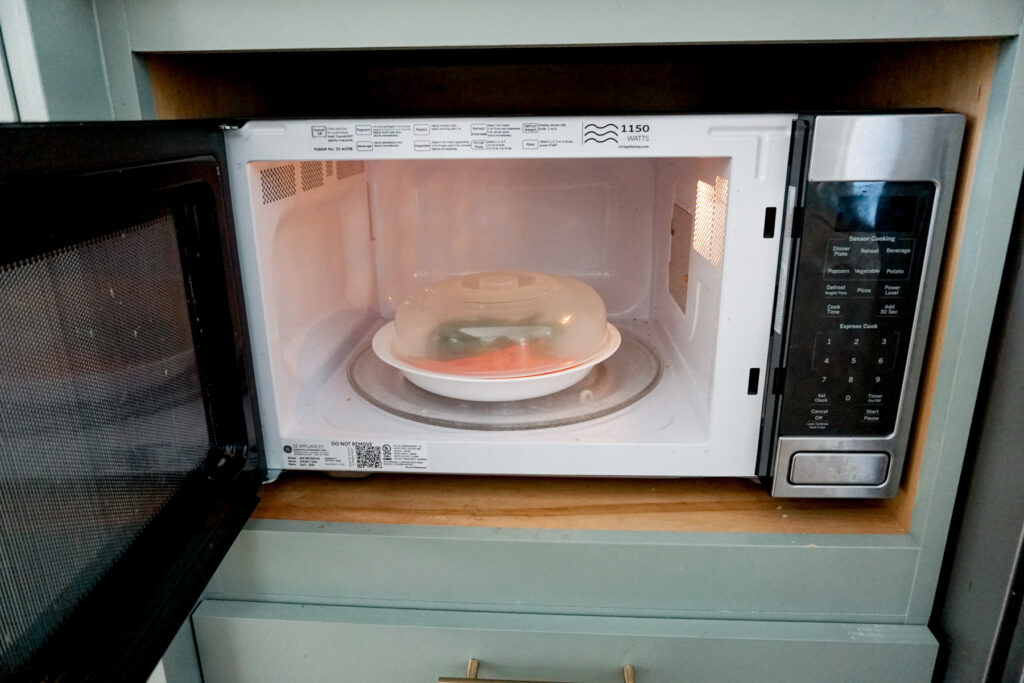
One thing to note: I always blanch or steam my vegetables before rolling them up, as pan frying the beef is so fast, it doesn’t cook root vegetables all the way. I used to dump my veggies in boiling water for 30 seconds to blanch them. But now, I just toss them in the microwave with 1-2 tbsp of water and steam them. You do you.
Ingredients for Teriyaki Roll Marinade
This teriyaki marinade is the base for so many delicious marinated meats. It is THE BEST. And it is so easy, you can memorize it. The ratio goes: 1 part sugar to 2 parts each soy sauce, mirin, and sake. Scale it up or down as much as you need. Then boil it on the stovetop and reduce it to be as thick as you want.
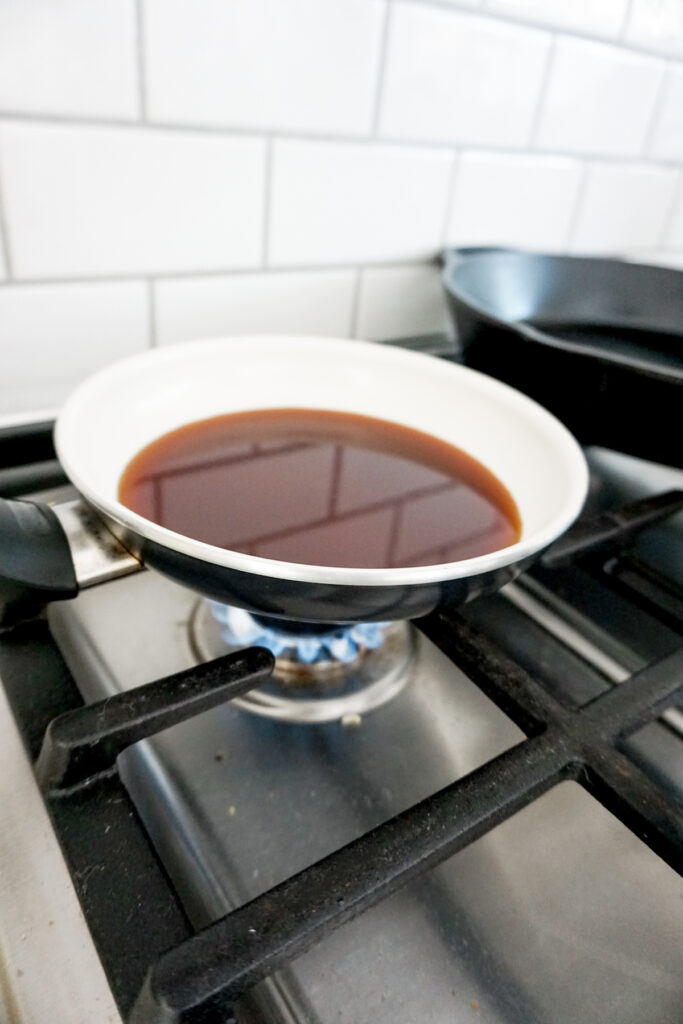
The original way I cooked these beef rolls is to mix the marinade ingredients and pour it into the pan while the beef is cooking. In other words, you don’t actually marinate the beef beforehand. The alcohol burns off and the sugar caramelizes in the pan with the meat.
However, when I’m cooking large batches for New Year’s, I found it’s tough to have to clean my pan in between batches, so I switched to marinating the beef rolls in the fridge overnight and then pan frying. The sauce doesn’t stick to the pan as much and it’s much easier to cook batches. I DO however really love the original way of cooking the sauces in the pan, which I think is a style popular in Kansai grilled meats. So you can choose!
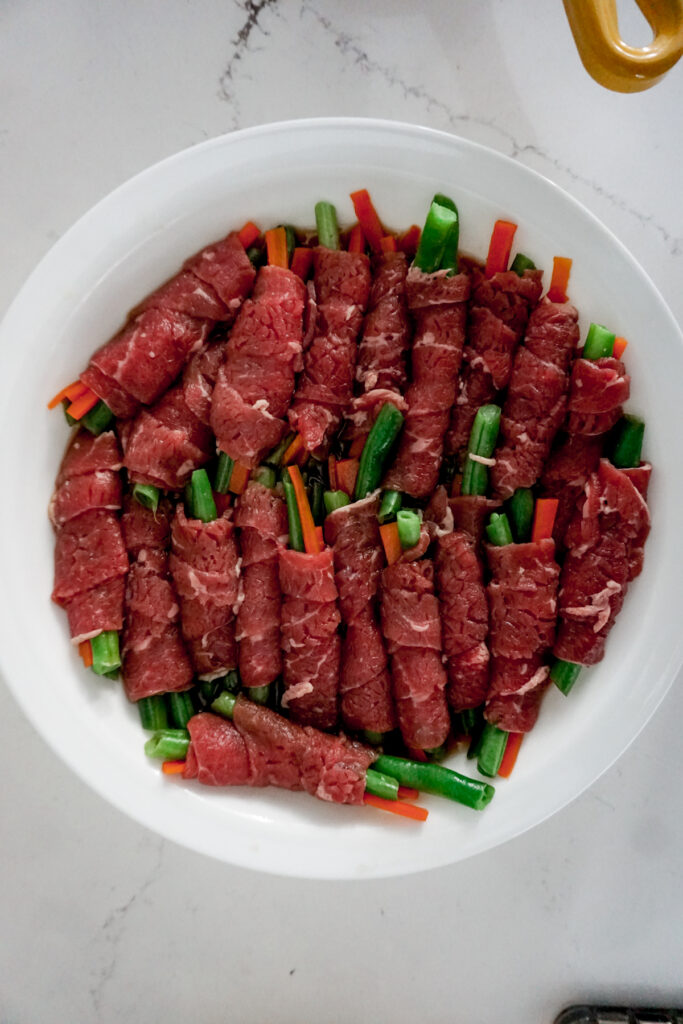
If using the marinade the night before, be sure to let it cool before actually putting it on the raw meat. I like to roll my beef and veggies first, then marinate them, turning them once halfway into their marinating time. But you could definitely marinate the meat first and then roll them up.
How to Serve Nikumaki
I like to slice the nikumaki in half, so you get mini rolls. Then you can serve them with rice or as a side dish to other entrees. You can eat them hot or cold, and they go great in packed lunches. My grandma always made these every year for New Years Day. Even though they’re not part of a traditional Japanese osechi (New Year’s food), I now make them every year too.
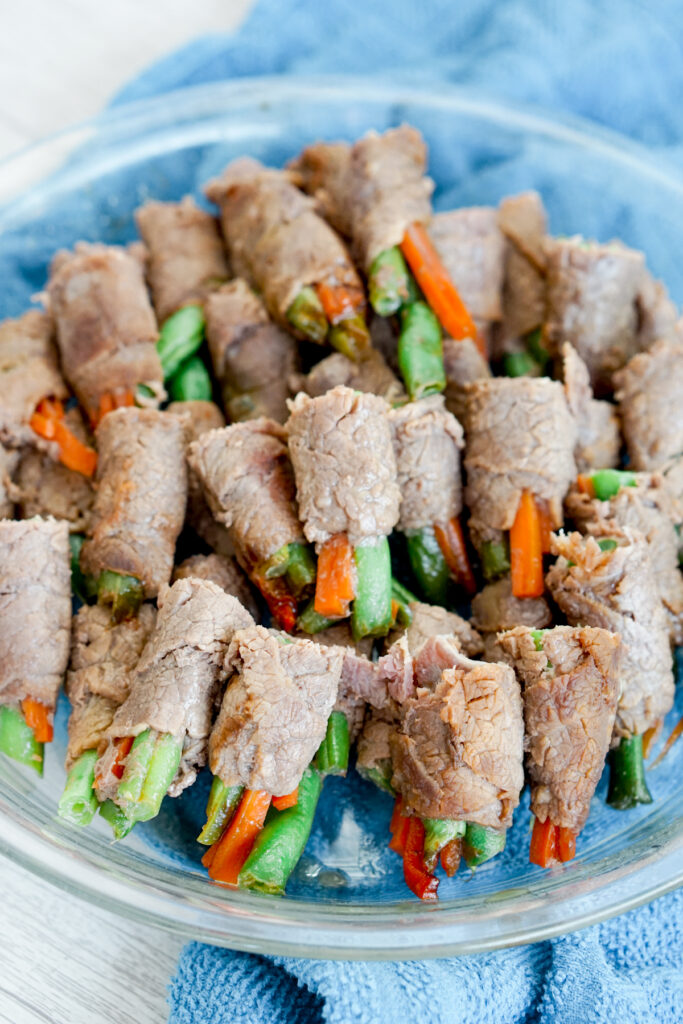
Popular with both kids and adults, I hope you give these Japanese beef rolls a try!

Nikumaki (Japanese Teriyaki Beef Rolls)
Ingredients
- 2 tbsp sugar
- 1/4 cup soy sauce
- 1/4 cup sake
- 1/4 cup mirin
- 1 large carrot, cut into matchsticks
- 8 oz green beans, 40 pieces
- 1 lb thinly sliced beef, at least 20 slices
Instructions
- In a skillet on stovetop, mix sugar, soy sauce, mirin, and sake.
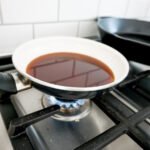 Heat mixture until bubbling and let simmer 2-3 minutes to boil off the alcohol.
- Let marinade cool while you prepare other ingredients.
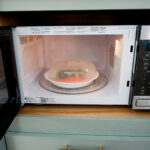 Place green beans and carrots in a microwave safe bowl with about 2 tbsp of water. Cover and microwave 3 minutes to steam. (Alternatively you can bring a pot of water to boil and blanch the veggies for 1 minute).
- Run veggies through cold water to cool them down enough to handle.
- Take a thin slice of beef and place two green beans and a few matchstick carrots at one end. Roll the vegetables in the beef, covering the length of the vegetables.
- Repeat for the remaining vegetables. You should have 20 rolls at the end.
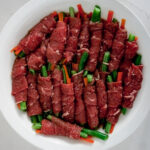 Place beef rolls in a large dish and pour the cooled marinade over them. Marinate for at least 20 minutes or up to overnight, turning the beef rolls once halfway through to coat both sides in marinade.
- When ready to cook, heat some oil in a skillet. Place beef rolls in skillet and let pan fry for 2-3 minutes.
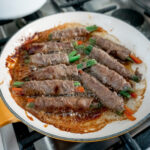 Using tongs or chopsticks, flip the beef rolls over and cook on the other side for another 2-3 minutes or until cooked through.
- Beef rolls can be served whole or sliced in half to make 40 mini rolls. They can be eaten hot or packed in a bento to eat at room temperature. Leftovers can be kept in the fridge and eaten cold or at room temperature – no need to reheat.

Pingback: The Best Teriyaki Chicken (Japanese American Family Recipe)
Pingback: The Best Beef Teriyaki (Japanese American Family Recipe)
Pingback: Easy Sukiyaki Recipe - Japanese Beef Hot Pot - Mochi Mommy