
Easy Yaki Udon Recipe (Stir Fried Japanese Noodles)
Yaki udon is a dry, stir fried udon dish from Japan. It’s super easy to make at home, and you can customize the veggies and yaki udon sauce however you want. If you’re looking for udon inspo, keep reading! Disclaimer: This post may contain affiliate links.
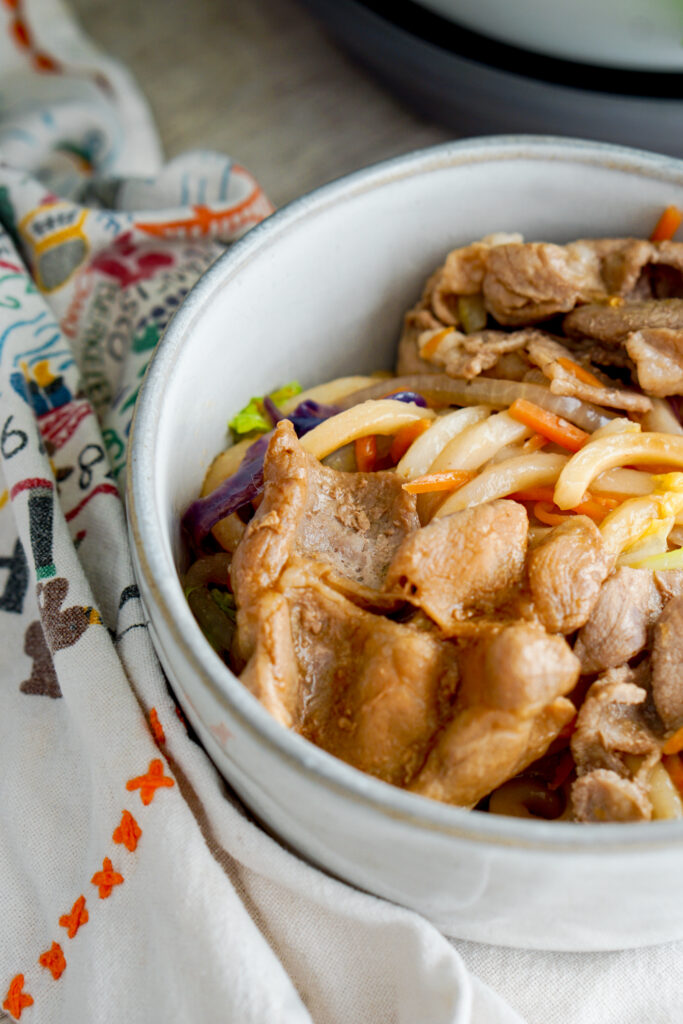
My kids love udon. I guess it’s not surprising. I’m pretty sure everyone loves udon. But as a kid, I was an udon purist. I only wanted my chewy udon in my very plain, no frills soup of water and mentsuyu. Have I mentioned that I was a picky eater?
But eventually as a teenager I tried yaki udon, and my life was changed. You get all the chewy, bouncy goodness of udon noodles plus a flavor bomb of sauce. And usually there’s a bunch of vegetables involved too, so your GI tract feels pretty happy about it as well.
If you’re pretty familiar with stir fries and dry noodles, you probably don’t even need a yaki udon recipe. Just toss everything together with your favorite sauce. But if you’re looking for some new noodle inspo or need a step by step, read my tips below.
What is Yaki Udon?
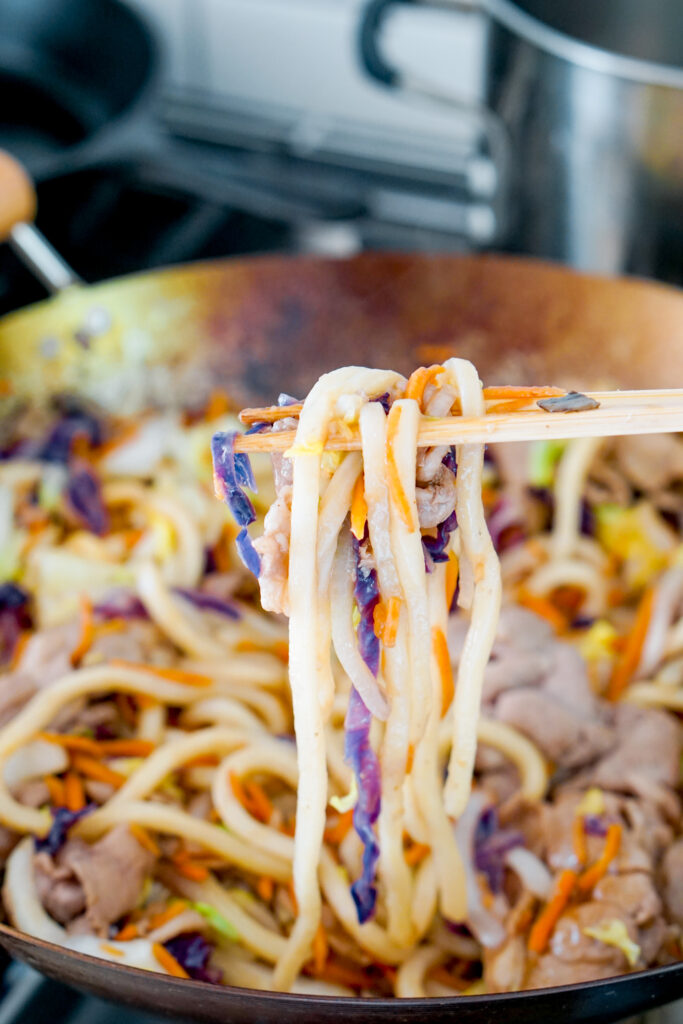
Yaki udon is a stir fried udon, yaki meaning “grilled” or cooked over direct heat. Udon is an extremely popular noodle in Japan made out of wheat flour. At udon restaurants, you typically find udon served as a hot noodle soup in a dashi and soy sauce broth. However, it’s not uncommon to eat udon as a cold noodle dish in the summer as well, either in a cold broth or served dry with a cold dipping sauce.
And, of course, you can find udon stir-fried in this dish, yaki udon. Yaki udon also includes lots of veggies and usually some thin sliced meat along with a soy sauce based sauce (but more on this later). You may be familiar with another Japanese stir-fried noodle dish called yakisoba, which is similar but uses thin, Chinese-style egg noodles.
What Udon Noodles Should I Buy to Cook at Home?
In Japanese markets in America, you can usually find both dry and frozen udon noodles. For the chewiest, thickest udon noodles, you’ll want to buy a type called Sanuki udon, which is sold frozen. Obviously, you can use other types of udon as well, but who doesn’t love the thick and chewy texture?
Frozen Sanuki udon is already cooked, so you are actually just reheating it in the boiling water. Don’t overcook! It takes just a couple minutes. That’s partially what makes cooking udon at home so fast and easy.
What Meat and Vegetables go in Yaki Udon?
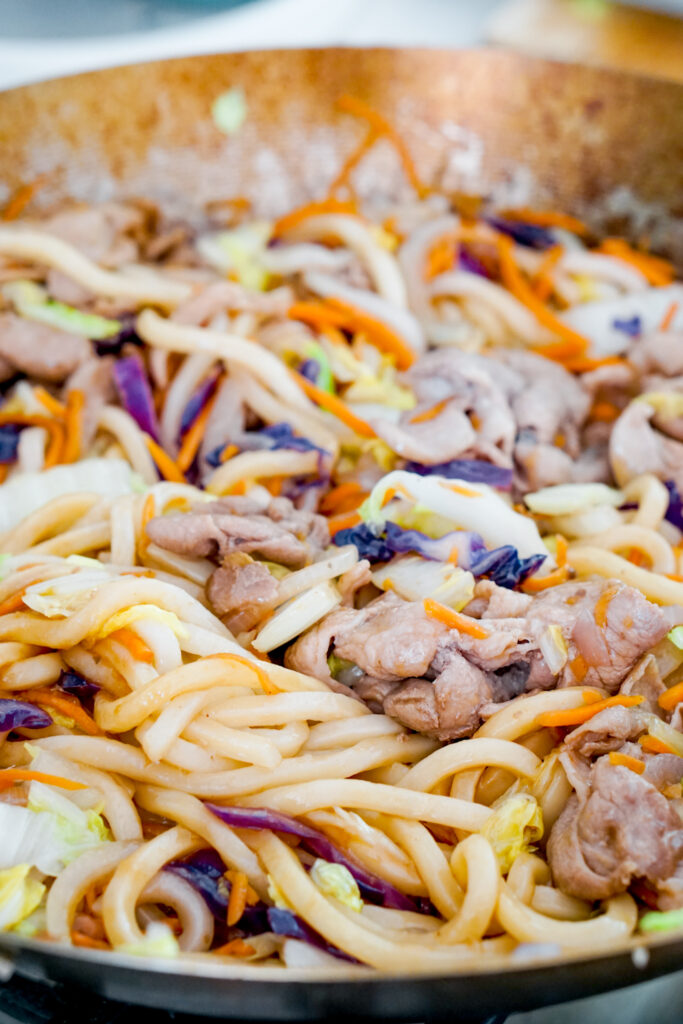
Sliced pork is probably the most common meat in yaki udon in Japan, but chicken or beef are both fine. Since this is not necessarily an ancient, “traditional” food in Japan, you can make a lot of customizations to this recipe according to your tastes. Use whatever protein you want. I just recommend using a meat that is thinly sliced so that it stir fries quickly. You can find thinly sliced meats at most Asian grocery stores. If you’re vegetarian or vegan, just sub tofu. For pescatarians, seafood also works!
As for vegetables, again you can use whatever you want. However, I feel like it’s a very common Japanese thing to at least always have some shredded cabbage and sliced onions. I never make my yaki udon without those vegetables. Other common vegetables in Japanese stir fries include shiitake mushroom and carrots. But you can definitely clean out whatever you have in the fridge. Bok choy? Gai lan? Broccoli? If you can stir fry it, you can put it in.
Yaki Udon Sauce Recipe
My yaki udon sauce in this recipe is really more SE Asian inspired. It uses sweet soy sauce and hoisin or oyster sauce. However, recipes with those ingredients are usually not traditionally Japanese, although I’m seeing from social media and magazines that oyster sauce is becoming more popular and common in Japanese home cooking, especially stir fries.
If you want to keep your cooking more similar to a strictly Japanese flavor profile, you will want to use a dashi and soy sauce based sauce. You can use storebought mentsuyu, the same as what you would use to make udon in noodle soup! Or you can make it from scratch by mixing some dashi with soy sauce, mirin, and sake, similar to my sukiyaki broth.
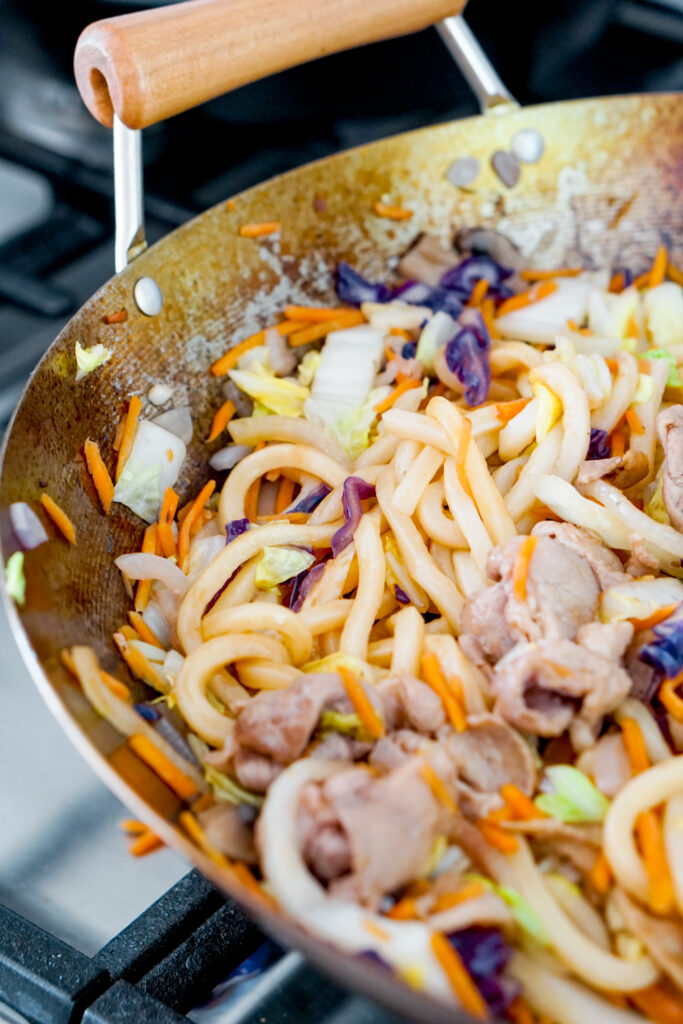
But if you want to experiment a little, I highly suggest trying out my secret sauce! It’s a combination of oyster sauce, sweet soy sauce, Japanese or other lighter soy sauce, sesame oil, and sambal oelek. Basically, it’s almost a mi goreng sauce. Despite my East Asian heritage, I cannot deny that my taste buds love SE Asian flavors.
You can substitute hoisin for oyster sauce and dark soy sauce plus brown sugar for the sweet soy sauce. This is a good way to keep your yakiudon vegan or vegetarian. And feel free to omit the sambal oelek or sub sriracha or other Asian hot sauce.
Basically, you can do whatever you want. Just try some sauce combinations and see what tastes good to you.
Special Tools for Stir Frying
The last thing I really want to emphasize for this recipe is that I highly suggest you use a wok or a griddle. It takes about one pack of udon to feed one person. So if you are feeding a family of four, you’ll need about four packs of udon. The only cooking vessels I have large enough to accommodate four packs of udon are my wok and my griddle. Otherwise, you’ll have to cook multiple smaller batches. Plus, woks can get hot enough to really flash fry those veggies. Gotta get that wok hei! (Confession: I am really bad at getting wok hei because I am scared of fire.)
I have a gas stove, but flat bottomed, carbon steel woks should work on induction stovetops. Woks do take some special care, like a cast iron skillet, but it’s worth having if you cook Asian food frequently. I deep fry and steam in my wok as well. I’ll leave it up to you if you want to research the best quality woks, but Joyce Chen has a pretty good one for beginners who don’t want to shell out a ton of money.
My griddle (which I just got recently as a Christmas gift) is from Our Place.
More Asian Noodle Recipes
Looking for more Asian noodle recipes? Check these out:
- Chinese Spicy Dry Noodles
- Vegan Chinese Tomato Rice Noodles
- Cold Asian Noodle Salad with Sesame Dressing
- Cantonese Wonton Noodle Soup
- Hawaii Style Somen Salad
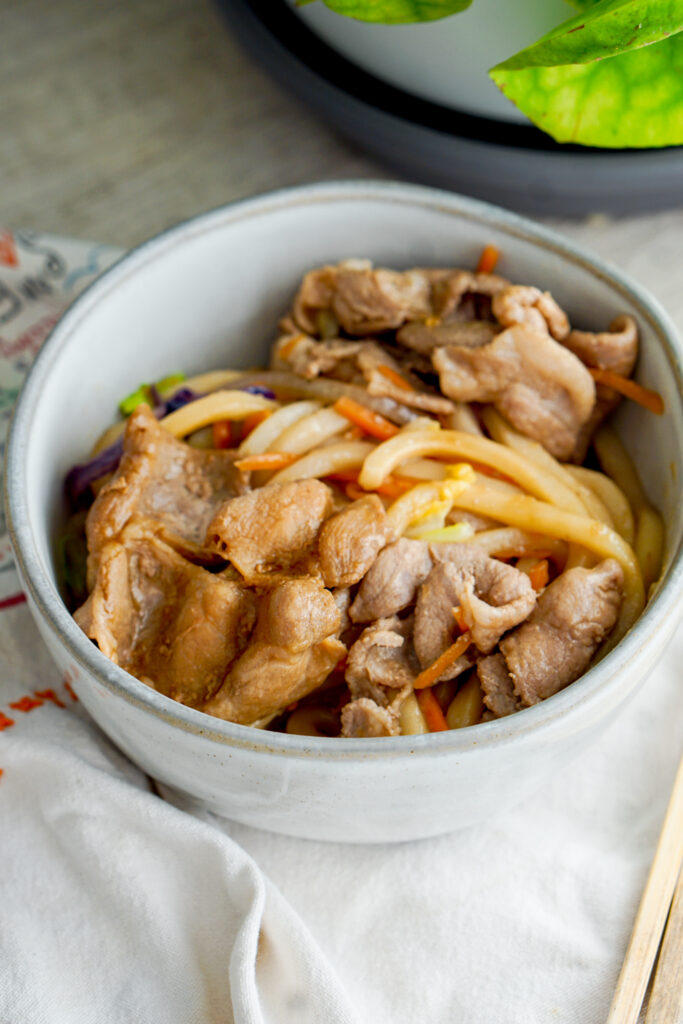
Easy Yaki Udon Recipe

Ingredients
- 4 packs frozen sanukiya udon
- 1 lb thinly sliced pork
- 1 clove garlic, minced or pressed
- 1/2 tsp freshly grated ginger
- 1/2 onion, sliced
- 1/4 head napa cabbage, shredded
- 3 shiitake mushrooms, sliced
- 1 cup shredded carrots
- oil for stir frying
For Yakiudon Sauce
- 1/4 cup oyster sauce, can sub hoisin sauce
- 1/4 cup light soy sauce
- 1/4 cup sweet soy sauce, can sub dark soy sauce with brown sugar
- 1 tbsp sesame oil
- 1/2 tsp sambal oelek, optional, or other hot sauce
Equipment
- Wok or Griddle See notes
Instructions
- Mix ingredients for the yaki udon sauce (hoisin, soy sauce, sweet soy sauce, sesame oil, sambal oelek) and set aside.
- Bring a large pot of water to boil and cook the frozen udon according to package instructions, usually around 2 minutes. Drain and set aside. Note: If you haven't chopped your veggies yet, you can do this while waiting for the water to boil.
- In a large wok or griddle, heat a small amount of oil and add sliced pork. Stir fry until pork is cooked through, and remove it from the wok.
- Add a little more oil to the wok along with garlic and ginger. After a few seconds, when the garlic and ginger have begun cooking and are very fragrant, add onions.
- Stir fry onions a couple minutes, and as they start to become translucent, add the cabbage and mushrooms.
- Continue to stir fry another few minutes, and when the cabbage and mushrooms have begun to soften as they cook, add the shredded carrots and return the sliced pork to the wok. Add the cooked udon noodles as well and pour the prepared yakiudon sauce over everything.
- Mix everything well. Taste and adjust seasonings (e.g. add more soy sauce or hot sauce) according to tastes. Turn off the heat and serve immediately. Leftovers can be kept in an airtight container in the refrigerator for a couple days.
Notes
- If you don’t have a wok or griddle, you will either have to cook in batches or decrease the serving size of the recipe.
- If you don’t have sweet soy sauce, you can mix an equal amount of brown sugar and dark soy sauce to substitute.
- You can really use whatever vegetables you have on hand or need to clear out of your fridge.