

Chocolate Stuffed Mochi (Nama Choco Daifuku)

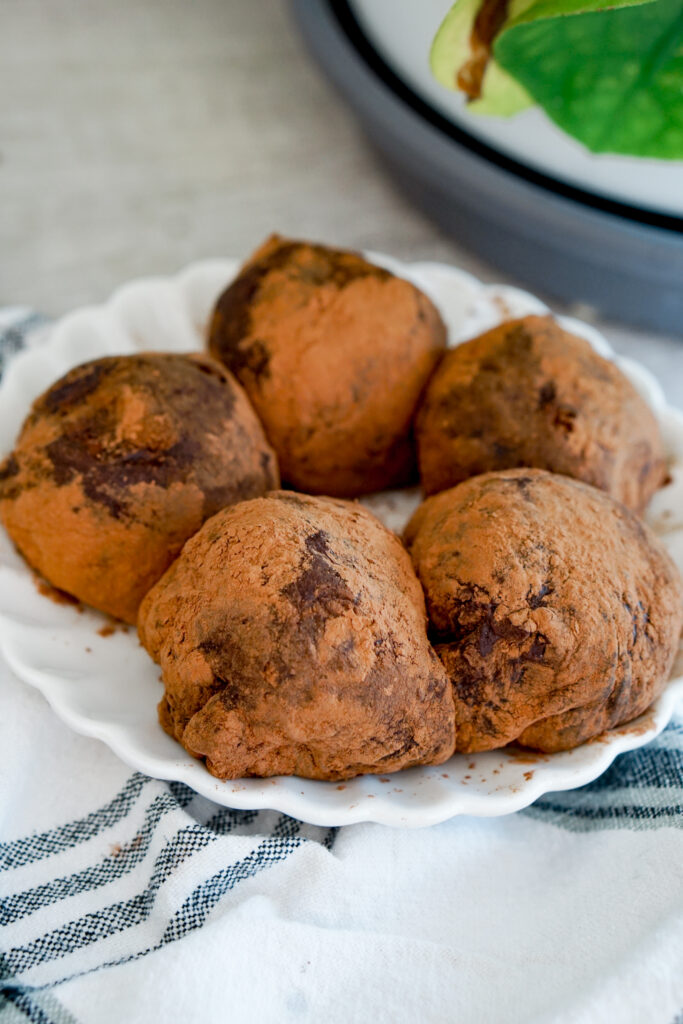
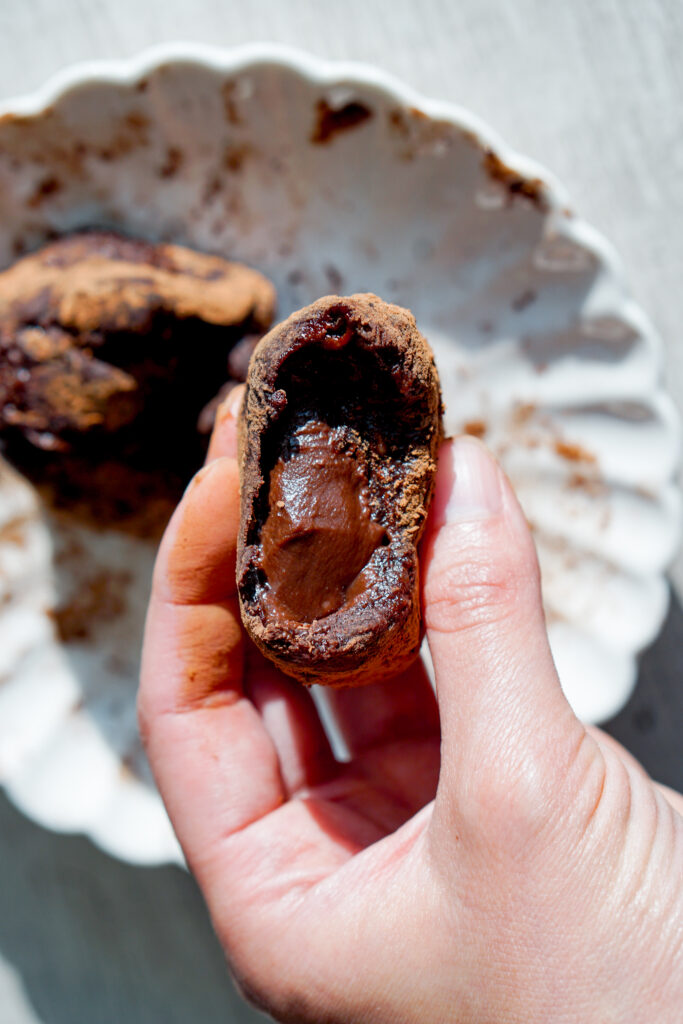
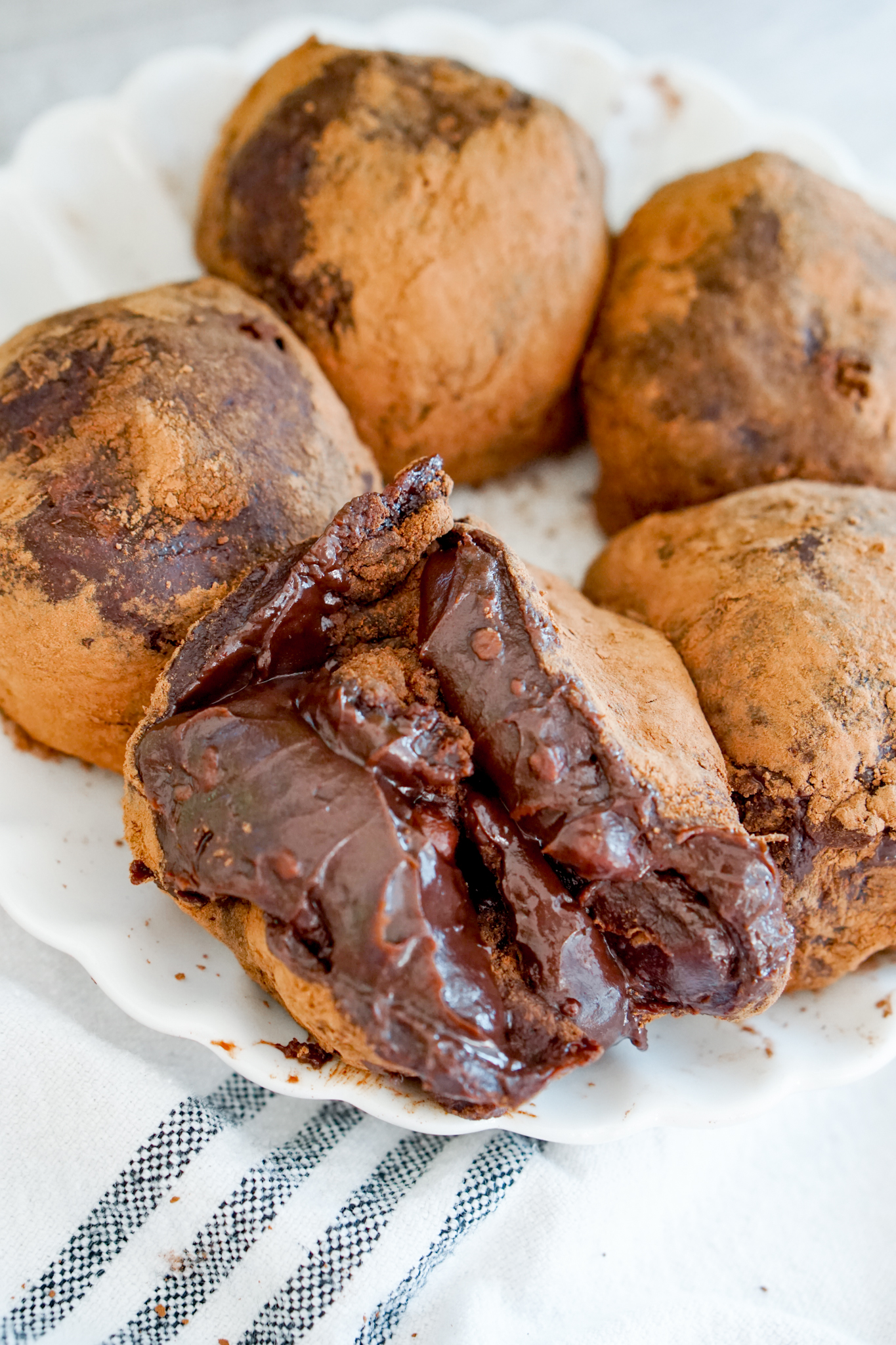
Nama choco daifuku is a chocolate stuffed mochi that makes a decadent dessert. Squishy mochi dough is filled with a soft chocolate ganache. The result is a chewy mochi texture with rich, creamy chocolate flavor. Making chocolate daifuku takes some practice, so this recipe is for intermediate mochi makers.
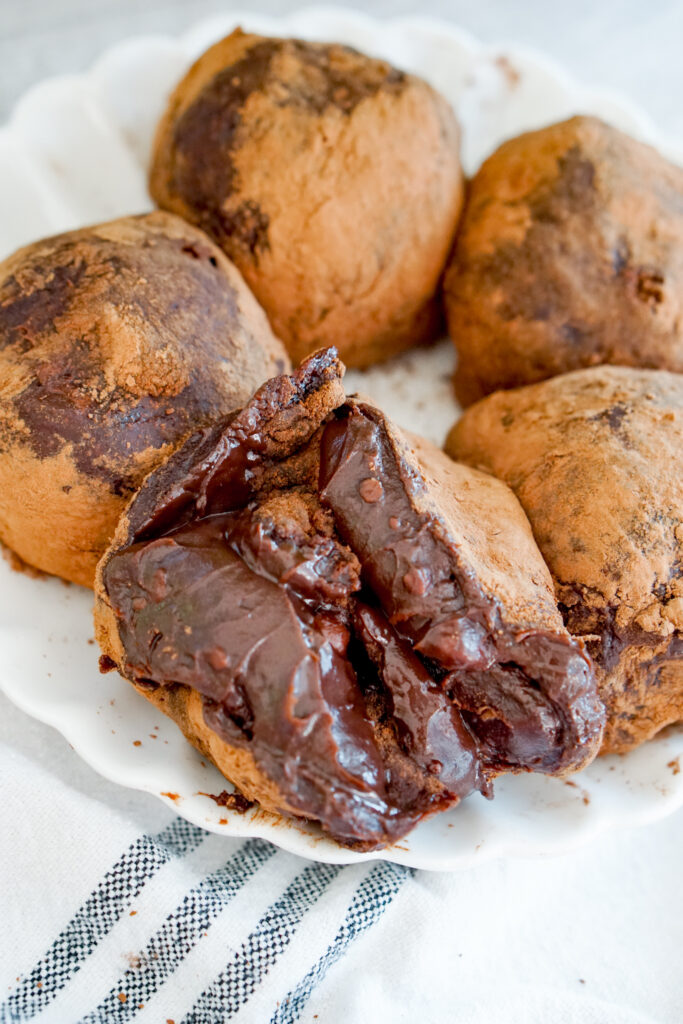
I recently had a Japanese friend over who really wanted to learn how to make daifuku mochi at home. She told me her favorite flavor was the choco daifuku, which typically consists of chocolate flavored mochi dough surrounding Japanese nama chocolate. Being the more loosey goosey baker that I am, I said SURE, let’s tackle one of the more difficult daifuku to make, and I’ll wing the recipe! All while trying to teach you how to make daifuku! For the first time!
Mistakes were made. Delicious mistakes, but mistakes nonetheless. In any case, we managed somehow to still get an amazing chocolate daifuku, and I think I nailed down my recipe in the process.
What is Nama Choco Daifuku?
Nama choco daifuku is really a combination of two Japanese desserts: nama chocolate and daifuku mochi. Daifuku mochi is a very famous type of mochi dessert in Japan. It consists of a chewy sphere of mochi with a red bean paste filling.
Nama chocolate is also a very popular sweet in Japan. It’s basically the Japanese version of a truffle but cut in rectangles instead of round. Both chocolate truffles and nama chocolate are made from ganache, which consists of two basic ingredients: chocolate and heavy cream. Depending on the ratios you use, your ganache can set hard or remain soft when chilled. Japanese nama chocolate tends to lean on the softer end.
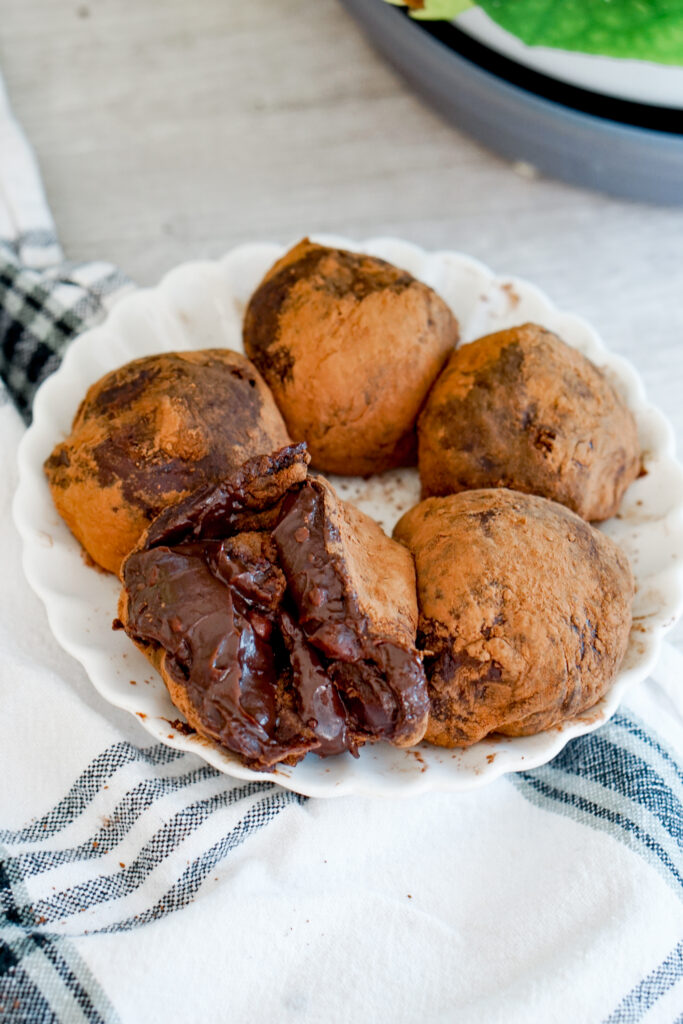
So altogether, nama choco daifuku is a stuffed mochi treat with nama chocolate in the middle. It’s certainly not traditional, but you can find fun flavors like this at modern mochi shops in Japan. In other words, it’s not a complete American bastardization of a cherished cultural treasure.
What Type of Rice Flours and Chocolate to Use
As with all my daifuku recipes, I recommend using shiratamako for your mochi dough instead of mochiko. Shiratamako and mochiko both come from mochigome rice, but they are milled differently. The process for making shiratamako is more intensive. As a result, shiratamako is more expensive, but it absorbs liquids better. I find that mochi desserts made with shiratamako end up being softer and stretchier than when I use mochiko. Of course, if you can’t find shiratamako, you can substitute mochiko instead.
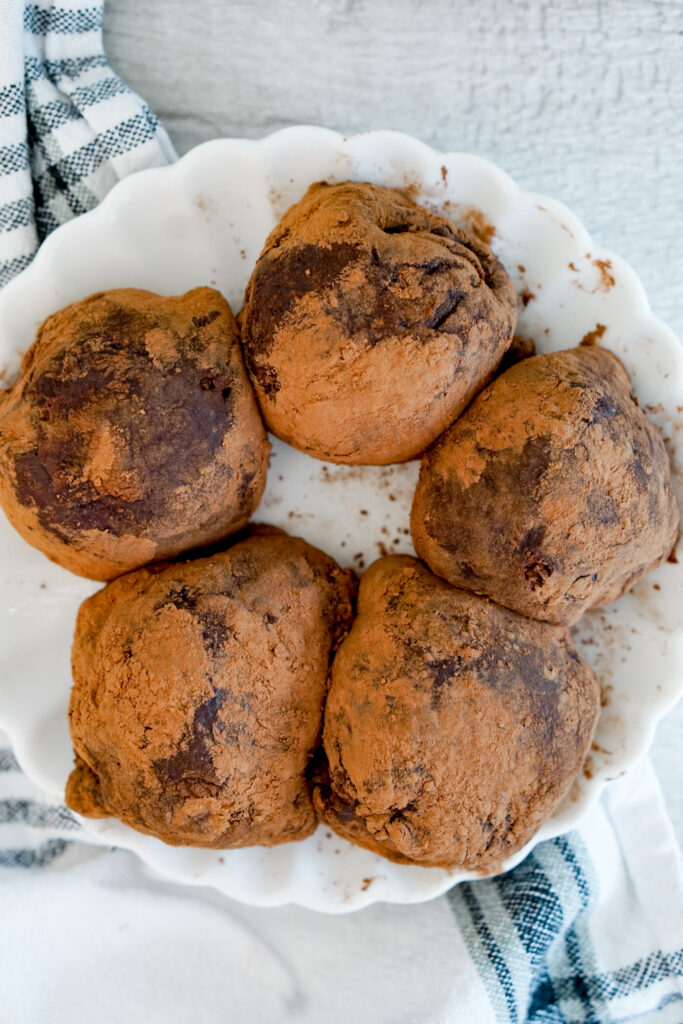
For the cocoa powder in this recipe, I used a Dutch process cocoa powder in the gyuhi (i.e. mochi dough) and natural cocoa powder for dusting. I like the darker flavor of Dutch process cocoa powder in my baked goods, but I thought the contrast with the lighter colored natural cocoa powder looked nice. But it’s all just personal preference. Use whatever type of cocoa powder you like!
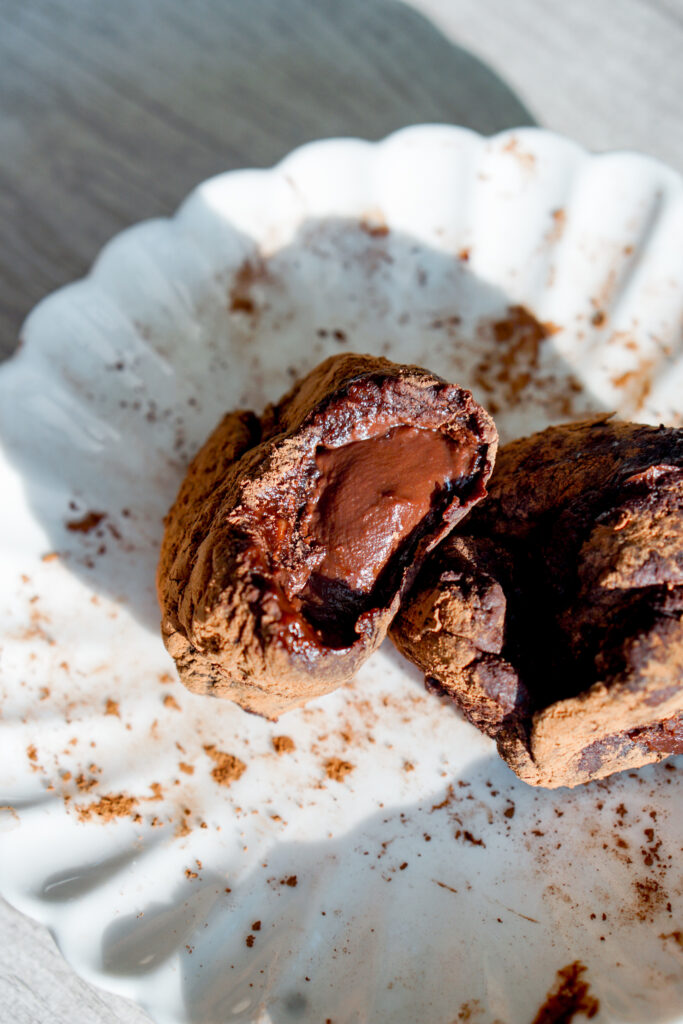
For the chocolate that’s actually in the ganache, you may want to be more selective. I like using dark chocolate so that the nama chocolate is not too sweet. However, if you use a chocolate bar that’s more than 60% chocolate, the ganache may set harder. I like to keep my ganache pretty soft for filling mochi so that the entire bite is still soft and chewy. You can use semi sweet chocolate chips instead or mix half and half with milk chocolate. Again, this is also up to your tastes, but I just want you to keep in mind how your choices may affect texture.
Making Nama Chocolate Filling
To make nama chocolate, all you really have to do is heat up some heavy cream and butter and then use it to melt your chocolate. Stir until everything is all combined and then stick in the fridge until it sets. The addition of butter also ensures that your chocolate doesn’t get rock hard in the fridge.
When it comes to melting chocolate, of course you can always use a double boiler. But the effervescent Mary Berry on the Great British Bake Off once said to remember that chocolate will melt in your pocket. It doesn’t take great lengths to melt chocolate. So I like to heat up my other ingredients either in the microwave or on stovetop and use that residual heat to melt the chocolate without cooking the chocolate directly.
Also keep in mind that the ganache may take up to four hours to set properly, so give yourself adequate time!
Differences Between Chocolate Daifuku and Normal Daifuku
I’ve made daifuku so many times by now that I’ve got my standard recipe memorized and can churn out some mochi balls in under 30 minutes. However, chocolate daifuku is a different beast.
Firstly, the cocoa powder in the mochi dough really absorbs a lot of liquid, so I had to increase the amount of water in this recipe drastically. I’ve seen other recipes call for using milk, but I’ve never been a huge fan of milk in daifuku. I tried this recipe with milk, and it ended up kind of weird. Let’s not complicate things. Save the milk for my microwave milk mochi and stick to water for this one.
The other big difference is that wrapping something meltable in mochi can be insanely hard. Usually you want to work with mochi while it’s still hot, which is when it’s the most pliable. But you can’t do that with chocolate. It melts. And causes a kitchen disaster. So read on for my mochi wrapping tips.
Tips for Wrapping Daifuku
I need you to understand that wrapping a meltable filling in mochi is really an intermediate to advanced mochi making undertaking. Be forewarned. The likelihood of your entire kitchen and body looking like you fell into Willy Wonka’s chocolate river is high. If you are not deterred yet, then here are my best tips and tricks.
Firstly, make sure your ganache is the right temperature. You want it to be cold, so it doesn’t melt so quickly. But it still must be soft enough to scoop into a ball. If you didn’t mess with the ratios in the recipe too much, it should be fine.
Another way to avoid Wonka-esque disaster is to use a cookie scoop! A 2 tbsp cookie scoop is the perfect size for daifuku filling. Using a cookie scoop also means you don’t have to touch the ganache directly, which leads to more melting and general calamity.
Perhaps most importantly, you want to wait until your mochi dough is close to room temperature. I found it best to roll out my mochi into flat circles and then wait a few minutes for them to cool down. No need to stick them in the fridge, just sitting on the counter for few minutes is long enough. Wait too long, though, and your mochi will dry out and get too hard to form into balls.
Lastly, work quickly but gently. The more you handle the filling, the faster it will melt. However, you don’t want to stretch the mochi dough so fast that it rips. It helps to make sure you’ve flattened it out to the right size (about 3 inches in diameter is perfect) so that it easily wraps your filling without needing to stretch too much.
More Daifuku Recipes
Looking for other daifuku recipes? Check these out!
Chocolate Stuffed Mochi (Nama Choco Daifuku)
Ingredients
For Chocolate Mochi Dough
- 100 g shiratamako, can sub mochiko
- 20 g cocoa powder, dutch processed or natural, plus more for dusting
- 20 g granulated sugar
- 200 mL water
For Chocolate Filling
- 200 g dark chocolate, chopped in small pieces
- 100 mL heavy cream
- 3 tbsp unsalted butter, 42g
Instructions
To Make the Chocolate Filling
- Heat heavy cream and butter together either on stovetop or in the microwave until butter is melted and the mixture is steaming, but not bubbling.
- Pour hot cream and butter over dark chocolate and stir until chocolate is melted and everything is homogenous.
- Place chocolate in the fridge and let chill until firm, which may take 3-4 hours. When chocolate is firm enough to scoop into balls and hold its shape, it's ready.
To Make Chocolate Mochi Dough
- Mix shiratamako, cocoa powder, sugar, and water until well combined and no dry lumps of flour remain.
- Transfer batter to a microwave safe dish lined with a wet dishcloth. Fold the ends of the dishcloth over the batter, cover with a microwave cover or plastic wrap and microwave on high for two minutes or until mochi dough is cooked through.
- Sprinkle your work surface with cocoa powder to prevent the mochi from sticking.
- Set your mochi onto the work surface and cut into eight equal pieces.
- Roll or pat each piece into a flat circle about three inches in diameter, and let them cool to about room temperature.
- Using a spoon or 2 tbsp cookie dough scoop, scoop balls of chocolate filling directly into the center of your mochi dough circle. Quickly but gently wrap the mochi dough around your filling to form a ball and pinch the edges shut. Dust with more cocoa powder to set and prevent sticking to the surface or to each other.
- Repeat this process with the remaining seven mochi pieces. You will have leftover chocolate filling which you can use as a dip or frosting. Daifuku should be eaten the day it is made but leftovers can be kept in an airtight container in a cool room for one more day.
Notes
- I like to use Dutch processed cocoa powder for the mochi dough and natural cocoa powder for dusting, but you can use whatever you like.
- You can substitute other kinds of chocolate for the filling, such as semi sweet chocolate chips or even milk chocolate. If using a high quality dark chocolate, aim for 50% or less chocolate otherwise the ganache may harden too much to scoop.
- Wrapping chocolate in mochi without melting the chocolate and without letting the mochi cool too much is not so easy. I aim to have my mochi at room temperature and use my chocolate filling straight from the fridge. If you have a cookie scoop, you can scoop your chocolate directly onto the mochi into a ball without having to touch it with your hands, which would cause further melting and mess, so I highly recommend doing that.

Hi! This recipe looks really good and the tips you provide are the most helpful I’ve found! I’m just wondering what’s the best way to store mochi after they’re filled? Will they harden quickly in the fridge or freezer? Or do they have to be eaten right away?
Japanese mochi recipes really need to be eaten within the day they are made, as they usually don’t add fats into the mochi dough, which would keep it from drying out (this is different from mochi recipes you may see from Taiwan or other Asian countries). If you use shiratamako instead of mochiko, it will stay pretty soft, even if you put it in the fridge. So if you have a really hot kitchen and your chocolate is going to melt, feel free to stick it in the fridge to be eaten within a few hours. Still, if you leave it overnight, it will definitely harden somewhat and dry out. Hope that helps!