Kawaii Food: Japanese Dango Recipe

Learn how to turn an easy Japanese dango recipe into cute characters! If you’re into kawaii food art, this is perfect for you. Dango are also naturally vegan and gluten free! Disclaimer: This post may contain affiliate links.
What is Dango?
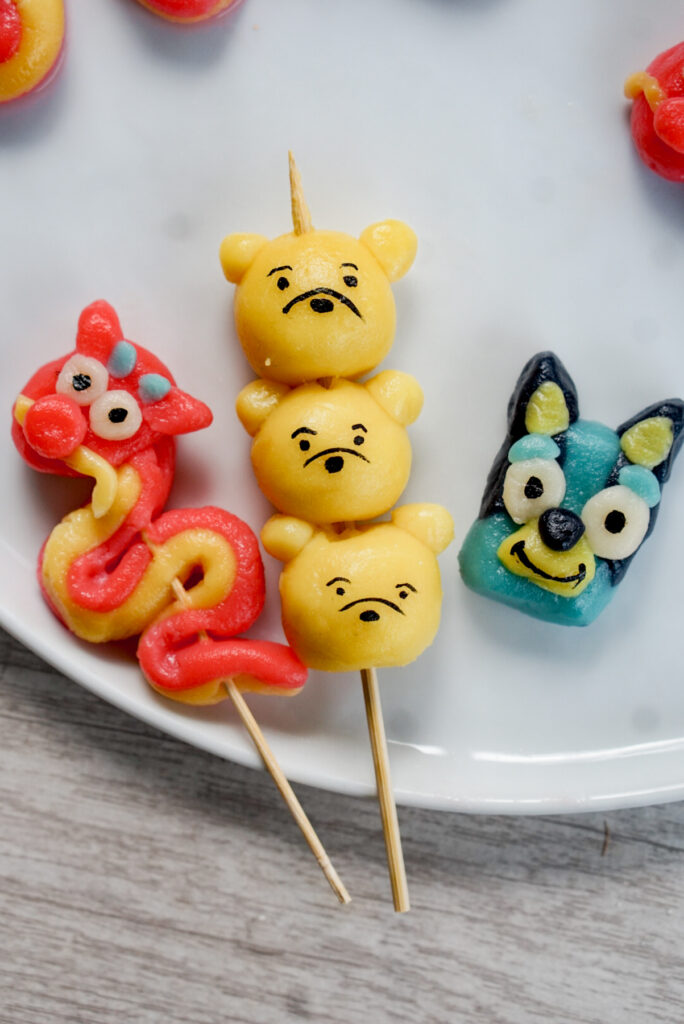
Dango is a Japanese rice dumpling. If you’re familiar with Chinese cuisine, it is similar to a tang yuan. Dango can be skewered and served with a sweet syrup or bean paste. It can also be used as a topping for desserts like ice cream parfaits, shave ice, or red bean soup. There are also some special dango eaten on holidays, such as tsukimi dango or hanami dango.
How do you Make Japanese Dango?
Luckily, making dango is actually really easy. At its most basic, you simply mix equal parts glutinous rice flour and water until you get a dough that’s similar in consistency to Play Doh (I’ll talk about ingredient substitutions and types of flour later on). Then you roll the dough into little balls, about the size of large grapes. To cook, you boil the dango until they float. Then you can skewer them or serve them as toppings with other sweets.
Dango With and Without Tofu
I know many families like to make their dango with silken tofu as a substitute for water. My friends who do this, and myself as well, say they like the additional nutritional benefits from adding tofu. I’m always trying to make sure my kids eat something besides carbs, so sneaking in a little extra protein here is perfect because my kids LOVE dango. It doesn’t make much difference to the taste or texture. If you’d like to make your dango with tofu, simply swap them out at the same amounts. Silken tofu is so soft, once you break it up, it turns into almost a liquid. Depending on the brand of tofu you buy, you may need to add a little more tofu or water if your dough is too try.
If you’re unfamiliar with silken tofu, make sure you buy a tofu that says “silken” on it as well as “soft.” What’s confusing is that sometimes there are “silken tofu” blocks sold at medium and firm consistencies. On the other hand, there are regular tofu blocks sold at “soft” consistencies but are not “silken.” Silken tofu is super smooth and watery in texture, which is why it works in this recipe to replace water. Other types of tofu will not work.
What Rice Flour for Dango?
The end texture of your dango will differ depending on what kind of rice flour you use, and it seems that everyone has a slightly different preference.
One option is to use all shiratamako, which is a glutinous rice flour that results in an extremely soft texture. I use shiratamako when making daifuku. If you use only shiratamako, you will end up with a specific dango called shiratama dango, which are often put in red bean soup or used with shaved ice desserts.
Shiratama dango can also be used for skewered dango, but it’s common to use a mix of shiratamako and a non-glutinous rice flour called joshinko for those dango. Joshinko is less stretchy and soft, so your resulting dango are a little more structured and firm. I find this is good for rolling into balls and shaping into characters when you want to make sure every little piece holds its shape. I like a 50/50 mix of shiratamako and joshinko, but you can adjust to your preference, based on how soft or firm you want your dango.
Another option is to use dangoko, which is a premixed bag containing both glutinous and non-glutinous rice flour made especially for making dango. I’ve used this before, and it’s very convenient. However, I noticed that when I use dangoko, my dough is always drier than with other flours, and I end up needing to put in more water.
You can find all three of these rice flours at Japanese markets. I’ve also included links to where to find these on Amazon, but the price on Amazon is usually more expensive than when I find it in store. If you’d like a central place to find some of my frequently used Asian ingredients on Amazon, you can check out my Amazon storefront.
Making Kawaii Dango
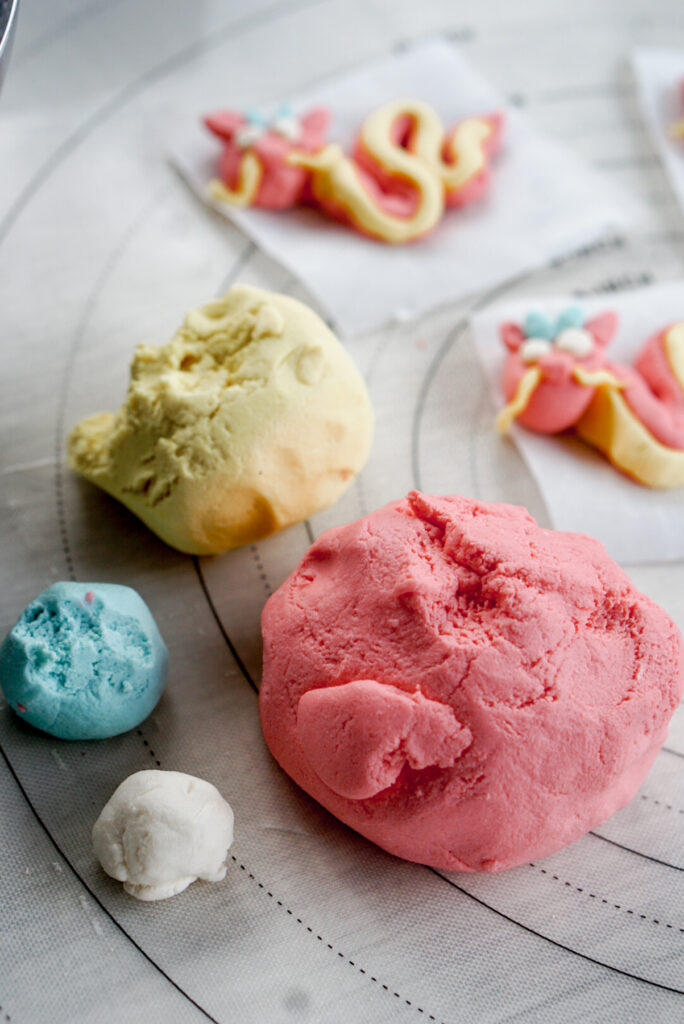
To make fun character dango, the basic recipe remains the same! Instead of rolling the dough into balls, you’ll separate it according to the number of different colors you want. Dye each section using gel food coloring. I use this set from Americolor. To assemble, you just create your characters the same way you would play with clay or Play Doh. It takes some creativity and time, but it’s so much fun. I’ve found that if I keep my dough slightly on the wetter side, all the pieces adhere with just a little pressure. If your dough is a little dry and the pieces seem to fall off, you can adhere them simply by dabbing some water. When I’m ready to cook my dango, I always like to do a test run of 1-2 dango first, to make sure that the pieces stay together when boiling.
Here are some examples of dango I’ve made:
Anpanman Dango
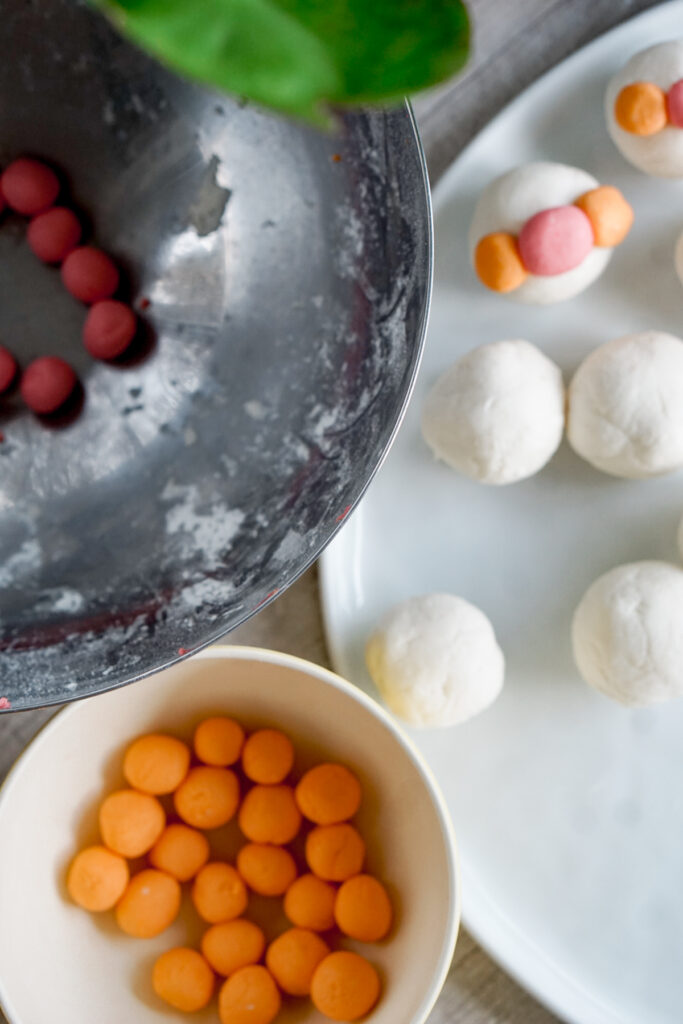
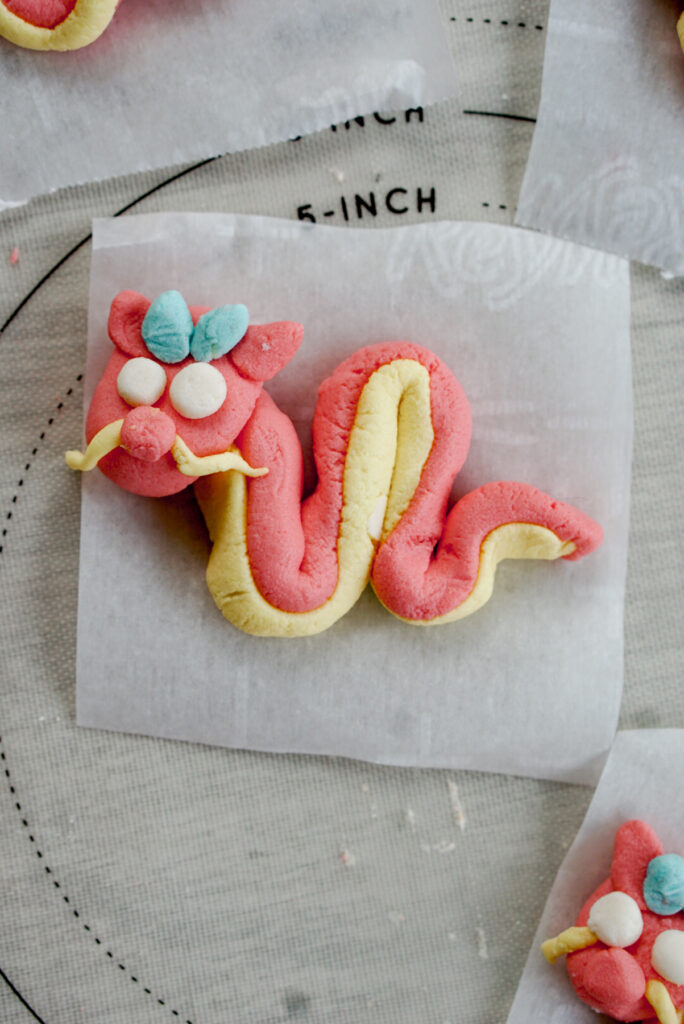
For Anpanman, break off two 20g portions of dough. Dye one red and one orange. Divide the remaining white dough into balls for Anpanman’s head. Then roll two small orange balls for the cheeks and one slightly larger red ball for the nose. I used a food safe paintbrush dipped in black sesame paste to paint the eyes and mouth on after cooking.

Winnie the Pooh Dango
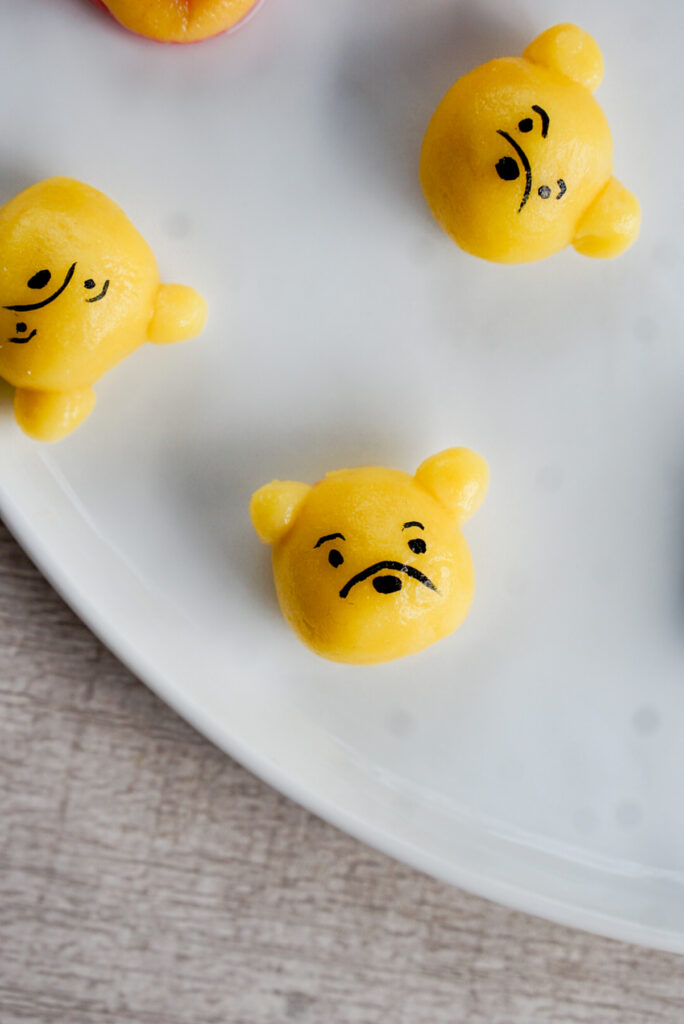
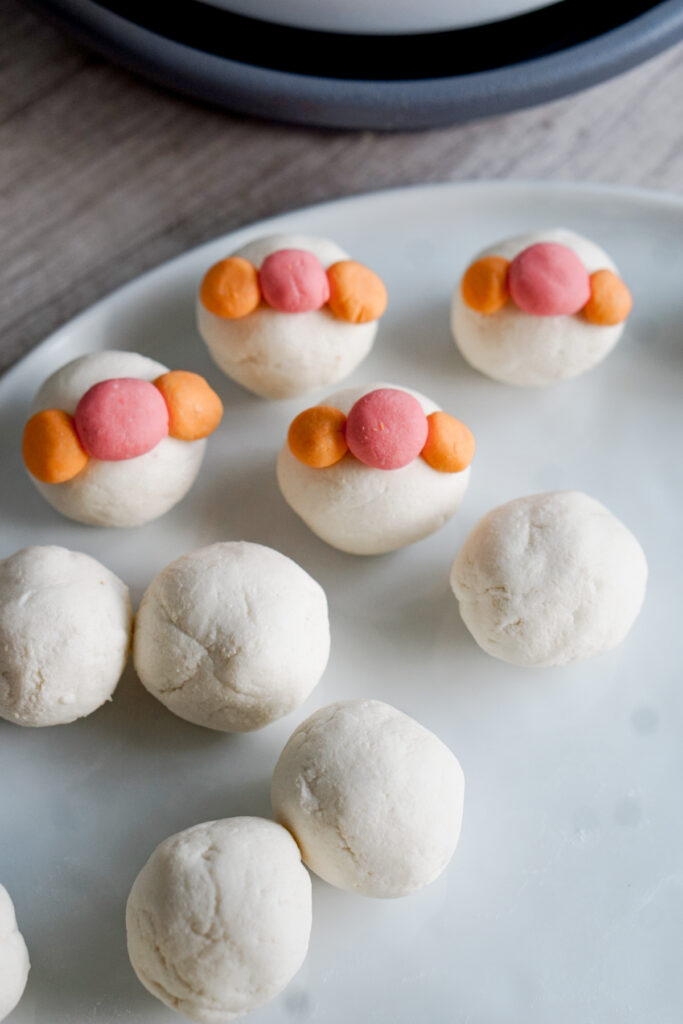
Winnie the Pooh dango is really easy because it’s all one color! Dye all your dough yellow. Roll two small balls for the ears and one medium one for the head. I painted the faces with black gel food coloring on this one.
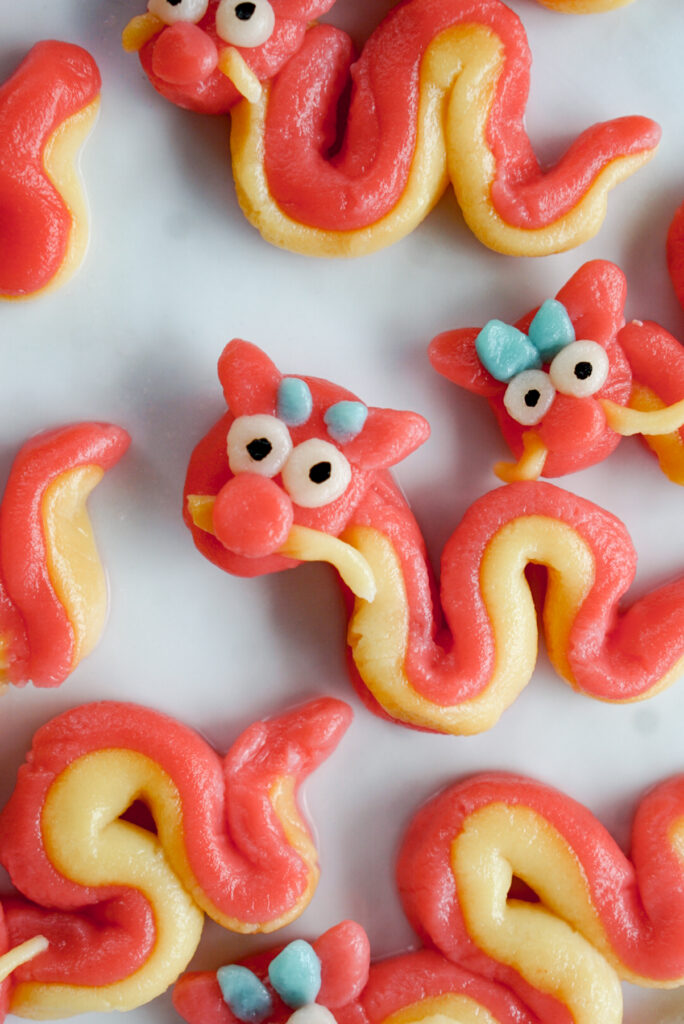
Mushu Dango
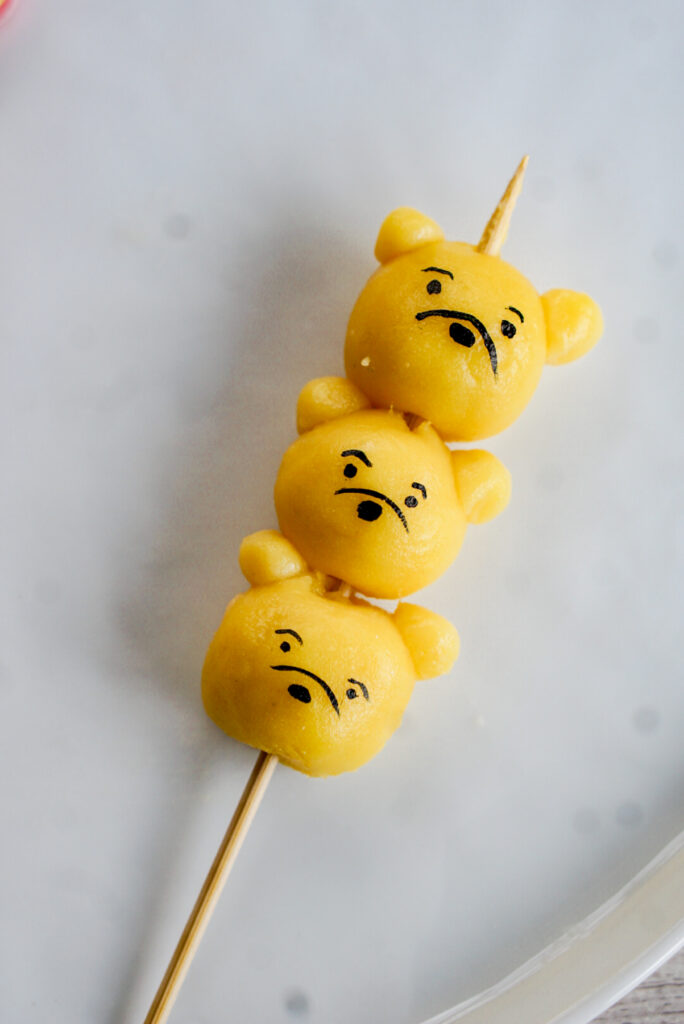
This one was way more intense, so only attempt if you really enjoy the crafting process! Roll a 3 inch long red rope for the body and a much thinner yellow rope for the belly. Place the yellow on top of the red and roll to adhere. Assemble your red and yellow body into a “W” shape and place on parchment paper. Shape a rectangle out of red dough for the head and attach to one end of your “W.” Roll two small triangles of red dough for the ears. Make very thin yellow ropes for the whiskers and top with another small ball of red for the nose. Make two small blue triangles for horns. Finally, add two small white pieces of dough for eyeballs. Paint in the irises after boiling! See my video here:
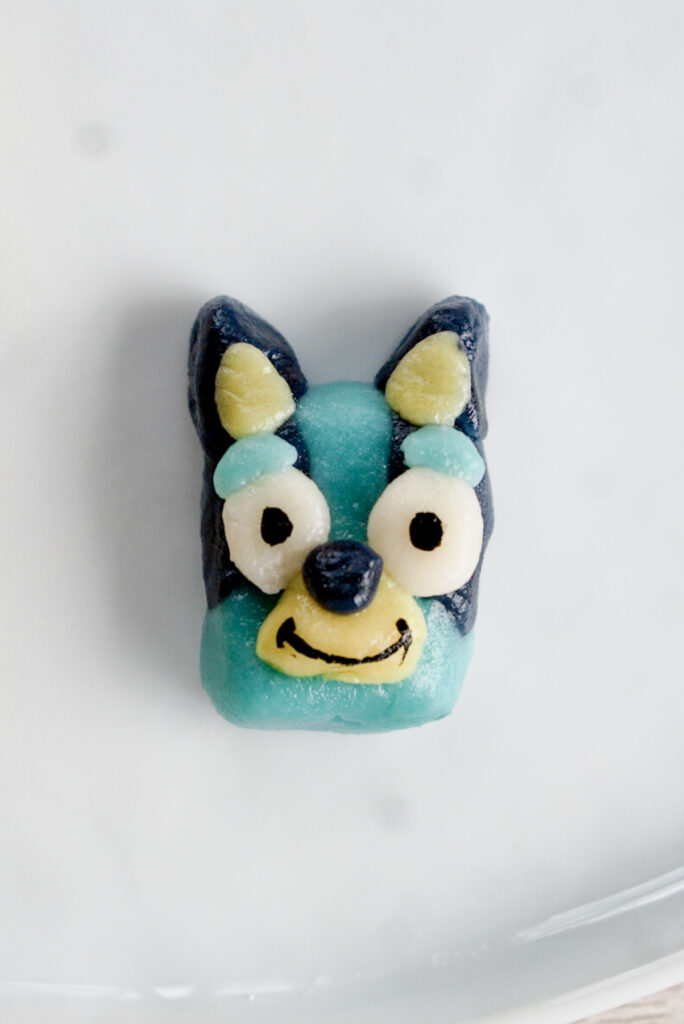
Bluey Dango
This is another dango that takes quite a bit of time due to all the small pieces. However, the end result is soooooo cute! I don’t think I can adequately describe in words the instructions for how to make all the small pieces, so I’ll just let you study the photo if you’re attempting to copy it.
More Kawaii Food Recipes
Looking for more easy, cute (or maybe just pretty?) foods to make? Check these out:

Kawaii Character Dango (Deco Dango)
Ingredients
- 50 g shiratamako
- 50 g joshinko, See notes for substitutions
- 120 g silken tofu, See notes for substitutions
- gel food coloring
- sweet topping of choice, See notes
Equipment
Instructions
- Whisk silken tofu until no solid lumps remain and tofu is liquidy.
- Add shiratamako and joshinko and knead until a soft dough forms. You are looking for a consistency similar to Play Doh, easily sculpted and able to hold its shape. If dough is too dry and hard, you can add more tofu or water. If dough is too wet, add more rice flour until desired consistency is met.
- Separate dough and dye each section using 1-2 drops gel food coloring, kneading the dough to disperse the color. For Anpanman dango, I separated two 20g balls of dough and dyed each orange and red. I left the remainder white.
- Create your dango. You can have fun scultping whatever you'd like and experimenting with different creations. For Anpanman, divide the remaining white dough into 12 balls. Take a small piece of red dough and roll into a nose. Take two small pieces of orange dough and roll into two spheres for the cheeks. If your dough is wet enough, they will adhere just by pressing lightly. If you notice your dough becoming dry, you can adhere the pieces with water. Overall, aim to have your finished dango be around 15-20g (around 1 tbsp in volume) or about the size of a very large grape.
- Bring a large pot of water to boil. Gently place your dango into the boiling water (I use a slotted spoon or spatula to do this). When dango float to the top, they are finished cooking, about 4-5 minutes. Scoop your dango out and let cool.
- If desired, you can skewer your dango. You can serve dango with a sweet topping like brown sugar syrup or red bean paste. Alternatively, you can use dango as a topping for other desserts, like shaved ice. Dango need to be eaten the day they are made, as they quickly dry out.
Notes
- In general, to make the dough, you are looking for about a 50/50 ratio of rice flour to tofu or water. You can use all shiratamako, which is a glutinous rice flour that results in a very soft texture. I like to use a combination of shiratamako and joshinko, which results in a firmer bite. You can also use dangoko, which is a premixed combination of shiratamako and joshinko. I find that dangoko tends to be drier for some reason, and when I use dangoko I need to add much more tofu.
- You can use water instead of silken tofu.
- If you are making dango that has a more oblong shape (i.e. not a sphere), you can assemble it onto pieces of parchment paper. When boiling, slide the entire piece of parchment into the boiling water. The parchment will naturally fall off the dango as it cooks, and you can fish it out.