

Perfectly Crumbly Matcha Scones Recipe

Enjoy a Japanese twist on traditional British scones with this simple and delicious matcha scones recipe. Disclaimer: This post contains affiliate links.
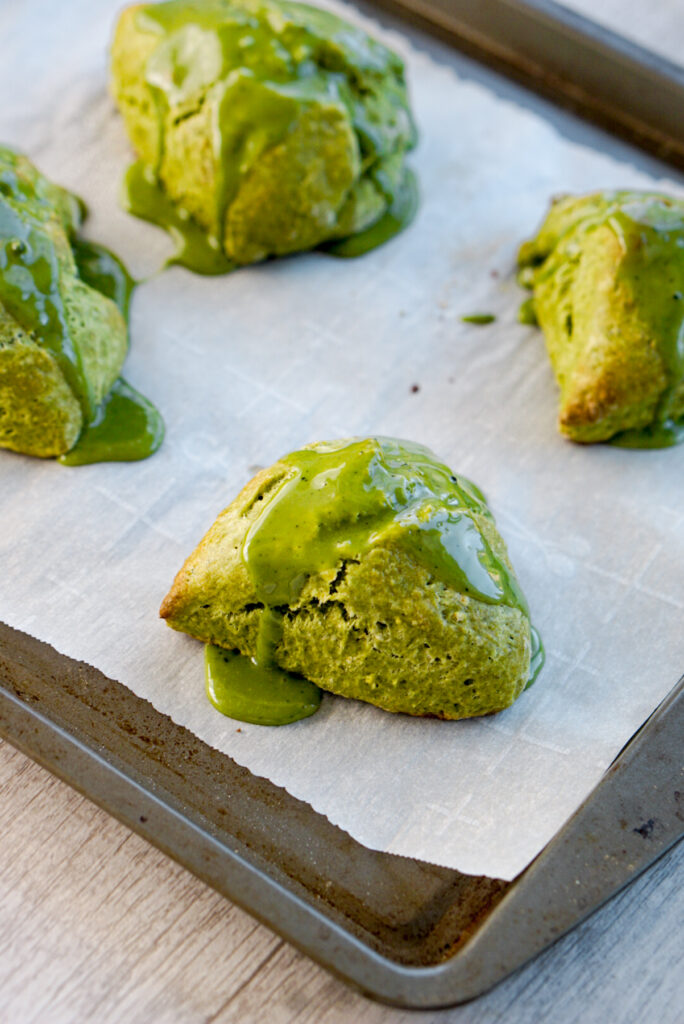
I’m a sucker for British scones, cream tea, and the Great British Bakeoff, so I do not take developing scone recipes lightly. In fact, I was hesitant to even try a matcha scone. Flavoring a scone just seems so… American.
But given that Japan has an even bigger tea culture (that’s right, I said it) than the UK and that matcha is tea, I figured matcha flavored scones might actually be the perfect fusion food. AND THEY ARE.
I brought these to a park playdate with a bunch of Japanese families, and everyone raved about these scones. Even the children. We probably shouldn’t have given the children so much free range with caffeine, but oh well. The point is, make this easy scone recipe, and you too can have boundless energy. Jump on down to the recipe if you are both a scone and matcha pro, or keep reading through the post for more thorough details.
What is matcha? What is the difference between matcha and green tea?
Matcha is made from the same plant as green tea, camellia sinensis. Unlike with most green teas, you make matcha by growing the plants under shade, which produces the super vibrant green matcha color. Additionally, with matcha you grind the leaves into a matcha powder which you whisk in hot water to form a matcha suspension rather than steeping the leaves as you would for tea.
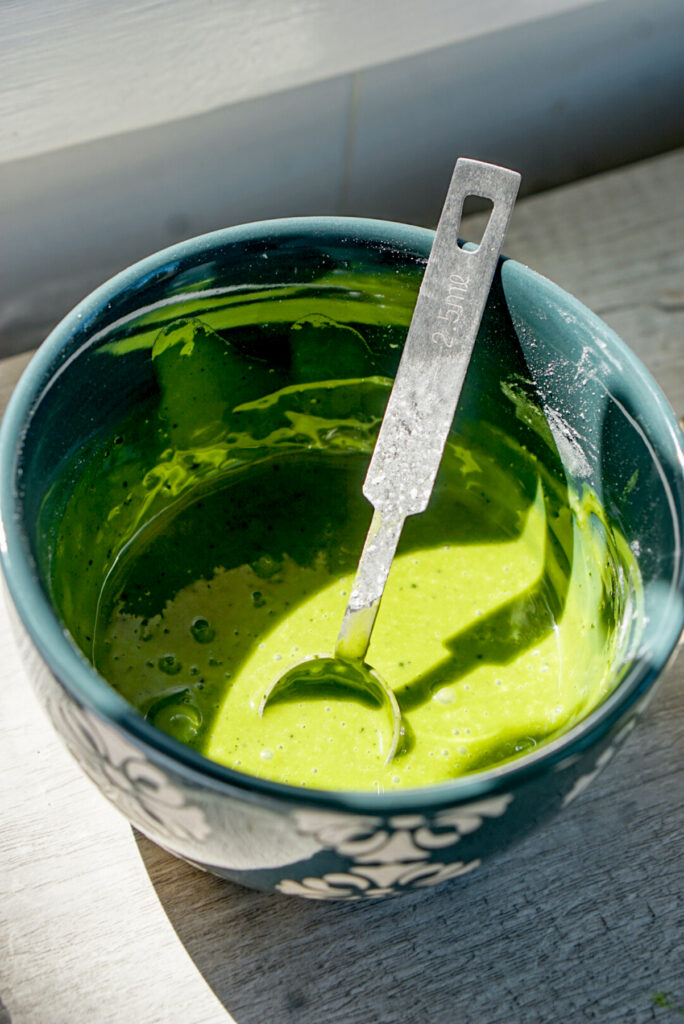
The powder form makes matcha really easy to add into baked goods!
What matcha is used for baking?
For baking, you need to use a matcha that has a very strong flavor. Like coffee, matcha comes in different blends with different flavor profiles. Matcha will taste different depending on where it’s grown as well.
With drinking matcha, I like to use lighter blends that are not bitter, so I don’t have to add any sweeteners to my drink.
With baking, I choose blends that are stronger and more bitter, since it has to compete with the sweetness of your baked goods, plus all the other ingredients in your bake. Knowing that I’m using a very strong blend, I’ve included only two tbsp matcha in this recipe. However, if you know your blend is maybe not too strong, you may want to increase by an extra tablespoon.
Can I Use Ceremonial Grade Matcha for Baking?
There’s a misconception on the internet that you need to use “culinary grade” matcha for baking and “ceremonial grade” for drinking. These labels don’t exist in Japan and were only created for Western marketing. There’s no regulation or official definition of each term. “Culinary grade” may refer to a lower quality matcha – perhaps the leaves have oxidized a bit more, or it’s not the best harvest, resulting in a lighter color and blander flavor. I would not use that kind of matcha for anything; it’s not worth buying.
On the other hand, ceremonial grade may just mean a giant markup. While you can expect ceremonial grade matcha to have a vibrant color, it tells you nothing about the actual flavor of the blend.
The only way to know for sure what kind of matcha you’re getting is to try them.
Which… granted can be expensive. So if you’d like to just take my recommendation, I use the Maeda-en Universal Quality matcha for baking. I’ve used the ceremonial grade as well, which has a slightly more vibrant color and stronger flavor, but the universal quality has worked well enough and is much more affordable. Both these blends are fairly bitter and not my favorite for drinking. For more information on matcha and brands I recommend, check out my Ultimate Guide to Matcha post!
British vs. American Scones
I hate American scones. They’re too dense, too soggy, and overly sweet. They’re also GIGANTIC.
I am much more partial to British scones. They’re crisp on the outside, while still soft on the inside, and with just the right amount of crumble. By itself, they may be slightly dry, but that’s what makes them so good with cream and jam!
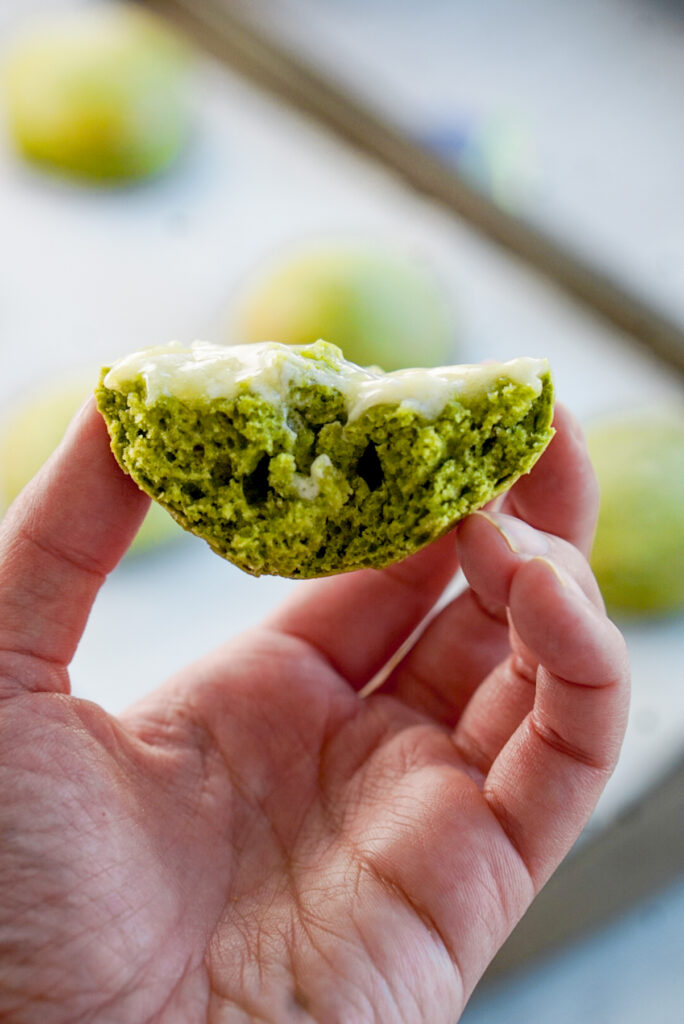
So for this recipe, I based it off a recipe from the Queen of Scones herself, Mary Berry. I had to make some minor adjustments to amounts, as British flour is different from American flour, but overall they’re fairly similar.
One key difference between the two countries’ scones is in the butter. Mary Berry uses softened, room temperature butter. American recipes tend to use cold butter that you cut into the flour like making biscuits or pie crust. Cold butter results in more flakiness and lamination. But for British scones, I don’t want a flaky biscuit. I want soft crumbles. Working the softened butter into your flour by hand will help achieve this texture.
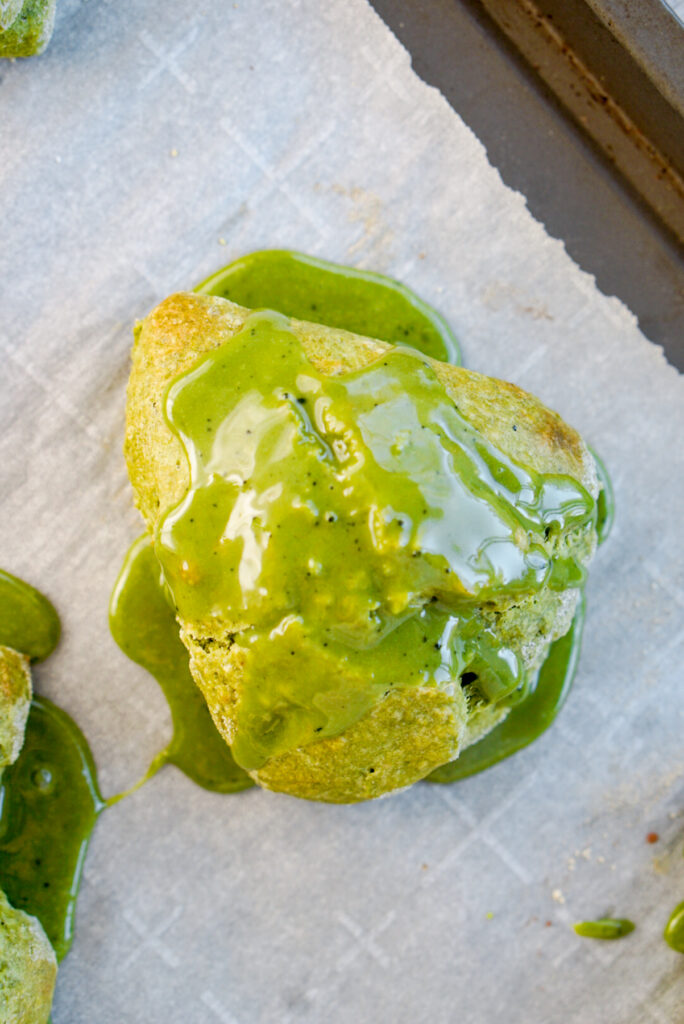
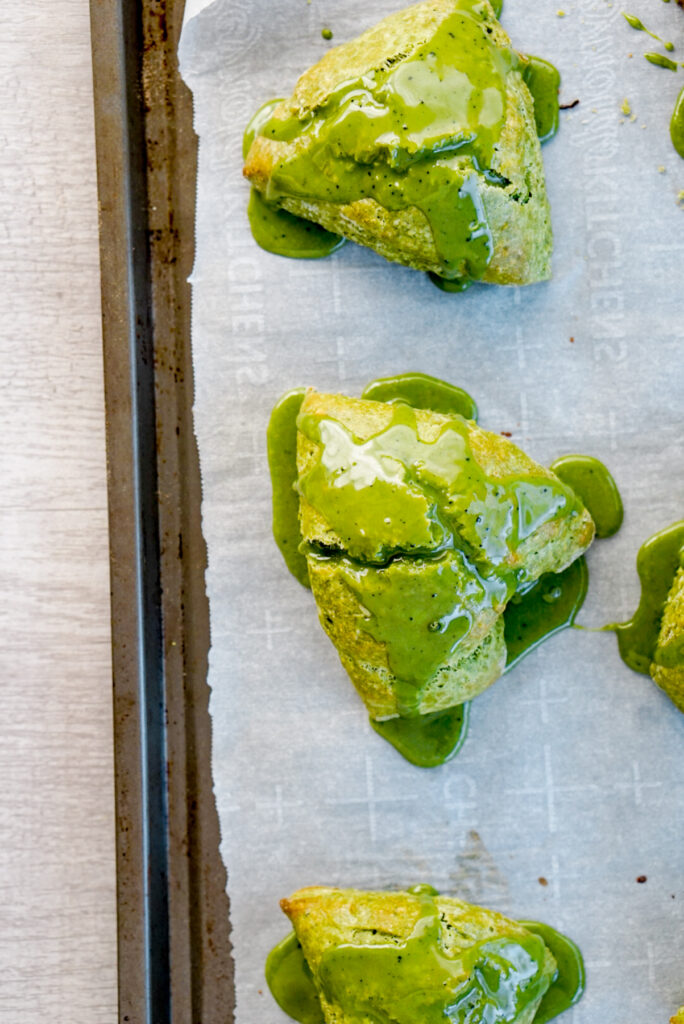
I confess, I do have an optional matcha glaze portion for this recipe, which is more American. But that’s why it’s optional! if you’re going to do the full cream and jam, then you don’t really need the glaze.
Milk Substitutions?
This recipe uses plain whole milk, the same as Mary Berry’s original recipe. I know many people ask if they can substitute almond milk or other types of plant milk, but I do not recommend it. Most plant milks don’t have as much fat as whole milk, or they’re too strongly flavored like coconut milk. On the other hand, heavy cream has too much fat. If you want to use heavy cream, I suggest you look up a cream scone recipe, which will likely omit or majorly decrease the butter.
At this time, I do not have a vegan or gluten-free version of this recipe, sorry!
Tips for Baking Scones
Baking is a science, so you’re likely to have better success being more accurate. One way to do that is to invest in a digital scale and weigh your ingredients.
Even with tools like scales, there’s still an element of baking that relies on intuition, as there are too many variables for any recipe to fully take into consideration. Your kitchen, your kitchen tools, and your brands of ingredients are all likely different from mine in some way.
One great tip I read was that different brands of flour absorb liquid differently because of variations in protein content or variations in strain of wheat. To determine how much liquid you add, I give you a general guideline, but you should ultimately go by feel. Your scone dough should be slightly sticky, but when turned out onto a lightly floured surface, does not stick to your hands. On the other hand, you should not have any dry powdery spots in your dough.
Another tip: use a sharp knife or pastry cutter to divide your dough into scones. Tearing the dough messes with the structure. A nice sharp cut straight up and down will give you better height.
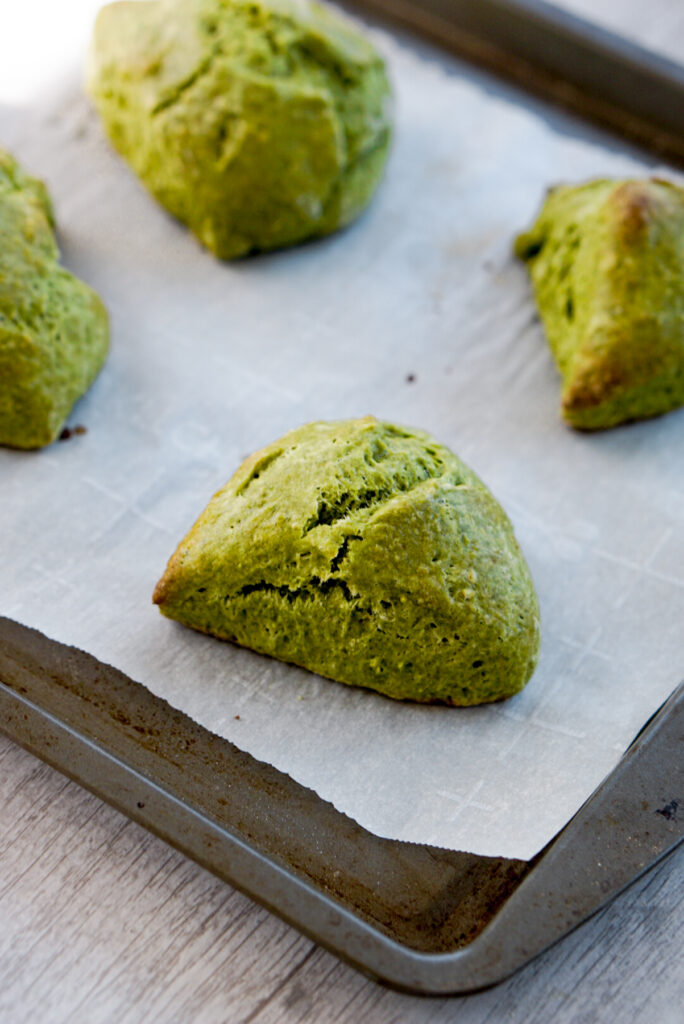
Speaking of height, also try to brush your eggs/milk glaze only on the tops of each scone scones. I’m not sure exactly why this works, but Paul Hollywood say to do this in one of his books, so I do.
More Matcha Recipes
Looking for more matcha desserts and drinks? Check these out:
- Matcha Horchata Latte
- Ube Matcha Latte
- Matcha Butter Mochi
- Soft Matcha Cookies with Strawberry Buttercream
- Matcha Crinkle Cookies
Perfectly Crumbly Matcha Scones
Ingredients
For Matcha Scones
- 3 1/2 cups all purpose flour, 425g
- 1 tbsp baking powder, 10g
- 2 tbsp matcha, 12g
- 1 tsp kosher salt, 6g
- 6 tbsp softened, unsalted butter, 84g
- 1/4 cup granulated sugar, 50g
- 1 cup whole milk, 240mL
- 2 eggs
For Optional Matcha Glaze
- 1/2 tsp matcha, 1g
- 1/2 cup powdered sugar, 50g
- 2 tsp whole milk, 10mL
Equipment
- biscuit cutter if doing round scones
Instructions
To Bake Round or Triangle Scones
- Preheat oven to 425 degrees F and line two baking trays with parchment paper or silicone.
- In a large mixing bowl, whisk flour, baking powder, matcha, and salt.
- Mix in softened butter into your dry ingredients by hand, until your mix has the texture of moist sand. Whisk in the sugar.
- In a separate bowl, whisk milk and eggs.
- Pour about a cup of the milk mixture into your flour mixture, reserving at least 2 tbsp of liquid for later. Different brands of flour will absorb liquids differently, so I recommend pouring a little at a time and adding more as needed. Mix until your dough comes together and no longer has dry patches. It's okay if your dough is a little sticky, as you will turn it out onto a floured surface.
- Dust a clean surface with flour and turn out your scone dough.
- For triangles, pat dough into two 6 inch discs about an inch thick and cut each circle into sixths, resulting in 12 total triangle scones.
- For rounds, pat dough to about 1/2 inch thick and fold one half of the dough on top of the other to create two layers. Cut out circles with a biscuit cutter. Reroll scraps and continue cutting out circles. With a 2 inch cutter, you should get about 16-20 round scones.
- Transfer scones to your prepared baking tray. Brush the tops with the remaining milk and egg mixture and bake for 15 minutes or until cooked through and just slightly browning on the edges.
For Optional Matcha Glaze
- Mix matcha, whole milk, and powdered sugar to make a glaze. Drizzle over completely cooled scones.
Notes
- This recipe can easily be halved for 6 triangle scones or 8-10 round scones (depending on the size of your biscuit cutter).
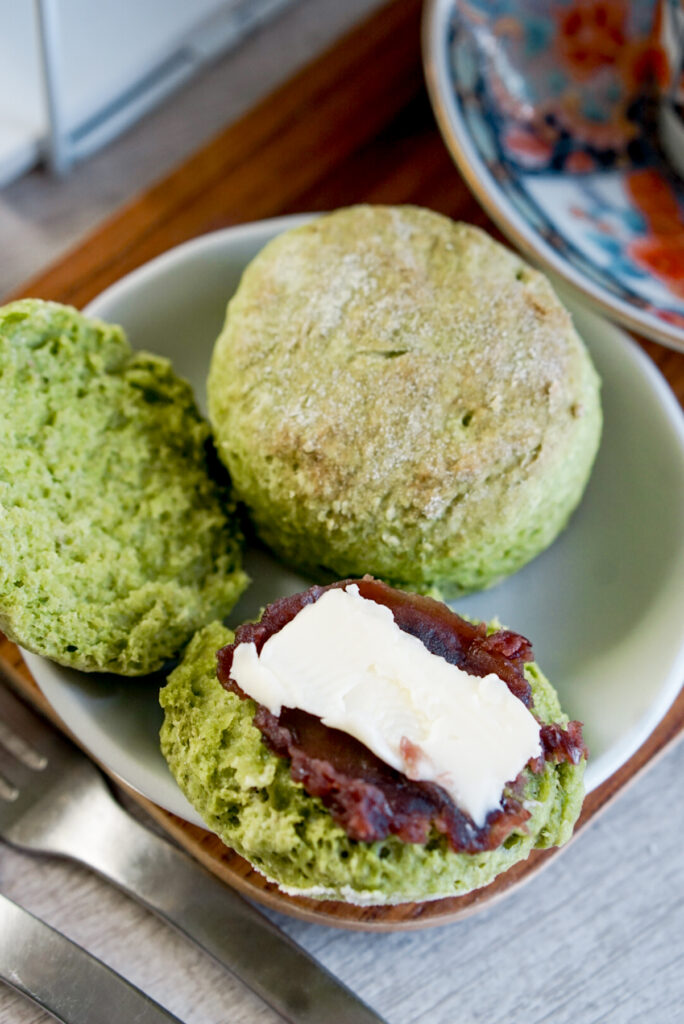
- I love topping scones with a smear of red bean paste and a pat of butter. This flavor combination is called an butter “あんバタ” in Japanese and is very popular.

Pingback: Easy And Delicious Yuzu Scones Recipe - Mochi Mommy
This is a good scone recipe and relatively simple to make! I did sub whole milk for oat because it’s all I had- may have left the scones more dry and dense but they’re still great. I prefer British scones over anything else so this recipe was perfect for that craving! The scones were crispy on the outside, but lacked any matcha flavor (could be my brand).
Yay, I’m glad you liked it! Can I ask what matcha brand you used? I highly recommend the Maeda-en brand for baked goods, as both the color and flavor comes out very strong.