
Make Authentic Miso Soup Like a Japanese Mom
Make an authentic homemade miso soup with this easy recipe. While many blogs will tell you to make this traditional Japanese soup from scratch, this quick miso soup recipe is how many busy Japanese moms actually cook in real life. Read through the blog post for information about ingredients like instant dashi and miso paste, or jump on down to the recipe card below.

What is Miso Soup?
Miso soup is probably the most famous Japanese soup and is absolutely crucial to Japanese cuisine. You will find it as a side dish at most Japanese restaurants and can be served with breakfast, lunch, and/or dinner.
The base of miso soup is called dashi, which is a broth frequently made from fish and kelp (more on this below). It is flavored with miso paste. You can find a variety of additional ingredients in miso soups that are completely customizable according to tastes. For example, some may have tofu, noodles, or a variety of vegetables.
What is Dashi?
Dashi is a type of broth used frequently in Japanese cooking. It is often made from a combination of fish and kelp. To make a pretty standard homemade dashi, you would simmer water with dried kelp (called kombu) and bonito flakes called katsuobushi. Then you strain those out for a clear Japanese soup stock full of umami ready to be used in a variety of recipes.
Of course there are different types of dashi stock. Some use only kelp or shiitake mushrooms for a vegan dashi. Of course there are different types of kombu and different types of katsuobushi that vary from region to region in Japan as well. But in general many standard dashi recipes will use a combination of kombu and katsuobushi.

Dashi from Scratch vs. Instant Dashi Powder
Many Japanese cooking blogs will tell you that you NEED to make your dashi from scratch or your soup won’t taste right. Of course, homemade dashi tastes great and is something that we should all aspire to.
However.
This is simply not realistic. Every single Japanese friend I have uses instant dashi packets or powders. Japanese people are busy too, just like us! They’re not super intense chefs, just like us! They use cooking shortcuts, just like us! So take those uppity from-scratch-only recipes with a grain of salt and go ahead with the instant dashi.
What is the Best Brand of Instant Dashi?
If you’re brand new to dashi, you can find instant dashi products at a Japanese grocery store in two main forms: steeping packets or dissolvable granules (and sometimes a combination of both). The dissolvable granules or powder is nice if you want to add dashi flavor but don’t want to add extra liquid. For example, you could throw it into your tamagoyaki without making the eggs too watery.
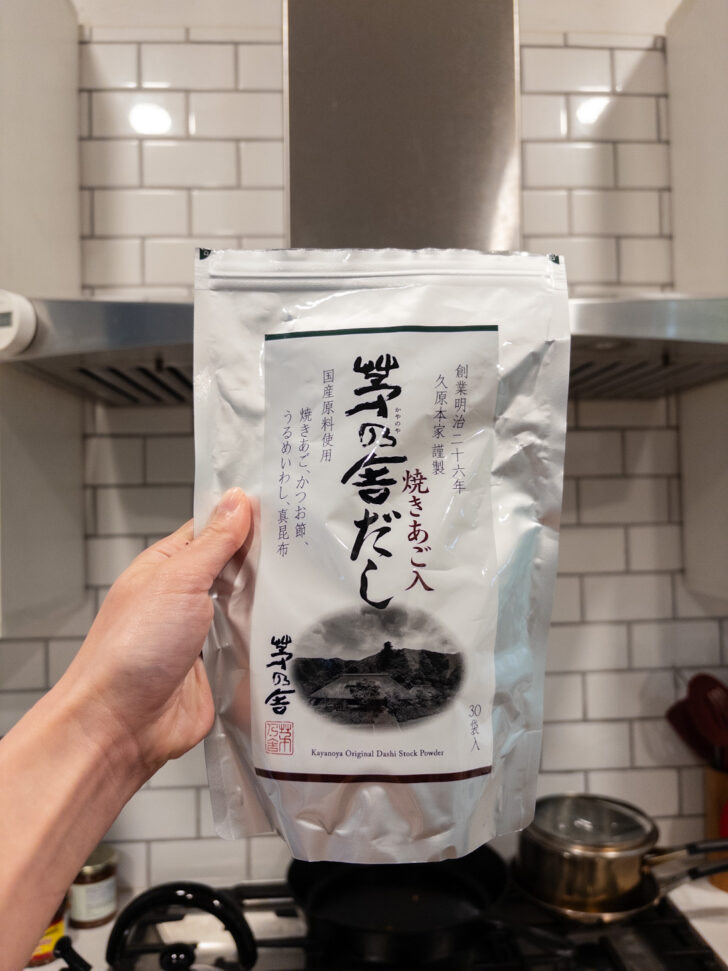
For soup, I tend to like the seasoning packets that you steep in hot water like tea. Then you toss the packet afterwards. My absolute favorite brand of dashi packet is Kayanoya. My friends who are born and raised and currently live in Japan also use this brand. It is more expensive than other brands, but it is completely worth it. The first time I used it, I was shocked. It smelled and tasted JUST like my grandma’s homemade dashi. I also really like that for Kayanoya packets, if you don’t need a clear soup, you can rip open the packet and dump the seasoning powder directly into your food.
You can buy Kayanoya on Amazon, but it is a lot more expensive than if you buy direct from them. They have a US site and, of course, you can also buy it in Japan. Last time I went to Tokyo, I stocked up.
What is Miso? Which Miso Should I Use for Soup?
The other crucial ingredient to a good miso soup is your miso. Miso is a paste made from cooked, mashed soybeans that are fermented with salt and a Japanese ingredient called koji. Koji is made from grains (like rice or barley) and a mold and is used to make fermented foods.
By altering the type of koji, fermentation time, and ratio of koji to soybeans, you can get a huge variety of different types of miso paste. My favorite to use in most of my recipes is white miso, also called shiro miso, which has a short fermentation time and a light flavor. In comparison, there’s also red miso, which has a longer fermentation time and a much stronger savory flavor.
I recommend white miso if it’s your first time, but feel free to experiment with different kinds as you get more used to making your own miso soup.

What to Put in Miso Soup?
This is where it gets fun. You can really customize your miso soup however you like. Here are some ingredients that I’ve seen put into miso soup in varying combinations:
- tofu
- seaweed
- somen noodles
- carrots
- daikon
- scallions
- kabocha
- clams
- fish cake
- spinach
As you can see, you can really make this dish your own. Just make sure to adjust your cook time accordingly. For example, you’ll want to simmer your dashi a little longer to cook through carrots and daikon than you would need for spinach.

More Japanese Recipes
Looking for more Japanese recipes to go with miso soup? Try these:
- Miso Glazed Salmon
- Grilled Corn with Miso Butter and Furikake
- Spinach Goma-ae (Japanese Sesame Spinach Salad)
- Extra Crispy Tonkatsu
- Simmered Kabocha with Ground Meat

Miso Soup (Japanese Mom Recipe)

Ingredients
- 3 cups water
- 1 packet Kayanoya dashi
- 1/4 block silken tofu
- 1 stalk green onion, chopped
- 3 tbsp white miso paste
Instructions
- Put water and dashi packet in a medium pot. Turn on the heat to high.
- While you wait for the water to boil, slice tofu into small cubes and prepare your green onion.
- When water is boiling, bring heat down to medium and simmer for 3 minutes.
- Remove dashi pack from the water and discard. Add tofu to your pot of dashi. Turn off the heat. Your dashi should still be very hot. If you added a lot of cold tofu, you may need to keep your dashi on the heat until it comes back up to almost boiling. See notes below for what to do if you add other ingredients. In any case, turn off the heat before you move on to the next step.
- Dissolve 3 tbsp of white miso paste into your dashi. Taste your soup and add more miso as needed.
- Scoop miso soup into small bowls (one serving is a little under one cup) and garnish with the chopped green onions. Serve immediately. Leftover miso soup can be kept in the fridge for up to two days, but it tastes best fresh.