

The Best Yuzu Meringue Pie Recipe

Try this yuzu meringue pie recipe for a tart, floral variation on classic lemon meringue. My recipe uses an equal amount of egg yolks and whites so you have no leftover (you’re welcome), and a marshmallow meringue with cooked egg whites. Disclaimer: This post may contain affiliate links.
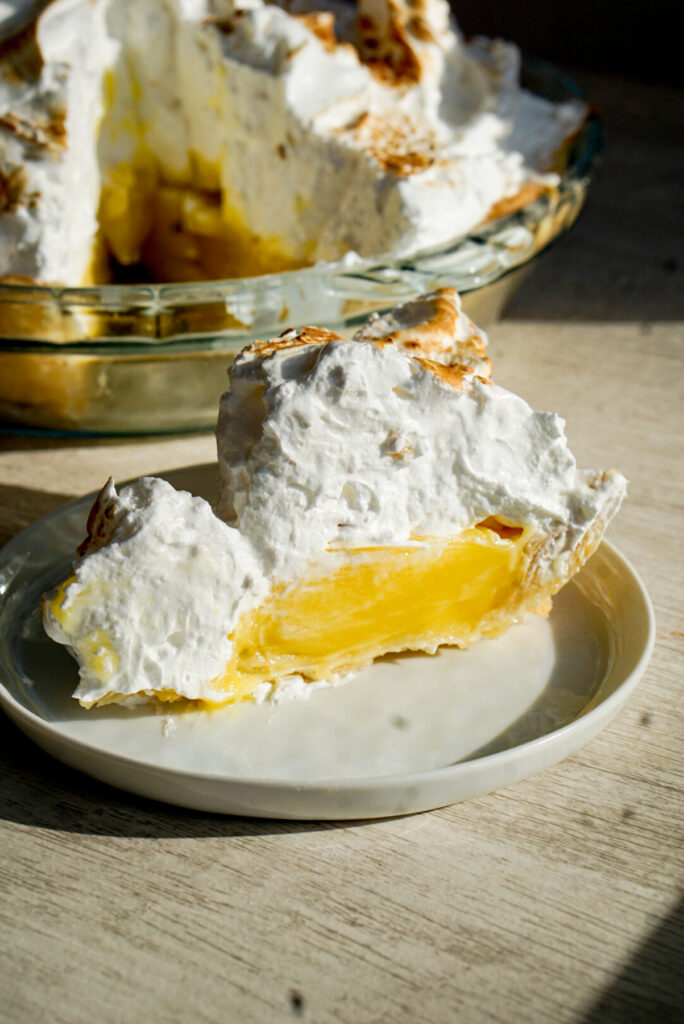
Some of you may know that pie may be one of my greatest baking weaknesses. If I was on Great British Bake Off, I would absolutely be eliminated on a pie challenge. So I don’t have too many classic pie recipes on this blog – they’re mostly pie bars or other ways to work around having to make an actual pie.
But I was really craving a super tart citrus-y meringue pie, and store-bought lemon meringue just wasn’t going to cut it. From my many egg white recipe escapades, I knew that making meringue added even more effort into my venture, but I committed myself to mastering the yuzu meringue pie.
And OMG IT’S SOOOO GOOD! MY NEW FAVORITE PIE!!! THE BEST!!!
So please, be forewarned that this is not the easiest recipe I have, but it’s worth the effort if you can muster up the steady dedication.
Yuzu FAQs
What is yuzu?
Yuzu is a very tart citrus fruit native to East Asia. It’s predominantly grown in Japan and China, but is popular among many Asian countries. It is round and about the size of a small orange, typically yellow in color. Yuzu is notorious for having many seeds, which makes it difficult to get much juice out of the fresh fruit. Fresh yuzu is also somewhat difficult to find in the US, so my recipes mostly require bottled yuzu juice.
What does yuzu taste like?
Yuzu is more tart than lemon, but I find it to be less bitter than grapefruit. It has some floral notes, as the fresh flowers smell like jasmine or orange blossoms. Like lemons and limes, yuzu is not eaten by itself but used to flavor drinks, sauces, desserts, and marinades.
Where to buy yuzu juice?
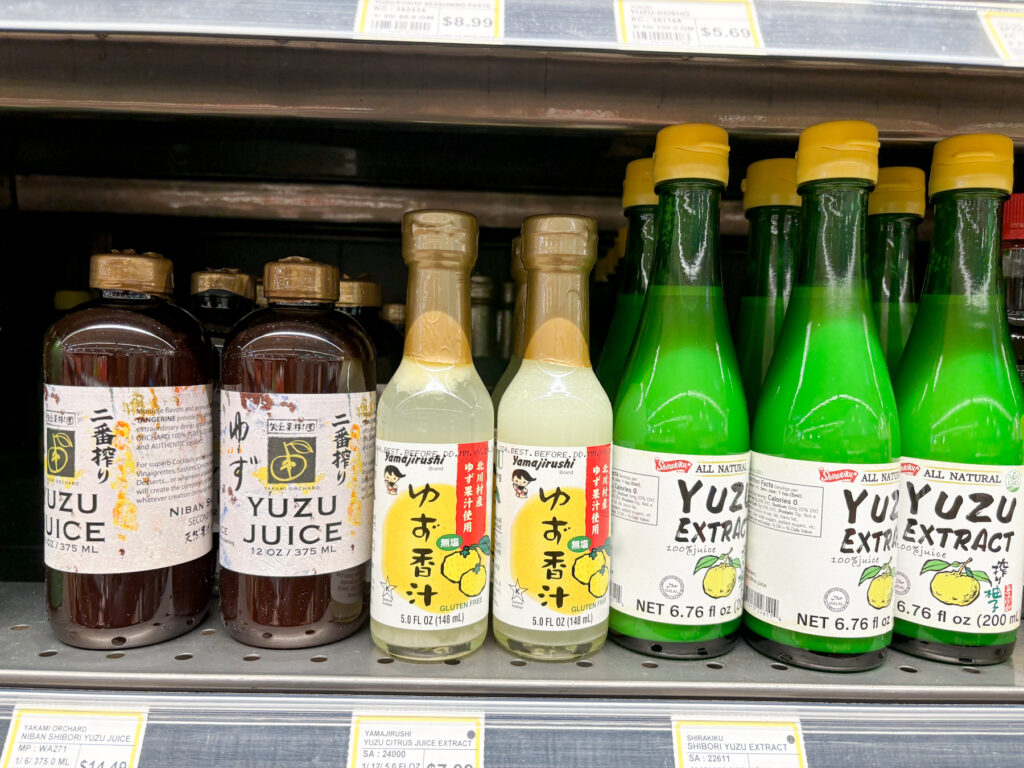
You can find bottled yuzu juice at Japanese grocery stores or on Amazon. Unfortunately, the flavor and acidity of the juice will vary wildly by brand, so you will need to taste test the juice before you use it. If you’d rather not go through the trial and error, my favorite yuzu juice is by Yuzu Co, but it is very expensive. A cheaper alternative is Shirakiku yuzu extract, which I find to be much more sour and less floral. If you use Shirakiku, I recommend diluting with water by 25% at least to start. Once you start baking with yuzu frequently, you’ll be able to adjust to your taste preferences.
What flavors go well with yuzu?
Because yuzu is so fragrant, I recommend pairing yuzu with floral extracts, such as orange blossom water or elderflower. Almond extract also pairs well with yuzu.
Can I substitute yuzu with lemon?
Yes! If you find that your yuzu juice is too weak in flavor, you can substitute parts of it with lemon juice. Alternatively, you can substitute all the yuzu for lemon to create a lemon pie, but where’s the fun in that?
Special Ingredients And Tools Needed
To make the pie, you will need some of the typical pie equipment: rolling pin, pie tin, pie weights, etc. I learned this from Stella Parks of Bravetart, but instead of pie weights, you can use sugar on top of aluminum foil to weigh down your crust as it blind bakes. The sugar gets toasty and can be reused in other recipes! Alternatively, you can also use dried beans or rice as your weights.
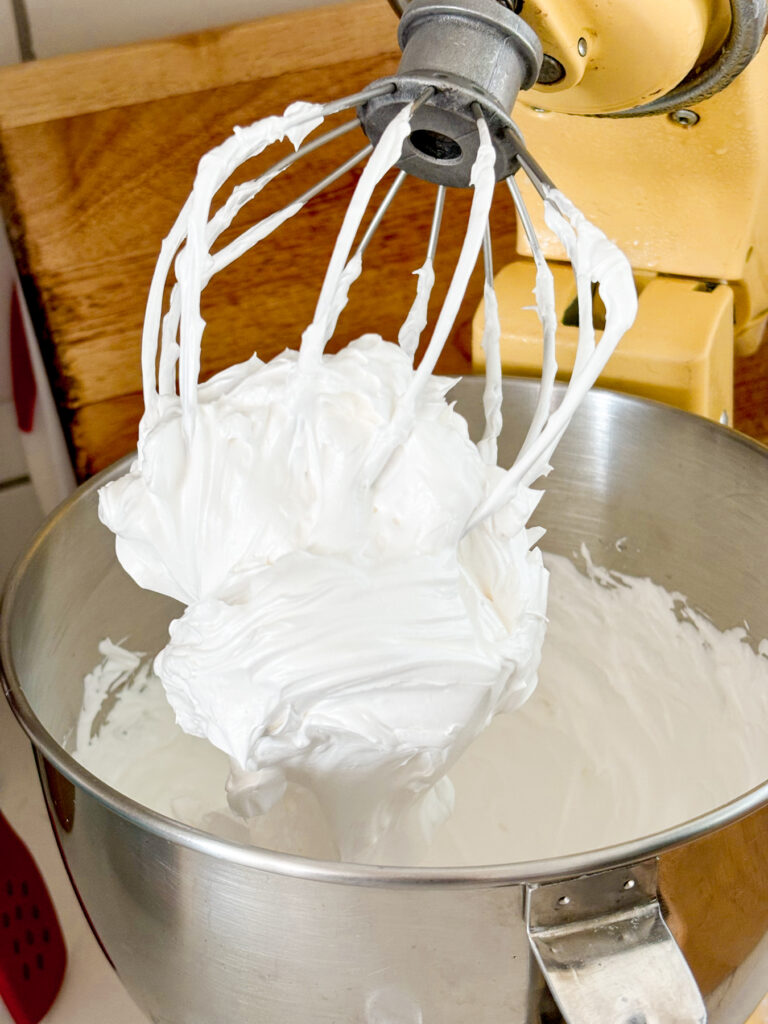
Because my recipe for the marshmallow meringue requires cooking the egg whites, you will need a digital thermometer and at least an electric beater of some kind (e.g. stand mixer). To make the marshmallow meringue, you will cook the sugar and egg whites over a double boiler to 160 degrees F before beating it to stiff peaks.
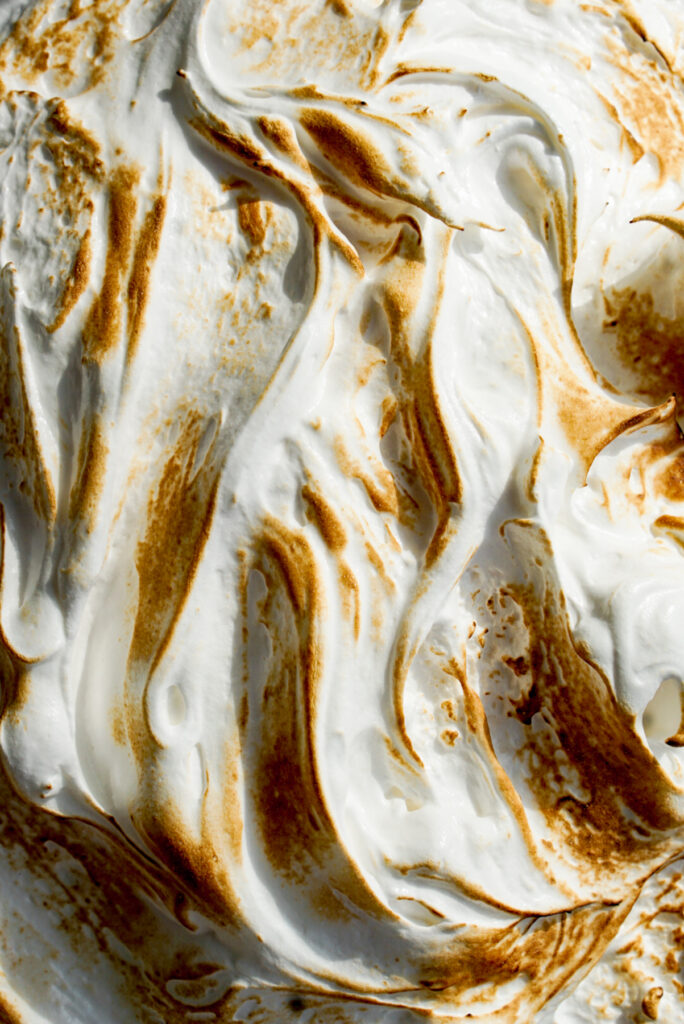
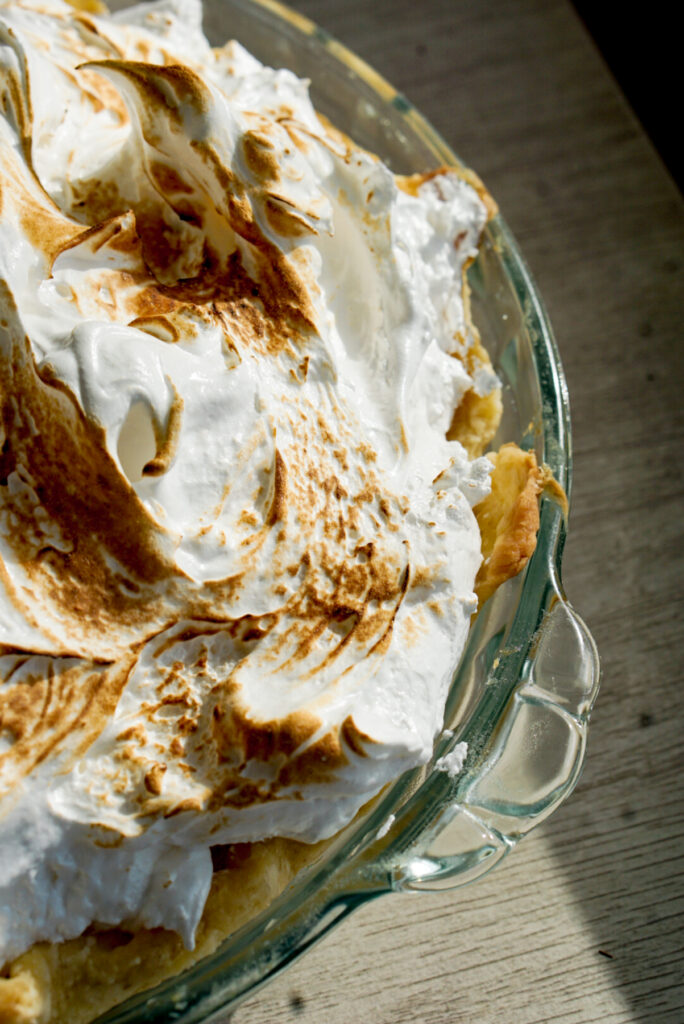
Lastly, if you want toasty swirled marshmallow edges, you’ll need a kitchen torch. It’s totally optional, but it’s SO FUN. And because the topping is marshmallow-y, it’s very campfire smores-like. I highly recommend it!!
Tips For Making The Pie Crust
Look, I am VERY BAD at making pie crusts. So if I can do this, you can too.
The biggest tip I have I learned from the Book on Pie by Erin McDowell and that is that different brands of flour absorb liquid differently. This means that regardless of what the recipe says, you will at some point need to go by feel. So put in water, mix gently by hand, and then decide if you need to add more or not. Don’t overthink it. If it’s too sticky, add more flour. If it’s too crumbly and dry, add more water.
P.S. If you have a tart shell recipe you like better than pie crust, you can use this recipe to make a yuzu meringue tart as well! I would just scale it down, as tart pans are usually more shallow than pie tins and will hold less volume.
More Asian Pie Recipes
Looking for more of my Asian flavored pie and pie-adjacent recipes? Check these out:
- Super Easy Chocolate Haupia Pie
- Easy Creamy Yuzu Pie
- Creamy Yuzu Pie Bars
- Okinawan Sweet Potato Haupia Pie Bars
- Okinawan Sweet Potato Haupia Pie
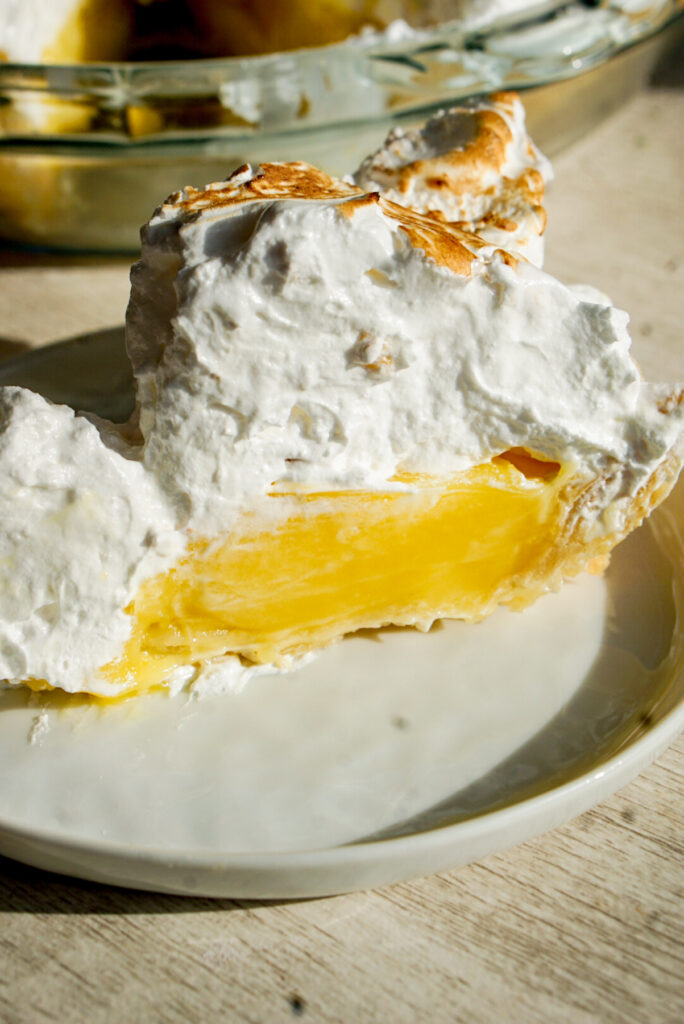
Yuzu Meringue Pie
Ingredients
For Pie Crust (Makes 2)
- 2 1/2 cups all purpose flour, 300g
- 1/2 tsp kosher salt, 3g
- 1 cup cold, unsalted butter, 227g
- 3/4 cup ice cold water, 177mL
- additional flour for dusting
For Yuzu Curd Filling
- 1 cup sugar, 200g
- 1/3 cup cornstarch, 37g
- 1/4 tsp kosher salt, 1.5g
- 1 cup yuzu juice, 236mL
- 1 cup water, 236mL
- 5 egg yolks
- 1/4 tsp orange blossom water, optional
For Meringue
- 5 egg whites
- 1 cup sugar, 200g
- 1/4 tsp cream of tartar
- 1/8 tsp kosher salt
- 1/4 tsp vanilla extract
Equipment
- digital food thermometer
- electric or stand mixer
- pie tin
- Rolling Pin
- pie weights OR extra granulated sugar
- kitchen blowtorch optional
Instructions
To Make Pie Crust
- In a large mixing bowl, whisk flour and salt.
- Cut cold butter into smaller cubes and add to the flour.
- Either using a food processor, pastry cutter, or by hand, work the butter into the flour until you get a sandy texture and pea-size chunks of butter remain. Note: You can achieve different textures of pie crust depending on how much you work the butter into the flour, so feel free to adjust to your preferences.
- Pour in 1/2 cup of the ice cold water and gently mix by hand. Continue adding water 1 tbsp at a time until the dough comes together in a ball. Dough should no longer be dry and crumbly but also not be sticky. Different brands of flour will absorb water differently, so you need to go by feel. You will not probably not need the full remaining 1/4 cup of water.
- Split dough in half, wrap each half in cling wrap and place in fridge for 20 minutes to rest. You can also let it sit overnight to finish the next day. The extra pie crust can also be frozen for a different recipe.
- Preheat oven to 425 degrees F.
- Dust a clean surface with flour and take out one of your chilled crusts. Roll out to a 12 inch circle, dusting with flour to keep from sticking. Note: If you are using a deeper dish pie tin, then you will need to roll out slightly larger.
- Transfer dough to your pie tin, trimming off any excess that overhangs down the sides of the dish. Crimp the edges and poke holes in the bottom of the crust with a fork. Note: You can wrap and freeze the dough at this point to finish the recipe at a later date, if needed.
- To blind bake the crust, cover the entire crust with aluminum foil. You can use pie weights, or, if you're like me, simply pour some granulated sugar into the foil to weigh down the crust and keep it from rising. The baked sugar gets toasted and can be reused after it's cooled down for other recipes.
- Bake for 15 minutes. Then remove the foil and weights (remember to save the sugar, if using) and bake, uncovered, for an additional 10 minutes, or until golden brown. Set aside to cool while you make the filling.
For the Yuzu Filling
- In a heat proof bowl, mix all ingredients for the filling except for the orange blossom water, if using. Remember to save the egg whites for making the meringue.
- Set a small pot with about an inch of water on the stovetop and bring to a simmer.
- Place the bowl with your yuzu mixture on top of the pot to create a double boiler (alternatively, if you have a separate double boiler, you can use that). Continuously stir the filling as it cooks, until it becomes very thick and bubbles.
- Remove from heat and stir in the orange blossom water.
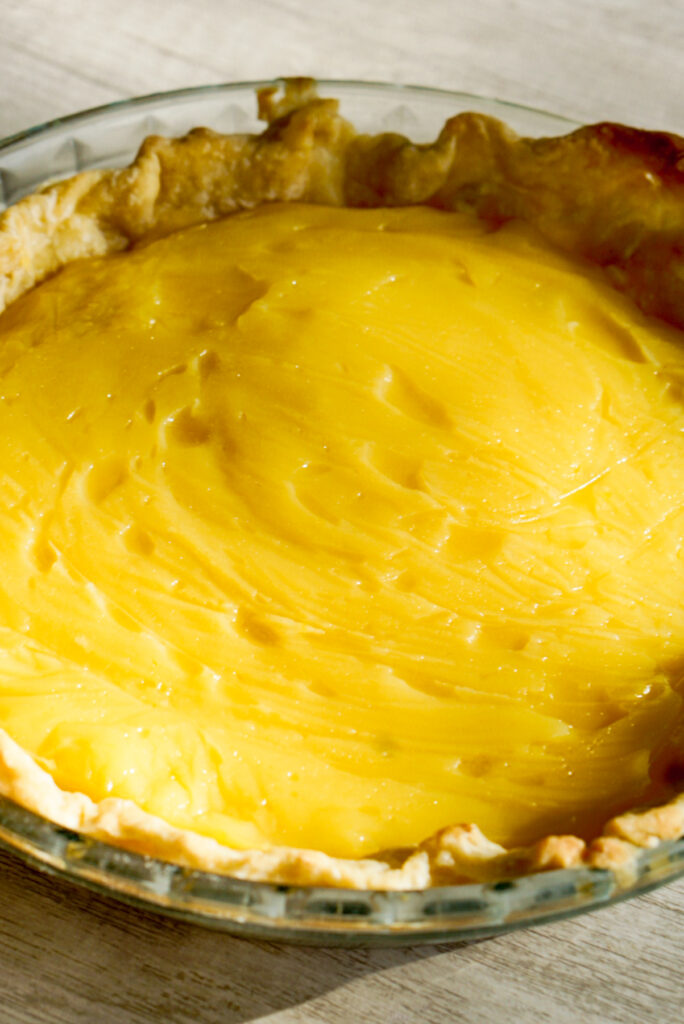
- Transfer curd to the prepared pie crust. Cover with plastic wrap, directly touching the surface of the curd, and place in the fridge to completely cool.
For the Meringue
- In the bowl of a stand mixer or other large mixing bowl, place egg whites, sugar, and cream of tartar. Clip on a digital thermometer to your bowl.
- Set up your double boiler again, or bring your pot of water back to a simmer.
- Place your mixing bowl above the simmering water and cook the egg whites, stirring continuously, until you reach a temperature of 160 degrees F. This should take about 7 minutes.
- Remove from heat and beat with an electric mixer or the whisk attachment of a stand mixer until meringue becomes light and fluffy and is no longer hot.
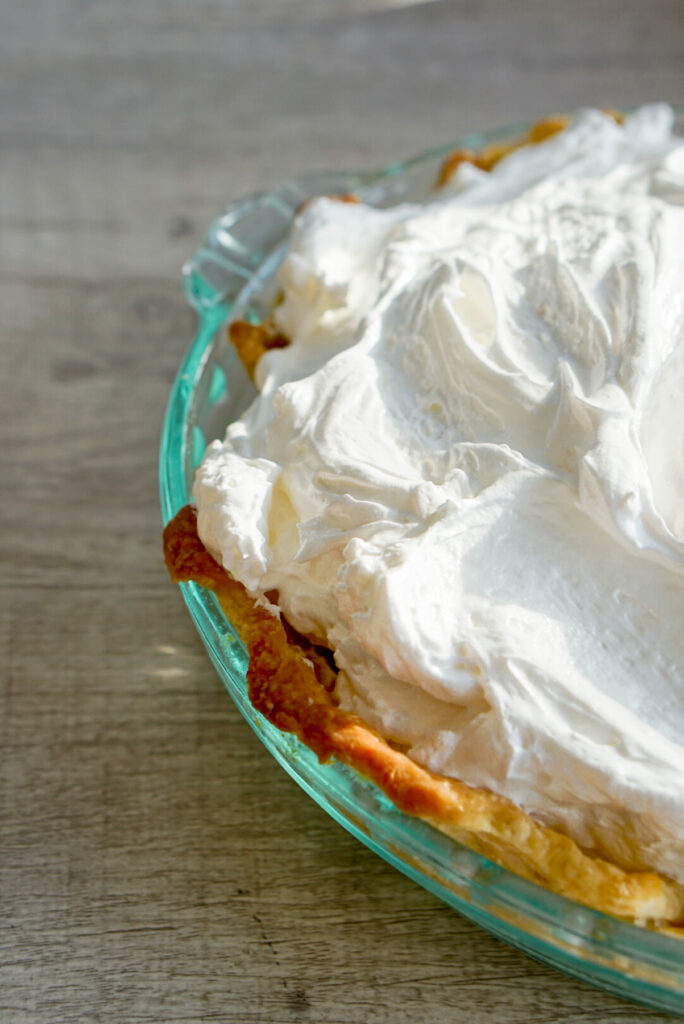
- Transfer meringue to the top of your chilled pie. Smooth out the meringue to cover the surface of the filling, and use a utensil to create swoops and swirls in the meringue, if you'd like.
- If you have one, use a kitchen blowtorch to brown the edges of the meringue.
- Pie is ready to be served immediately but can also be stored in the fridge.
Notes
- This recipe makes two pie crusts, so you can save one to make a different recipe at a later time. Alternatively, you can halve the pie crust recipe and make just one.
- Feel free to use a store bought crust if you don’t want to make one from scratch.
- The acidity of the yuzu may react with some metal cookware, so use a glass bowl and silicone whisks and spatulas if you think your cookware may be reactive.
- Bottled yuzu juice can have varying levels of tartness depending on the brand and regardless of how they are labeled. Please check by tasting your juice first; it should be about as tart as lemon juice. I used Yuzu Co brand for this recipe.
- Cooking the egg whites in this swiss meringue method means that the meringue will not deflate and lasts much longer than an uncooked meringue, plus it’s safer to eat if you’re pregnant or otherwise immunocompromised.

I should’ve known that because I used a ceramic pie dish, it would need more baking time for the rest of the pie crust to bake thoroughly. Aside from this, the yuzu curd struggled to thicken after stirring continuously for 20+ min, so I had to add 1 tbsp cornstarch (+ 3 tbsp water) then blitz it in the microwave 30 sec at a time.
As for the meringue, it remained sticky and wouldn’t form stiff peaks no matter long I whipped it for — I ended up just using it anyway, and it was delicious! (once you bake it for a few minutes at a lower oven temp or low broil while watching very carefully, it crisps up into a meringue texture)
If I were to make this again, I would also increase the sugar ratio since the yuzu curd left a sour aftertaste, or actually try adding orange blossom water