
The Easiest Steamed Red Bean Buns (Mushi Manju)
Make perfect Japanese steamed red bean buns with my mushi manju recipe. This is similar to Chinese dou bao or dou sha bao and Korean jjinppang but with NO yeast! It’s super easy, fast to make, and accidentally vegan. Disclaimer: This post may contain affiliate links.
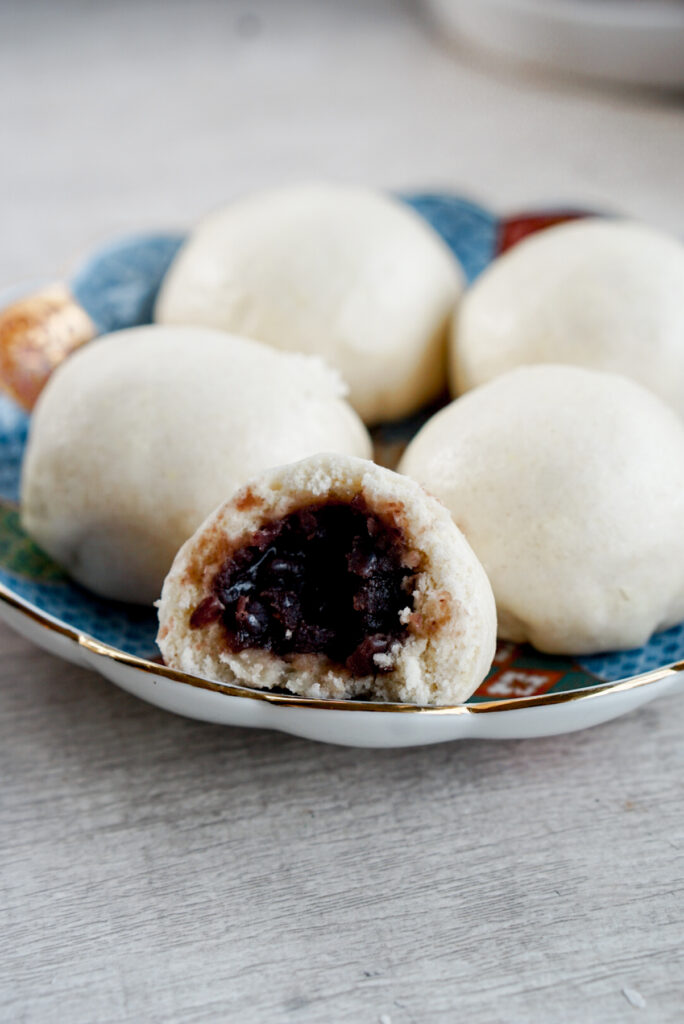
Hello and welcome back to Manju Madness! I’ve been writing a series of recipe posts featuring different kinds of manju. So far I’ve done baked manju, Maui manju, one pan manju, and a Taiwanese pineapple cake manju, but I haven’t yet tackled the most common manju – mushi manju.
What is Mushi Manju?
Manju is a category of sweet Japanese confections. They come in the shape of small cakes, sort of similar in size to daifuku mochi, and they typically consist of some sort of carb-y outer shell stuffed with a sweet filling. The most common versions use wheat flour for the shell and a sweet red bean paste filling.
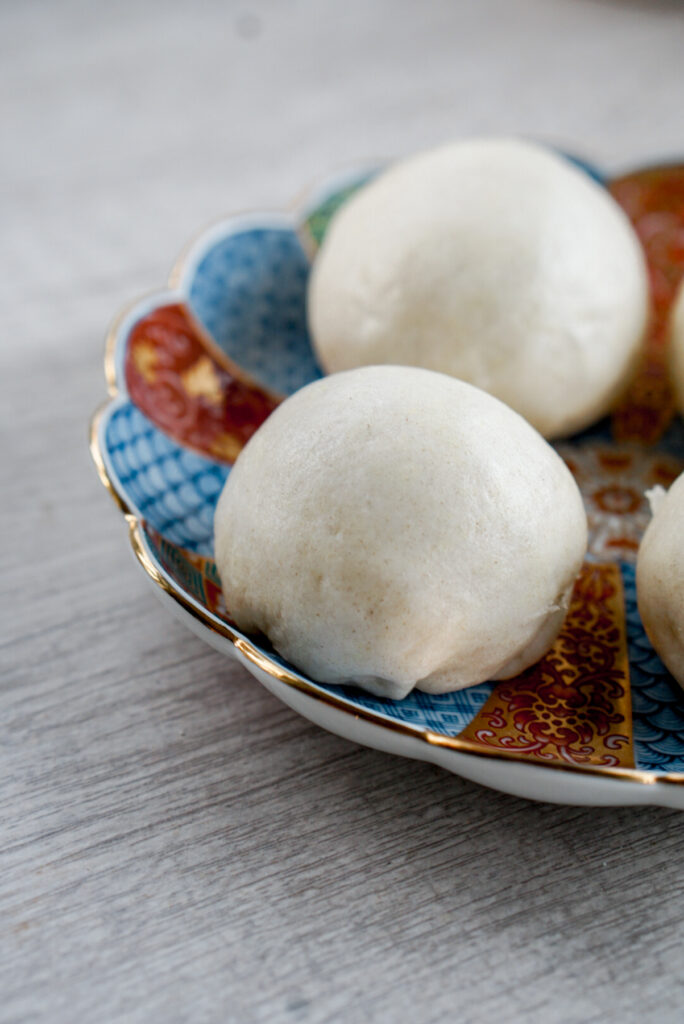
Manju can be baked, becoming similar to a hand pie. But the more common version of manju seen in Japan are mushi manju, mushi referring to foods that are steamed. My recipe for mushi manju have a fluffy white bao bun like shell and a sweet filling made from adzuki beans.
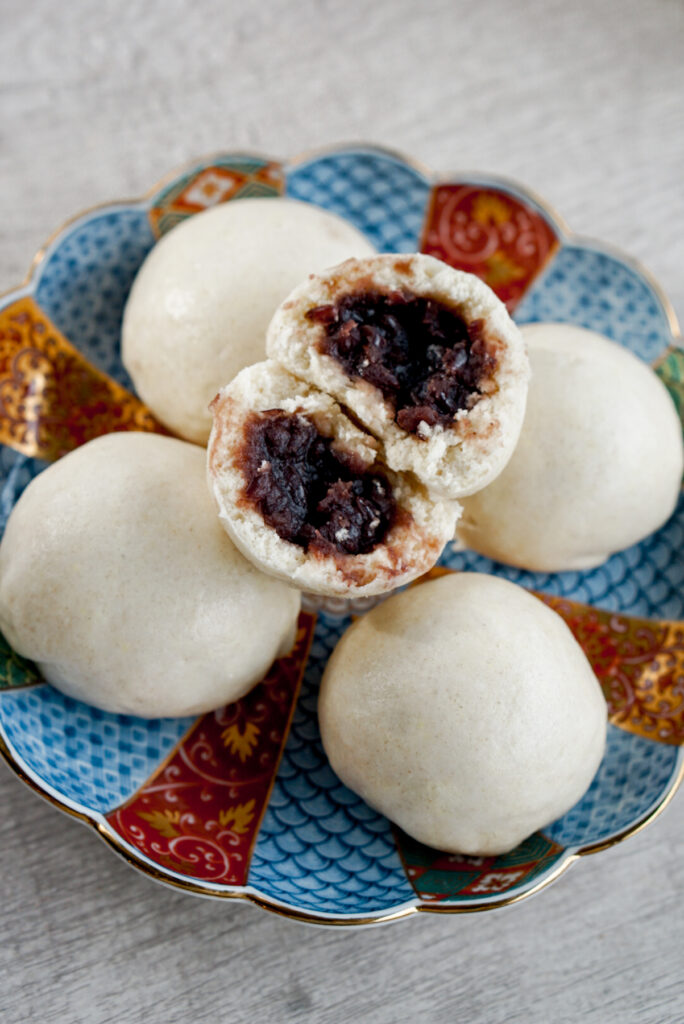
To get the fluffy white bao look, I use granulated sugar and baking powder, but other version of manju that are darker in color may use brown sugar and baking soda instead. Stay tuned for those kinds of manju! I plan to post more recipes with those variations.
Difference Between Japanese, Chinese, and Korean Red Bean Steamed Buns
Manju originally developed in Japan after emissaries who traveled to China brought back Chinese customs of eating sweet confections with tea (the OG dim sum?) and the fluffy steamed bread mantou. The name mantou morphed into “manju” in Japanese.
So it’s no wonder that Japanese steamed red bean buns are almost exactly like the Chinese version! The main difference is that Chinese steamed breads use instant yeast (or some other sort of yeast). The korean red bean bun also is yeasted. The Japanese steamed buns, however, generally use baking powder or baking soda instead. That means no waiting for dough to rise or proof, no kneading, and a lot less room for error. You don’t need any special equipment like an electric or stand mixer either! You can mix everything in a bowl with a spoon. The only special equipment you will need is some way to steam the buns. I like using a bamboo steamer basket because you can layer them on top of each other and cook all the buns at once, saving time. But you could use a metal steamer or even a plate balanced on chopsticks over simmering water in a skillet with a lid.
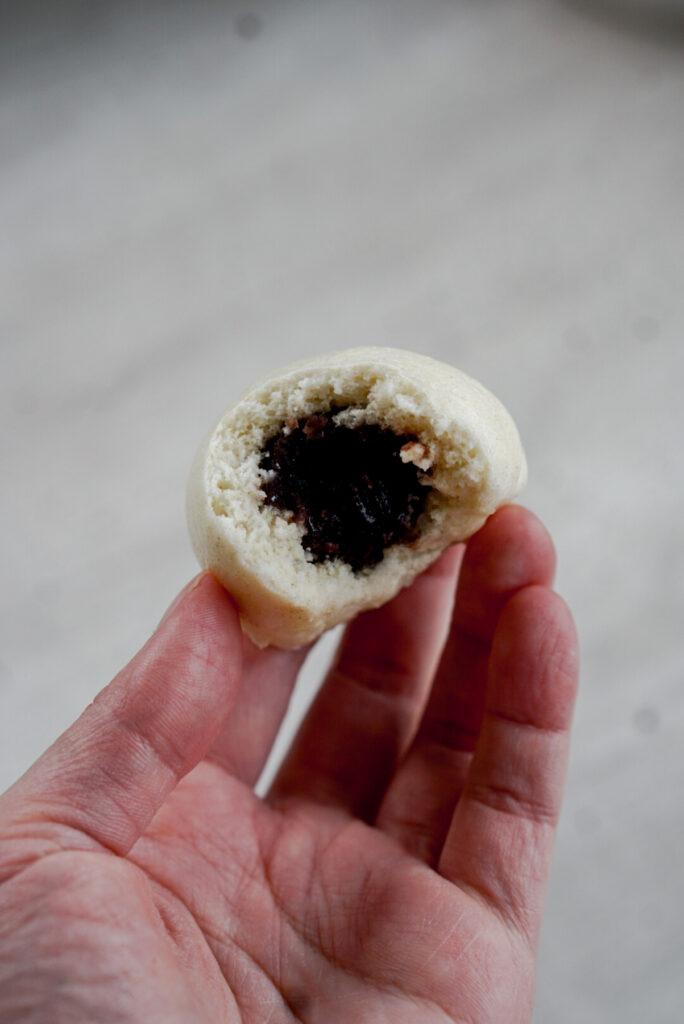
I do find that the texture of the Chinese and Korean buns are maybe a little more bouncy, fluffy, and spongy, whereas the Japanese baking powder breads don’t quite have such even air bubbles and a slightly denser texture. But if you’re not super picky about textures, the difference is fairly small.
What Kind of Bean Paste to Use?
You can find manju made with a variety of different bean pastes, so honestly you can use whatever you like. For Japanese red bean paste, you can usually find a smooth texture one (koshian) and a chunky texture one (tsubuan) at Japanese grocery stores in the US. Either works. White bean paste or other sweet fillings like purple sweet potato are fine too, but I like the beans for a little extra protein in my sweets.
Feel free to also make the red bean paste yourself instead of buying it!
What Makes This Recipe So Good
While many of my recipes come from old Japanese church cookbooks that have withstood the test of time, with some tweaking to adapt for modern kitchens, this recipe is especially worth trying because I had some extra help. A Japanese confectionary artisan who used to own his own mochi and manju shop taught me some of his secrets for perfecting manju! If you want artisan-level steamed buns, be sure to follow these tips and tricks:
Tips and Tricks for Perfect Steamed Buns
This recipe is super easy and much easier than yeasted steamed buns, but you’ll still want to make sure to follow all the steps, including these tips.
- Don’t skip the step where you rest the dough for 15-20 minutes. It’s important to hydrate the flour so you get super smooth surface on your bread.
- When you flatten the dough to wrap the filling, try to make the edges thinner than the middle. That way when you pinch the edges closed it’s not too thick on the bottom.
- The ratio of dough to filling should be about 1:1 in weight. So no matter what filling you use, just make sure the filling and bread portions are about the same to achieve the right thickness of fluffy bao.
More Asian Snack Recipes
If you liked this recipe, check out these other easy Asian dessert and snack recipes, perfect for your next tea time:
- Ichigo Daifuku (Strawberry Stuffed Mochi)
- Warabimochi Recipe
- Chinese Bakery Sponge Cake
- The Best Matcha Cupcakes
- Homemade White Rabbit Candy
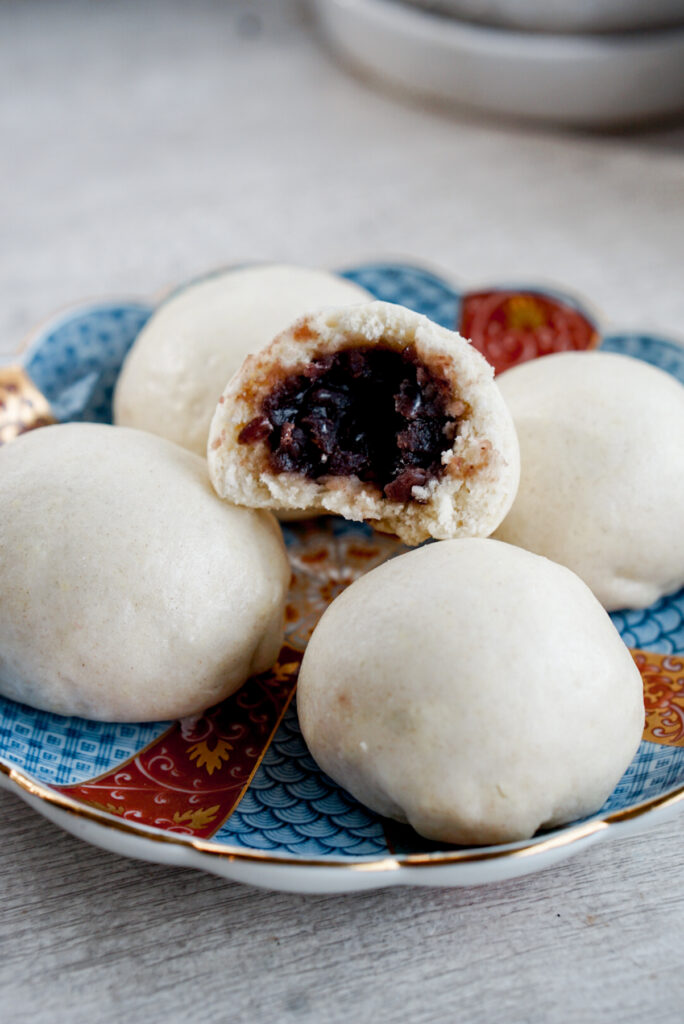
Easy Steamed Red Bean Buns (Mushi Manju)

Ingredients
- 1/3 cup granulated sugar, 80g
- 3 1/2 tbsp hot water, 40mL
- 1 cup cake flour, 120g
- 1 tsp baking powder
- 1/2 cup red bean paste, about 150g
Equipment
- bamboo steamer basket or other steamer
Instructions
- In a small mixing bowl, add sugar and warm water. Stir to dissolve the sugar.
- Add flour and baking powder and mix until a dough forms. Gather dough into a ball, cover bowl with plastic wrap, and let rest for 15 minutes while you set up the rest of your ingredients.
- While dough is resting, heat water in a large pot or skillet for steaming and scoop 10 tablespoons of red bean paste (about 15 grams each). Roll each portion of bean paste into a ball and set aside. Cut ten 3 inch squares of parchment paper and set aside.
- After the 15 minutes is up, lightly knead dough until the surface is smooth (only a few times). Dust with excess flour as needed to prevent sticking.
- Divide dough into 10 pieces. Roll each piece into a ball. Take a dough ball, flatten into a circle, and place a ball of red bean paste in the center. Gently wrap the dough around the bean paste and pinch the edges to seal. Repeat with the remaining pieces of dough and bean paste.
- Place each sealed manju seam side down onto a square of parchment paper and place in a bamboo steamer basket. You can typically fit five buns per basket. Put steamer over your pot of simmering water and steam for 10 minutes.
- Manju can be served immediately after steaming. Leftovers can keep in an airtight container in the fridge.
Notes
- You can make your own cake flour by using all purpose flour and substituting two tablespoons of the all purpose flour for cornstarch in this recipe.